
A New Paradigm for Accessibility: The RayNeo iO Smart Glasses
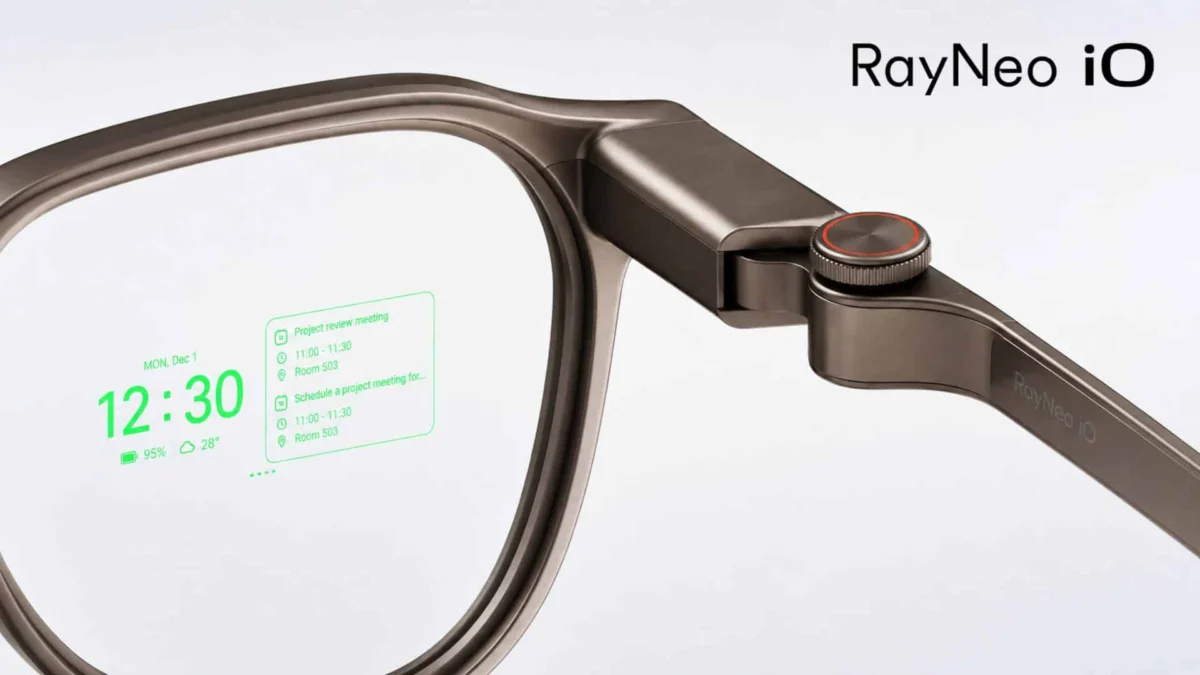
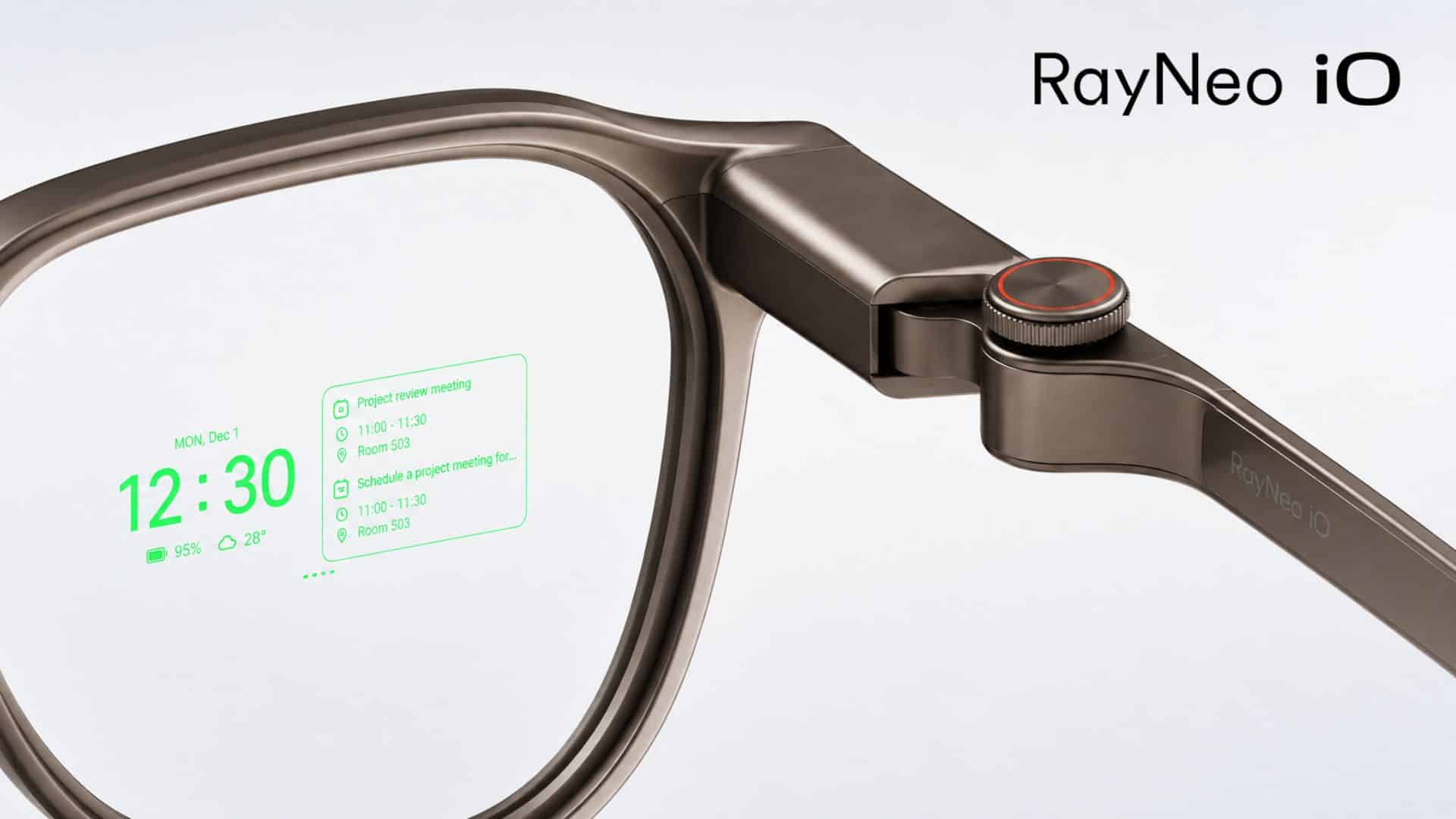
The RayNeo iO Smart Glasses emerge as a beacon of innovation in assistive technology, specifically addressing long-standing communication barriers for the DHH community. Weighing a mere 33 grams, these glasses integrate a transparent heads-up display with a sophisticated four-microphone array, bone-conduction voice sensing technology, advanced AI-assisted features, and live translation capabilities. This combination allows for spoken conversations to be converted into visual text seamlessly, presented directly before the wearer’s eyes without the need to divert attention to a smartphone or other external screen.
For millions globally living with hearing loss, daily interactions can present significant challenges. Traditional methods often involve lip-reading, which can be inconsistent and tiring, or reliance on interpreters, which is not always practical or available. Existing mobile applications that transcribe speech typically require users to hold up a phone, creating a barrier in natural conversation flow and forcing a constant gaze downward, disconnecting them from the speaker’s facial expressions and body language. The RayNeo iO seeks to bridge this gap by offering an unobtrusive, hands-free solution that integrates directly into the wearer’s visual experience, promoting more engaged and natural social interactions.
RayNeo emphasizes the iO’s "visual-first" design, notably lacking built-in speakers. This deliberate choice ensures that the device primarily serves as a display for information, allowing users to remain fully immersed and visually engaged with their surroundings and conversations. The bone-conduction technology, typically associated with specialized headphones, is ingeniously repurposed here for voice sensing, enhancing the clarity and accuracy of speech capture even in varied acoustic environments. The integration of AI further refines transcription accuracy and opens doors for future features such as contextual understanding and personalized communication aids.
The potential impact of the iO extends beyond individual conversations. Imagine a DHH student in a lecture hall, a professional in a bustling meeting, or a traveler navigating a foreign country. The ability to receive real-time, translated captions directly in their line of sight could revolutionize access to education, professional opportunities, and global experiences. This innovation represents a significant step towards creating more inclusive environments, fostering greater independence, and reducing the cognitive load often associated with managing hearing loss in auditory-centric settings.
The RayNeo GT Series: Immersive Entertainment on the Go
Complementing the iO’s focus on productivity and accessibility, RayNeo also introduced the RayNeo GT and RayNeo GT Max, two new models within its GT Series. Unlike the iO’s heads-up information delivery, the GT Series is engineered from the ground up to provide an uncompromising personal cinema and gaming experience, leveraging advanced spatial viewing technologies. These glasses cater to the growing demand for immersive entertainment solutions that offer portability without sacrificing quality.
The GT Series is powered by a dedicated dual-chip architecture, featuring RayNeo’s proprietary Vision 4000 Display Chip and the Zone 360 3DoF Chip. The Vision 4000 is responsible for rendering stunning visuals, while the Zone 360 chip enables three degrees of freedom (3DoF) tracking, allowing users to look around a virtual environment by moving their head, providing an immersive experience ideal for media consumption and casual gaming. This 3DoF capability offers a significant upgrade over static screen viewing, creating a sense of presence within virtual spaces.
Both the GT and GT Max models are designed to project large-format virtual screens, with the GT offering up to a 231-inch equivalent display and the GT Max pushing boundaries further with an impressive 307-inch virtual screen. This capability effectively transforms any environment into a private theater, perfect for long flights, commutes, or simply enjoying media at home without the need for a physical television. The audio experience is equally prioritized, with both GT models featuring quad speakers co-tuned by the renowned Danish audio brand Bang & Olufsen (B&O), ensuring a premium, immersive soundscape that complements the expansive visuals.
Weighing 68g for the GT and 78g for the GT Max, these glasses are designed for comfortable extended wear, making them ideal companions for entertainment enthusiasts. The GT Series also supports custom prescription lens inserts, ensuring that users with vision correction needs can enjoy the full immersive experience without compromise. The introduction of these models positions RayNeo to capture a significant share of the evolving consumer market for portable, high-quality AR entertainment.
RayNeo’s Strategic Vision and Market Leadership
RayNeo’s dual launch strategy—addressing both critical accessibility needs and premium entertainment—reflects a nuanced understanding of the burgeoning AR market. As stated by Howie Li, Founder and CEO of RayNeo, "RayNeo iO and the GT Series represent a fundamental commitment to purpose-built spatial hardware. Rather than compromising with a single device that tries to do everything, we designed two dedicated experiences: the iO as an invisible, all-day assistant for heads-up productivity, and the GT Series as an uncompromising personal cinema for travel and entertainment. Together, they deliver intuitive tools tailored precisely to how people work and relax every day." This philosophy stands in contrast to some industry trends that prioritize general-purpose, high-cost AR/VR headsets, demonstrating RayNeo’s focus on specialized, user-centric solutions.
This targeted approach appears to be paying dividends for the company. According to Counterpoint Research Q1 2026 data cited by RayNeo, the company held a commanding 23.7% share of the global consumer AR smart glasses market by shipment volume. This robust market position underscores RayNeo’s success in navigating the complexities of consumer adoption and distinguishes it as a leading player alongside other prominent names in the spatial computing arena. RayNeo, incubated by TCL Electronics and serving as an Official Worldwide Olympic Partner in the AR glasses category, has rapidly built a diverse portfolio, including the full-color spatial computing X Series and the portable Air Series, demonstrating a consistent track record of innovation and market penetration.
The broader AR market is projected for substantial growth in the coming years, driven by advancements in display technology, processing power, and user interface design. Industry analysts anticipate the global AR market to reach hundreds of billions of dollars by the end of the decade, with consumer devices forming a significant segment. RayNeo’s strong market share in this nascent but rapidly expanding sector positions it for continued leadership and innovation. The company’s strategy of creating distinct product lines for specific use cases could very well become a blueprint for success in a market that is still defining its core applications.
Technical Specifications and Comparative Overview
To provide a clear understanding of the distinct capabilities of these new devices, a comparative overview of key specifications highlights RayNeo’s deliberate design choices:
| Specification | RayNeo iO Smart Glasses | RayNeo GT | RayNeo GT Max |
|---|---|---|---|
| Primary Function | Ambient Heads-Up Productivity & AI | Portable AR Media & Gaming | Cinema-Grade AR Display |
| Weight | 33g | 68g | 78g |
| Optical System | Firefly Nano Engine (0.085cc MicroLED) | Birdbath (BB) | Peacock Optical Engine 3.0 Max |
| Field of View (FOV) | 23.5° | 46° | 59° |
| Display Sizing | Heads-Up Text Overlay | Up to 231-inch (136″/201″/231″) | Up to 307-inch (227″/267″/307″) |
| Audio Configuration | Visual-First (0 Speakers / Bone Conduction + 4-Mic) | Quad Speakers (Co-Tuned by B&O) | Quad Speakers (Co-Tuned by B&O) |
| Tracking & Controls | Smart Crown Dial & Head Gestures | Zone 360 Native 3DoF Chip | Zone 360 Native 3DoF Chip |
The iO’s "Firefly Nano Engine" with its ultra-compact 0.085cc MicroLED system is crucial for its lightweight design and transparent display, prioritizing minimal visual obstruction. In contrast, the GT series utilizes more expansive optical systems like "Birdbath" and "Peacock Optical Engine 3.0 Max" to achieve larger fields of view and more immersive virtual screen sizes, reflecting their entertainment-centric purpose. The difference in FOV—23.5° for the iO versus 46° and 59° for the GT models—clearly illustrates the divergent design goals: discreet information overlay versus expansive visual immersion. Control mechanisms also vary, with the iO favoring intuitive head gestures and a smart crown dial for productivity, while the GT series relies on its dedicated 3DoF chip for navigation within virtual environments.
Availability and Global Showcase
The RayNeo iO Smart Glasses and RayNeo GT Series are scheduled to become available for purchase starting September 4, 2026. Consumers will be able to acquire these devices directly through the official RayNeo website (www.rayneo.com) and the company’s dedicated Amazon store.
The RayNeo iO Smart Glasses will be offered in two sophisticated color options: Polar Night (Dark Grey) and Dune (Gold), providing aesthetic choices to suit individual preferences. The GT Series, comprising the RayNeo GT and RayNeo GT Max configurations, will also cater to diverse user needs, with custom prescription lens inserts supported across both GT models to ensure optimal visual clarity for all users.
Further underscoring their global ambitions, both product lines are slated for an extensive demonstration at IFA 2026 in Berlin, one of the world’s leading trade shows for consumer electronics and home appliances. This exhibition, running from September 4-8, 2026, will provide industry professionals, media, and consumers with a firsthand opportunity to experience the capabilities of these new AR devices, garnering crucial international attention and feedback. The timing of the launch coinciding with IFA further emphasizes RayNeo’s confidence in its product offerings and its strategy to leverage major industry platforms for global outreach.
Looking Ahead: The Future of Spatial Computing and Accessibility
The introduction of the RayNeo iO and GT Series marks a pivotal moment for RayNeo and the broader AR industry. By delivering specialized, high-performance AR solutions, RayNeo is not only pushing the boundaries of what augmented reality can achieve but also making significant strides in practical applications that genuinely enhance daily life. The iO’s potential to revolutionize communication for the DHH community represents a powerful testament to technology’s capacity for social good, fostering greater inclusivity and bridging long-standing gaps. Simultaneously, the GT Series promises to redefine portable entertainment, offering immersive experiences that transcend traditional screens.
As spatial computing continues its trajectory from niche technology to mainstream adoption, companies like RayNeo, with their focused and innovative product development, will be instrumental in shaping its future. The challenge remains in refining user experience, extending battery life, expanding content ecosystems, and ensuring social acceptance, but with these new offerings, RayNeo has firmly established itself at the forefront of this exciting technological frontier.