Historical Context and Policy Evolution
The term "zero tolerance" emerged prominently in American public policy during the late 1980s and early 1990s, initially popularized by the federal government’s "War on Drugs" and subsequently adopted by public school districts nationwide. By the mid-1990s, these policies—characterized by mandatory, predetermined punishments for specific infractions regardless of individual circumstances—became ubiquitous.
Sociological studies conducted over the past three decades have frequently identified these policies as significant drivers of systemic inequities. Research from civil rights organizations, including the American Civil Liberties Union (ACLU), has highlighted that zero-tolerance mandates often disproportionately impact marginalized populations, frequently leading to exclusionary outcomes that fail to address the root causes of conflict or behavioral issues. For the NAD, a historically advocacy-driven organization committed to social justice, the alignment of its internal language with the broader sociopolitical history of this terminology has become a point of critical internal debate.
Chronology of Internal Discord
The current policy has been a staple of NAD operations for several biennial national conferences, serving as the governing framework for conduct at all organization-sponsored meetings, events, and authorized gatherings. Its primary objectives—to curb harassment, bullying, discrimination, and retaliation—remain fundamental to the NAD’s mission of fostering an inclusive environment. However, the disconnect between these stated goals and the perceived rigidity of the "Zero Tolerance" label began to surface during recent cycles.
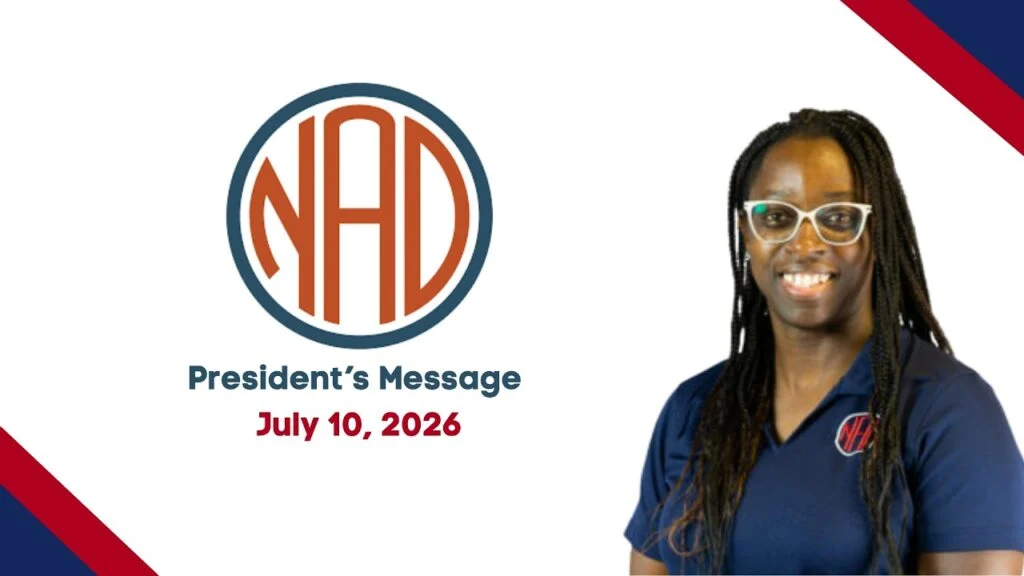
In early 2026, a series of community-led discussions underscored a growing desire for policies rooted in restorative justice rather than punitive mandates. Stakeholders argued that the "Zero Tolerance" framework, while intended to protect, could inadvertently foster an environment of fear or rigid exclusion that contradicts the values of accessibility and mutual support. This feedback culminated in a wave of formal correspondence directed toward the Board of Directors, prompting the President’s announcement on July 10, 2026.
Data and Behavioral Implications
Organizational policies in non-profit and civil rights sectors typically aim to balance safety with restorative outcomes. According to best practices established by the Society for Human Resource Management (SHRM) and various non-profit governance standards, organizations are increasingly moving away from strictly punitive language in favor of "Accountability and Community Standards."
Data from human resources and organizational development research suggests that:
- Clarity vs. Rigidity: Organizations that adopt restorative justice frameworks see higher rates of successful conflict resolution compared to those relying on mandatory, one-size-fits-all disciplinary outcomes.
- Cultural Sensitivity: Language carries weight, particularly in organizations representing marginalized or disabled communities. When policy language mirrors that of systems historically used to disenfranchise those populations, it can erode trust between the organization’s leadership and its grassroots members.
- Reporting Frequency: In environments where policies are perceived as overly punitive, reporting of minor grievances often decreases, leading to a "chilling effect" where only the most severe incidents are documented, often too late for proactive intervention.
The NAD’s current review seeks to reconcile these findings with the need to maintain a secure environment for all participants. By evaluating whether the policy’s current architecture serves to silence or protect, the Board is attempting to align its governance with contemporary standards of community care.
The Official Position of the NAD Board
In her address, President Stephanie Hakulin clarified that while the review process is underway, the current policy remains in full effect. This operational continuity is designed to ensure that the organization does not face a vacuum in accountability while the terminology and implementation strategies are under audit.
"We recognize that the phrase ‘zero tolerance’ carries significant historical context and has been associated with policies and practices that resulted in disproportionate harm and inequitable outcomes for marginalized communities," Hakulin stated. She further emphasized that the Board is not operating under a pre-determined conclusion. Instead, the review is characterized as a comprehensive assessment of the title, language, and, most importantly, the procedural implementation of the policy.
Key areas of the review will include:
- Terminology Assessment: Investigating whether the title "Zero Tolerance" should be replaced with language that better reflects restorative justice, accountability, and inclusivity.
- Procedural Transparency: Reviewing the established procedures for reporting and resolving grievances to ensure they are accessible and perceived as fair by the community.
- Values Alignment: Ensuring that every aspect of the policy is explicitly mapped to the organization’s core values of equity, inclusion, and belonging.
Broader Impact and Industry Implications
The NAD’s decision to revisit its internal policies reflects a broader trend among major national advocacy groups. As organizations mature, they are increasingly pressured to reflect on the legacy of the administrative tools they use. For an organization as influential as the NAD, this shift could set a precedent for other disability advocacy groups and non-profits across the United States.
Industry experts observe that the NAD’s move toward a potential restorative justice model could prove highly effective. Restorative justice focuses on repairing the harm caused by behavior, rather than simply punishing the individual, which often facilitates a more sustainable, inclusive, and respectful community environment. If the NAD successfully transitions to a model that emphasizes accountability over punitive measures, it may provide a template for other organizations struggling with the dual challenges of maintaining strict conduct standards while upholding a commitment to equity.
Future Outlook and Community Engagement
The Board has committed to a policy of open communication throughout this transition. While no specific timeline for the conclusion of the review has been finalized, the NAD has pledged to share updates with its membership as the process progresses. The organization views this period of reflection not as a rejection of safety, but as an evolution of its organizational culture.
For the membership, the next several months will be a period of observation. The success of this review will likely be measured by the transparency of the Board’s decision-making process and the extent to which the final policy reflects the voices of the diverse individuals who make up the NAD.
As the organization navigates this complex internal audit, the overarching goal remains the protection and elevation of the deaf and hard-of-hearing community. The NAD, in its commitment to "Together, we NAD rise," suggests that the organization views this period of self-correction as a necessary step in its ongoing mission to advocate for the rights, dignity, and inclusion of all its members.
By prioritizing the nuance of language and the impact of its governance, the NAD is positioning itself to lead by example, proving that institutional strength is found not in the rigidity of its rules, but in the adaptability of its values. The coming months will likely see the release of draft policy revisions, which will undoubtedly be subject to further discourse within the deaf community, ensuring that the final outcome is one that is both community-informed and organizationally sound.