The Clinical Challenge of Parkinson’s Disease Diagnosis
Parkinson’s disease is the second most common neurodegenerative disorder worldwide, characterized by the progressive loss of dopaminergic neurons in the substantia nigra region of the brain. Currently, the diagnosis of PD relies heavily on clinical observation, primarily through the assessment of motor symptoms such as tremors, bradykinesia (slowness of movement), postural instability, and rigidity. However, these symptoms typically manifest only after 60% to 80% of the brain’s dopamine-producing neurons have already been compromised.
Traditional diagnostic aids, including the Movement Disorder Society-Unified Parkinson’s Disease Rating Scale (MDS-UPDRS), are inherently subjective and depend on the expertise of the examining clinician. More advanced techniques, such as Dopamine Transporter (DaTscan) imaging using Single-Photon Emission Computed Tomography (SPECT) or Positron Emission Tomography (PET), provide more objective data but are constrained by high costs, limited availability in rural or developing regions, and the use of radioactive tracers. The need for a biological marker—a "biomarker"—that can be detected via a simple, non-invasive test has led researchers to explore the chemical secretions of the human body.
From Sebum to Earwax: The Evolution of Olfactory Diagnostics
The concept that Parkinson’s disease possesses a distinct odor is not entirely new. The field gained significant momentum nearly a decade ago when "super-smellers"—individuals with a heightened sense of olfaction—demonstrated the ability to identify PD patients by the scent of their skin. Scientific investigation later confirmed that this scent originates in sebum, an oily, waxy substance produced by the sebaceous glands to protect and hydrate the skin.
Previous studies indicated that the metabolic shifts associated with PD—specifically neurodegeneration, systemic inflammation, and oxidative stress—alter the composition of volatile organic compounds (VOCs) released by sebum. However, sebum collected from the forehead or back is frequently contaminated by environmental variables. Exposure to air pollution, fluctuating humidity, cosmetic products, and daily hygiene routines can degrade the VOC profile, leading to "noise" in the data and reducing the reliability of the test.
To circumvent these issues, Hao Dong, Danhua Zhu, and their colleagues turned their attention to the ear canal. The skin inside the ear canal is shielded from the external environment, providing a more stable and concentrated reservoir of sebum. Earwax, or cerumen, is composed primarily of sebum mixed with dead skin cells and sweat. Because it is secreted in a protected environment, earwax acts as a biological "time capsule," preserving the metabolic signatures of the body with greater integrity than surface skin oils.
Study Methodology and Identification of Key Biomarkers
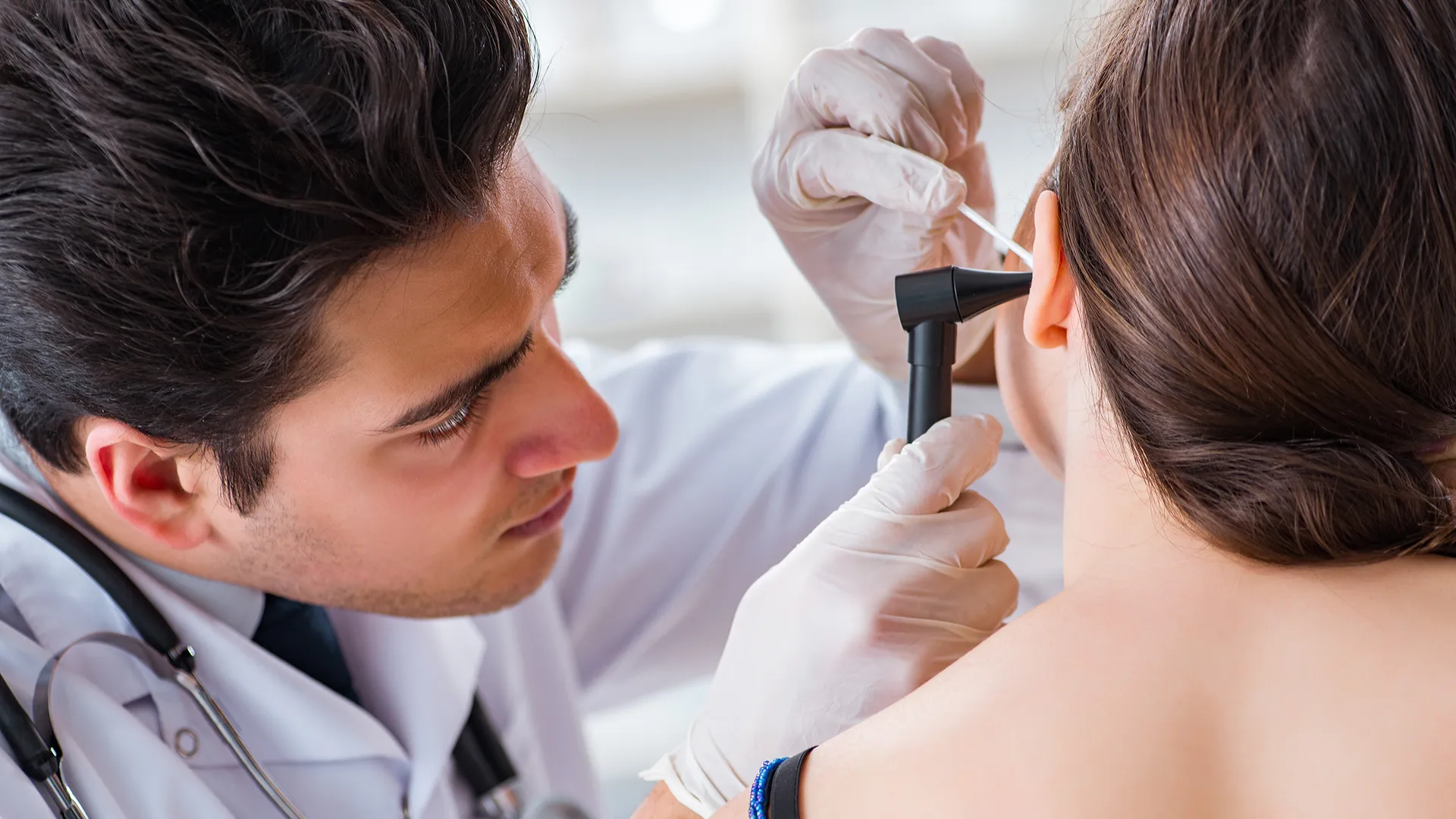
The research team conducted a controlled study involving 209 human subjects. This cohort included 108 individuals previously diagnosed with Parkinson’s disease and 101 healthy control subjects. To ensure the integrity of the samples, researchers used specialized swabs to collect secretions from the ear canals of the participants.
The collected samples underwent rigorous chemical analysis using gas chromatography-mass spectrometry (GC-MS). This process allows scientists to separate the complex mixture of chemicals within the earwax and identify the individual molecules based on their mass and chemical properties. Upon comparing the chemical profiles of the PD group against the control group, the researchers identified four specific VOCs that were significantly altered in the presence of the disease:
- Ethylbenzene: Often associated with metabolic processes, its levels showed a distinct deviation in PD patients.
- 4-Ethyltoluene: A compound whose presence in biological samples can indicate specific oxidative pathways.
- Pentanal: An aldehyde that is frequently a byproduct of lipid peroxidation, a process closely linked to the oxidative stress found in neurodegenerative states.
- 2-Pentadecyl-1,3-dioxolane: A complex organic molecule that served as a defining characteristic of the PD olfactory signature.
These four compounds were designated as potential biomarkers. The researchers noted that the presence and concentration of these VOCs likely reflect the systemic metabolic changes occurring as the brain’s neurological health declines.
The Role of Artificial Intelligence in Olfactory Analysis
While the identification of biomarkers was a crucial first step, the researchers sought to automate the diagnostic process to make it viable for clinical settings. They developed an Artificial Intelligence Olfactory (AIO) system, essentially an "electronic nose" powered by machine learning algorithms.
The AI was trained using the VOC data sets generated from the 209 subjects. By processing the ratios and concentrations of the four identified biomarkers, the AIO system learned to distinguish between the chemical "fingerprint" of a healthy individual and that of a Parkinson’s patient. When the model was tested on a validation set of earwax samples, it achieved a remarkable 94% accuracy rate in correctly categorizing the samples.
This integration of AI allows for a level of pattern recognition that exceeds human capability. While a human might struggle to detect subtle shifts in four different chemicals simultaneously, the AIO system can analyze these variables in seconds, providing an objective, binary result (PD-positive or PD-negative) that can then be reviewed by a neurologist.
Chronology of Research and Development
The journey toward this earwax-based diagnostic tool follows a clear scientific timeline:
- 2012–2015: Initial anecdotal reports of PD-related odors emerge, leading to pilot studies on skin sebum.
- 2019: Researchers confirm that VOCs in sebum are linked to the metabolism of lipids and can be detected via mass spectrometry.
- 2021–2022: Limitations regarding environmental contamination of skin sebum lead researchers to investigate more "protected" sebum sources.
- 2023: The China-based team led by Hao Dong and Danhua Zhu initiates the earwax study, recruiting over 200 participants for a comparative analysis.
- 2024: Publication of the findings in Analytical Chemistry, detailing the 94% accuracy of the AIO system and the identification of the four primary VOC biomarkers.
Expert Analysis and Potential Implications
The medical community has reacted to these findings with cautious optimism. Dr. Hao Dong emphasized the importance of the study’s controlled environment, noting that "the skin inside the ear canal is kept away from the elements," which provides the stability necessary for a standardized medical test.
Industry analysts suggest that if this method is scaled, it could drastically alter the economics of Parkinson’s care. A simple ear swab and subsequent chemical analysis are significantly cheaper than a $3,000 SPECT scan. This could enable "first-line screening" in primary care offices. Patients over a certain age or those with a family history of PD could undergo an annual earwax screen, much like a routine blood test for cholesterol.
The implications for early intervention are particularly profound. While there is currently no cure for Parkinson’s, medications like Levodopa and therapies like Deep Brain Stimulation (DBS) are much more effective when started in the early stages of the disease. Furthermore, early diagnosis allows patients to make lifestyle changes—such as specific exercise regimens and dietary adjustments—that have been shown to slow functional decline.
Limitations and Future Research Directions
Despite the high accuracy reported, the researchers are transparent about the limitations of the current study. The experiment was a small-scale, single-center study conducted in China. Biological markers can vary significantly across different ethnic groups due to genetics, diet, and environmental factors.
"The next step is to conduct further research at different stages of the disease, in multiple research centers and among multiple ethnic groups," Dong stated. This expansion is necessary to determine if the "earwax signature" remains consistent globally. Additionally, researchers need to determine if the AIO system can distinguish Parkinson’s from other "Parkinsonian" syndromes, such as Multiple System Atrophy (MSA) or Progressive Supranuclear Palsy (PSP), which often mimic PD in their early stages but require different treatment paths.
Future studies will also focus on longitudinal tracking—observing how these VOC levels change as the disease progresses from Stage 1 to Stage 5 on the Hoehn and Yahr scale. If the chemical concentration correlates with disease severity, the earwax test could be used not just for diagnosis, but for monitoring the efficacy of new neuroprotective drugs in clinical trials.
Conclusion: A New Frontier in Bio-Analytical Screening
The development of the AIO system for earwax analysis represents a significant leap forward in the application of analytical chemistry to clinical neurology. By identifying a stable, easily accessible source of biomarkers and utilizing the power of machine learning, the research team has provided a blueprint for the future of non-invasive diagnostics.
As the global population ages, the prevalence of Parkinson’s disease is expected to double by 2040. Tools that offer rapid, inexpensive, and accurate screening will be essential to managing this public health challenge. The earwax test, though still in the developmental and validation phase, offers a promising path toward a world where Parkinson’s is caught not by the appearance of a tremor, but by the subtle chemical whispers of the body.
The research was supported by several prestigious institutions, including the National Natural Sciences Foundation of Science and the Pioneer and Leading Goose R&D Program of Zhejiang Province, underscoring the high level of institutional confidence in this diagnostic approach. As multi-center trials begin, the medical world will be watching closely to see if the humble earwax swab becomes a standard tool in the fight against neurodegeneration.