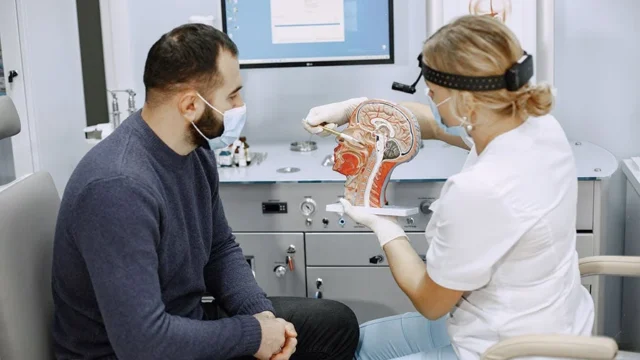

The clinical question at the heart of this research was whether an AI-driven longitudinal surveillance model could accurately predict both recurrence-free survival (RFS) and overall survival (OS) in patients who have undergone curative-intent surgery for HNSCC. The findings provide a resounding affirmative, suggesting a paradigm shift in how post-treatment monitoring is approached.
The Challenge of Recurrence in Head and Neck Cancer
Head and neck squamous cell carcinoma is a complex group of cancers affecting the mouth, throat, larynx, and other related structures. Despite advancements in surgical techniques, chemotherapy, and radiation therapy, recurrence after initial curative treatment continues to be a major concern for a substantial proportion of patients. Estimates suggest that up to 50% of HNSCC patients may experience a recurrence, depending on various risk factors such as the stage of the cancer, tumor location, and the presence of human papillomavirus (HPV) infection.
Current surveillance protocols typically rely on a combination of periodic clinical examinations and imaging studies, such as CT scans or MRIs. While these methods are crucial for detecting recurrent disease, they often lack the granularity to dynamically individualize a patient’s risk profile over time. The intensity and frequency of follow-up are generally based on broad risk categories, which may lead to either undertreatment for high-risk individuals or overtreatment for those with a lower probability of recurrence. This can result in unnecessary patient anxiety, financial burdens, and exposure to radiation from repeated imaging.
Developing the RADAR Model: A Multimodal Approach
To address these limitations, researchers embarked on the development of a sophisticated AI model, dubbed the "Recurrence And Death AI-based Risk" (RADAR) model. This retrospective prognostic study employed an eXtreme Gradient Boosting (XGBoost) algorithm, a powerful machine learning technique known for its efficiency and accuracy in handling complex datasets. The study was conducted across two prominent institutions: Samsung Medical Center in the Republic of Korea and Massachusetts Eye and Ear Infirmary/Massachusetts General Hospital in the United States, underscoring its multinational and multicenter scope.
The RADAR model was designed to integrate a comprehensive set of variables, moving beyond static baseline characteristics to incorporate the temporal evolution of a patient’s health markers. Specifically, it combined 68 distinct variables. These included fundamental clinicopathologic features – such as demographic information, tumor size, T and N classifications (which describe the extent of the tumor and lymph node involvement), and histological grade – with serial laboratory measurements collected during routine post-operative surveillance visits. This longitudinal data integration is a key differentiator, allowing the model to capture subtle changes and trends that might precede overt signs of recurrence.
Robust Performance Across Diverse Patient Cohorts
The study analyzed data from 975 patients diagnosed with HNSCC affecting the oral cavity, oropharynx, hypopharynx, and larynx, all of whom had undergone surgery with curative intent between 2008 and 2024. The AI model’s predictive capabilities were rigorously evaluated for both recurrence-free survival (RFS) and overall survival (OS) at one, two, three, four, and five-year intervals post-surgery.
The results were highly encouraging. The RADAR model demonstrated strong predictive performance across all assessed time points. For RFS, the areas under the curve (AUCs), a measure of the model’s ability to distinguish between patients who would and would not experience recurrence, ranged from an impressive 0.769 to 0.831. Similarly, for OS prediction, AUCs spanned from 0.788 to 0.820. These figures, coupled with sensitivities and specificities generally exceeding 70%, indicate a high degree of accuracy in identifying patients at risk.
A particularly notable finding emerged from subgroup analyses. The model exhibited exceptional performance in predicting OS for HPV-positive oropharyngeal cancer, a subset of HNSCC often associated with better prognoses but still susceptible to recurrence. In this group, AUCs for OS prediction reached as high as 0.943 at the one-year mark. This suggests that the RADAR model can effectively stratify even relatively favorable prognostic groups.
Crucially, the model also maintained robust predictive accuracy in non-HPV-positive HNSCC, which typically carries a poorer prognosis. Over the five-year follow-up period, OS AUCs ranged from 0.780 to 0.813, and RFS AUCs ranged from 0.774 to 0.830. This broad applicability across different HPV statuses highlights the model’s versatility and potential to benefit a wide spectrum of HNSCC patients.
Interpreting the Drivers of Prediction
Beyond its predictive power, the RADAR model offers valuable insights into the factors that most significantly influence recurrence and survival outcomes. Model interpretability analyses identified several key variables that emerged as the most influential predictors. These include:
- ECOG Performance Status: A measure of a patient’s general well-being and ability to carry out daily activities.
- Tumor Size and T Classification: Indicators of the primary tumor’s extent.
- N Classification: Reflecting the involvement of regional lymph nodes.
- Albumin: A blood protein often indicative of nutritional status and overall health.
- Hemoglobin: A marker for red blood cell count, relevant to oxygen transport and anemia.
- Neutrophil Count: A type of white blood cell that can indicate inflammation or infection.
- Lymphocyte Count: Another type of white blood cell, crucial for immune function.
- C-reactive Protein (CRP): A marker of inflammation in the body.
The identification of these factors, particularly longitudinal laboratory markers like albumin, hemoglobin, and inflammatory markers, underscores the importance of a patient’s physiological status and inflammatory response in their post-treatment trajectory.
Implications for Clinical Practice and Future Directions
The authors of the study emphasize a critical aspect of the RADAR model: its reliance on routinely collected clinical and laboratory data. This is a significant advantage, as it means the model can potentially be integrated directly into existing electronic medical record (EMR) systems without necessitating additional, burdensome testing for patients. Such integration would streamline the process of risk assessment and allow for real-time updates to a patient’s predicted prognosis as new data becomes available.
The implications for clinical practice are far-reaching. The RADAR model could enable:
- Individualized Surveillance: Moving away from one-size-fits-all follow-up schedules to personalized plans based on a patient’s dynamic risk profile.
- Risk-Adaptive Follow-up: Increasing the intensity of monitoring for high-risk patients and potentially reducing it for those with a very low probability of recurrence, thereby optimizing resource allocation and patient burden.
- Early Intervention: More timely identification of patients experiencing subtle signs of recurrence, potentially leading to earlier intervention and improved treatment outcomes.
- Clinical Trial Stratification: Better stratification of patients for future clinical trials based on their predicted risk of recurrence.
However, the researchers acknowledge certain limitations inherent in their study design. The retrospective nature of the analysis means that causal relationships cannot be definitively established. Furthermore, the current iteration of the model does not incorporate radiomic (imaging-derived features) or genomic data, which are increasingly recognized as valuable prognostic indicators in cancer. The absence of data from the peri-operative immunotherapy era is also a limitation, as the effectiveness of immunotherapy in HNSCC is an evolving area, and its impact on recurrence patterns may not be fully captured by the current dataset.
Despite these limitations, the study represents a significant step forward in leveraging AI for enhanced cancer surveillance. The successful validation across multiple institutions and diverse patient subgroups, including robust performance in both HPV-positive and HPV-negative HNSCC, lends strong support to its potential clinical utility. Future research could focus on prospective validation of the RADAR model, exploring the integration of additional data modalities like radiomics and genomics, and evaluating its impact on clinical decision-making and patient outcomes in real-world settings.
The citation for this study is: Jung HA, et al. Artificial intelligence-powered real-time multimodal model for predicting recurrence and survival in head and neck cancer: a multicenter, multinational study. ESMO Open. 2026;11:106046. DOI: 10.1016/j.esmoop.2025.106046.