
The implications of retrocochlear hearing loss extend beyond mere volume reduction. Individuals experiencing this condition often grapple with a profound difficulty in discerning speech, particularly in noisy environments. The clarity of words can become distorted, making conversations a frustrating and often isolating experience. Other debilitating symptoms can include tinnitus, a persistent ringing or buzzing in the ears, and vestibular disturbances such as dizziness and balance problems, which can significantly impact daily life and overall well-being. In some instances, while sounds may be perceived as loud enough, the intelligibility of speech remains elusive, a hallmark characteristic that distinguishes it from more common forms of hearing loss.
The Nuances of Retrocochlear vs. Cochlear Hearing Loss
Understanding the fundamental difference between retrocochlear and cochlear hearing loss is paramount for accurate diagnosis and effective management. Cochlear hearing loss, the more prevalent form, arises from damage within the cochlea itself, the spiral-shaped organ in the inner ear that converts sound vibrations into electrical signals. This damage can be caused by aging, excessive noise exposure, genetic factors, or certain medications. In essence, the cochlea struggles to effectively capture and transduce sound.
Retrocochlear hearing loss, conversely, occurs after the cochlea has performed its initial function. The term "retrocochlear" literally means "behind the cochlea." The problem lies in the auditory nerve, which carries the electrical signals from the cochlea to the brainstem, or in the neural pathways within the brainstem that process these signals. Even if the cochlea is functioning optimally, a compromised auditory nerve or brainstem pathway can prevent these signals from reaching the auditory cortex of the brain in an understandable form. This distinction is critical, as it often points to a different set of underlying causes and requires a more specialized diagnostic approach.
| Feature | Cochlear Hearing Loss | Retrocochlear Hearing Loss |
|---|---|---|
| Location of Problem | Inner ear (cochlea) | Auditory nerve or auditory pathways beyond the inner ear |
| Sound Transmission | Difficulty in capturing and transducing sound | Sound reaches the ear, but the signal transmission is impaired |
| Speech Clarity | Often reduced, especially in noise | Disproportionately poor, even at sufficient volume levels |
| Common Symptoms | Muffled sounds, difficulty with high frequencies, poor understanding in noise | Unilateral hearing loss, poor speech intelligibility, tinnitus, dizziness, balance issues, facial numbness |
| Potential Causes | Aging, noise exposure, genetics, ototoxic medications | Tumors (e.g., vestibular schwannoma), MS, neurodegenerative disorders, vascular issues |
| Diagnostic Tools | Pure-tone audiometry, speech audiometry | Pure-tone audiometry, speech audiometry, ABR, MRI |
| Treatment Focus | Hearing aids, assistive listening devices, therapies | Addressing underlying cause, medical interventions, potentially implantable solutions |
Unveiling the Symptoms: A Spectrum of Auditory and Neurological Clues
The symptoms associated with retrocochlear hearing loss can be diverse and often present a subtle yet significant departure from typical hearing loss. While some individuals may experience a gradual decline in hearing sensitivity, others might notice a sudden onset of symptoms. One of the most telling signs is unilateral hearing loss, where the impairment is primarily or exclusively in one ear. This asymmetry is a critical flag for further investigation.
Another hallmark symptom is a disproportionate difficulty in understanding speech. Even when sounds are perceived as loud enough, words can sound distorted, muffled, or jumbled. This is particularly pronounced in environments with background noise, where individuals with retrocochlear hearing loss struggle immensely to filter out extraneous sounds and focus on the intended speech. This is often described as words sounding "garbled" rather than simply "quiet."

Beyond auditory disturbances, retrocochlear conditions can manifest in neurological symptoms due to the proximity of the auditory nerve and its pathways to other cranial nerves. These can include:
- Tinnitus: A persistent ringing, buzzing, hissing, or clicking sound in the affected ear.
- Dizziness and Vertigo: A sensation of spinning or unsteadiness, often indicative of involvement of the vestibular portion of the auditory nerve.
- Balance Problems: Difficulty maintaining equilibrium, which can lead to falls and impact mobility.
- Facial Numbness or Weakness: In cases where a tumor or lesion is pressing on nearby cranial nerves, such as the facial nerve.
- Headaches: Persistent or severe headaches can sometimes accompany retrocochlear conditions.
The presentation of these symptoms can vary significantly, making a comprehensive medical evaluation essential. Not everyone will experience the full spectrum, and the severity can range from mild to profound.
The Genesis of Retrocochlear Hearing Loss: Diverse Etiologies
The causes of retrocochlear hearing loss are as varied as the pathways it affects, ranging from benign growths to more complex neurological disorders. Understanding these underlying causes is fundamental to developing an effective treatment plan.
Tumors: The Vestibular Schwannoma and Beyond
Perhaps the most well-known cause of retrocochlear hearing loss is a vestibular schwannoma, also known as an acoustic neuroma. This is a benign (non-cancerous) tumor that originates from the Schwann cells that cover the auditory and vestibular nerves. As the tumor grows, it can compress the auditory nerve, disrupting the transmission of sound signals and potentially affecting balance. Early symptoms often include unilateral hearing loss, tinnitus, and dizziness.
While vestibular schwannomas are the most common, other types of tumors in the vicinity of the auditory pathways can also lead to retrocochlear hearing loss. These could include meningiomas or other rare brain tumors.
Neurological Conditions: Disrupting the Neural Highway
A range of neurological conditions can impact the auditory nerve and its central processing pathways. Multiple Sclerosis (MS), an autoimmune disease that attacks the myelin sheath protecting nerve fibers, can affect the auditory pathways, disrupting the speed and clarity of signal transmission. Similarly, neurodegenerative disorders, such as auditory neuropathy spectrum disorder (ANSD), where the auditory nerve is affected but the cochlea may be functioning, or hereditary neuropathies, can lead to significant auditory processing deficits.
Other Contributing Factors
Beyond tumors and primary neurological diseases, other conditions can contribute to retrocochlear hearing loss:

- Vascular Issues: Problems with blood flow to the auditory nerve or brainstem, such as strokes or transient ischemic attacks (TIAs), can damage neural tissue and impair hearing.
- Inflammatory Conditions: Infections or inflammatory processes affecting the central nervous system can also impact the auditory pathways.
- Trauma: Head injuries that affect the auditory nerve or brainstem can result in retrocochlear hearing loss.
- Congenital Malformations: In rare cases, developmental abnormalities of the auditory nerve or brainstem present from birth can lead to hearing impairment.
It is important to reiterate that retrocochlear hearing loss is not solely attributable to tumors. A thorough diagnostic workup is crucial to identify the specific underlying cause.
Diagnosing the Hidden Impairment: A Multi-faceted Approach
Diagnosing retrocochlear hearing loss requires a systematic and often multi-pronged approach, as a single test is rarely sufficient to provide a definitive answer. The process typically begins with a comprehensive evaluation by an audiologist and may involve further investigation by an otolaryngologist (ENT specialist), neurotologist, or neurologist.
Initial Audiological Assessments
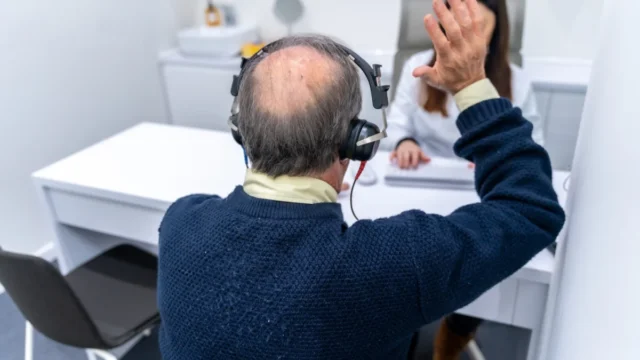
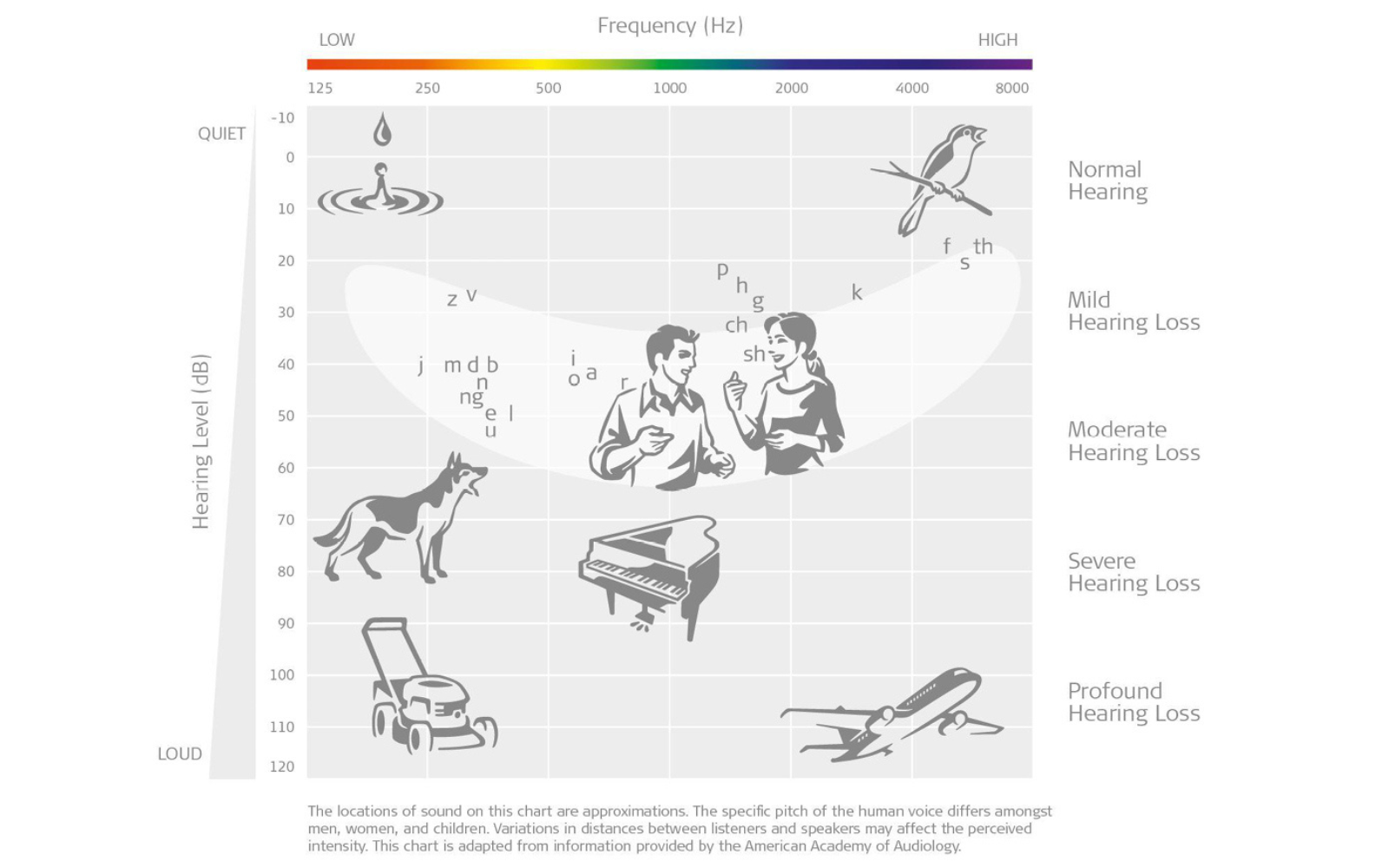
The cornerstone of diagnosis involves detailed hearing tests. Standard pure-tone audiometry measures an individual’s hearing thresholds across various frequencies, revealing the degree and configuration of hearing loss. However, in retrocochlear cases, pure-tone thresholds might appear relatively normal or show a mild to moderate loss, yet the individual experiences significant difficulty understanding speech.
This is where speech testing becomes critically important. Tests such as word recognition scores, where individuals are asked to repeat words spoken at different volumes, can reveal a disproportionately poor performance compared to their pure-tone thresholds. This discrepancy is a strong indicator of a problem beyond the cochlea.
Advanced Diagnostic Tools
To pinpoint the location and nature of the retrocochlear impairment, more specialized tests are employed:
-
Auditory Brainstem Response (ABR): This non-invasive test measures the electrical activity of the auditory nerve and brainstem in response to sound stimuli. It assesses the integrity of the auditory pathway from the cochlea to the brainstem. Abnormalities in the timing or amplitude of the ABR waves can strongly suggest a retrocochlear lesion. For instance, a delayed latency or absent wave in the ABR can be a key indicator of auditory nerve dysfunction.
-
Magnetic Resonance Imaging (MRI): When a retrocochlear cause is suspected, an MRI scan of the brain and internal auditory canals is often the gold standard for visualization. MRI provides detailed images of the auditory nerve, brainstem, and surrounding structures, allowing for the detection of tumors, demyelinating lesions (like those seen in MS), or other abnormalities that may not be apparent through hearing tests alone. Contrast-enhanced MRI is particularly useful for identifying tumors.
-
Otoacoustic Emissions (OAEs): While OAEs primarily assess the function of the outer hair cells in the cochlea, their presence in the context of hearing loss can sometimes provide additional clues. If OAEs are present but speech understanding is poor, it further suggests a problem in the neural pathway.
-
Tympanometry: This test assesses the function of the middle ear and the mobility of the eardrum, helping to rule out conductive hearing loss.
Interpreting the Audiogram
An audiogram, while a vital tool, does not offer a singular definitive sign for retrocochlear hearing loss. However, certain patterns can raise suspicion. Asymmetrical hearing loss, where the hearing in one ear is significantly worse than the other, is a key indicator. A significant discrepancy between pure-tone thresholds and speech discrimination scores is another red flag. For example, an individual might have a mild hearing loss on the audiogram but struggle to understand even simple words. This poor word recognition score relative to the pure-tone average is a classic sign that warrants further investigation into retrocochlear pathways. It’s crucial to remember that audiogram findings are always interpreted in conjunction with a patient’s reported symptoms and other diagnostic test results.
Treatment Strategies: Addressing the Root Cause
The treatment for retrocochlear hearing loss is highly individualized and depends entirely on the underlying cause. There is no universal cure, and management strategies aim to address the specific pathology and mitigate its impact on hearing and overall quality of life.
Medical and Surgical Interventions
-
Tumor Management: For vestibular schwannomas and other tumors, treatment options can include observation (especially for small, slow-growing tumors), radiation therapy, or surgical removal. The choice of treatment depends on the tumor’s size, location, growth rate, and the patient’s overall health and symptoms. Surgical intervention aims to remove the tumor while preserving as much auditory and facial nerve function as possible, though hearing loss is a common consequence.
-
Neurological Condition Management: For conditions like Multiple Sclerosis, treatment focuses on managing the disease itself through disease-modifying therapies, aimed at reducing inflammation and slowing disease progression. This can indirectly benefit auditory pathway function.
-
Other Medical Treatments: Depending on the identified cause, treatments might include addressing vascular issues, managing infections, or using medications to alleviate symptoms like tinnitus or dizziness.
Hearing Rehabilitation and Assistive Technologies
When the underlying cause cannot be fully reversed or when hearing loss persists, rehabilitation plays a crucial role.
-
Hearing Aids: In cases of mild to moderate retrocochlear hearing loss where the auditory nerve still has some function, hearing aids may offer some benefit. However, their effectiveness can be limited due to the poor speech understanding, especially in noisy environments. Advanced hearing aids with directional microphones and noise reduction features might be considered.
-
Implantable Hearing Solutions: For individuals with more significant hearing loss where conventional hearing aids are insufficient, implantable hearing solutions may be an option.
-
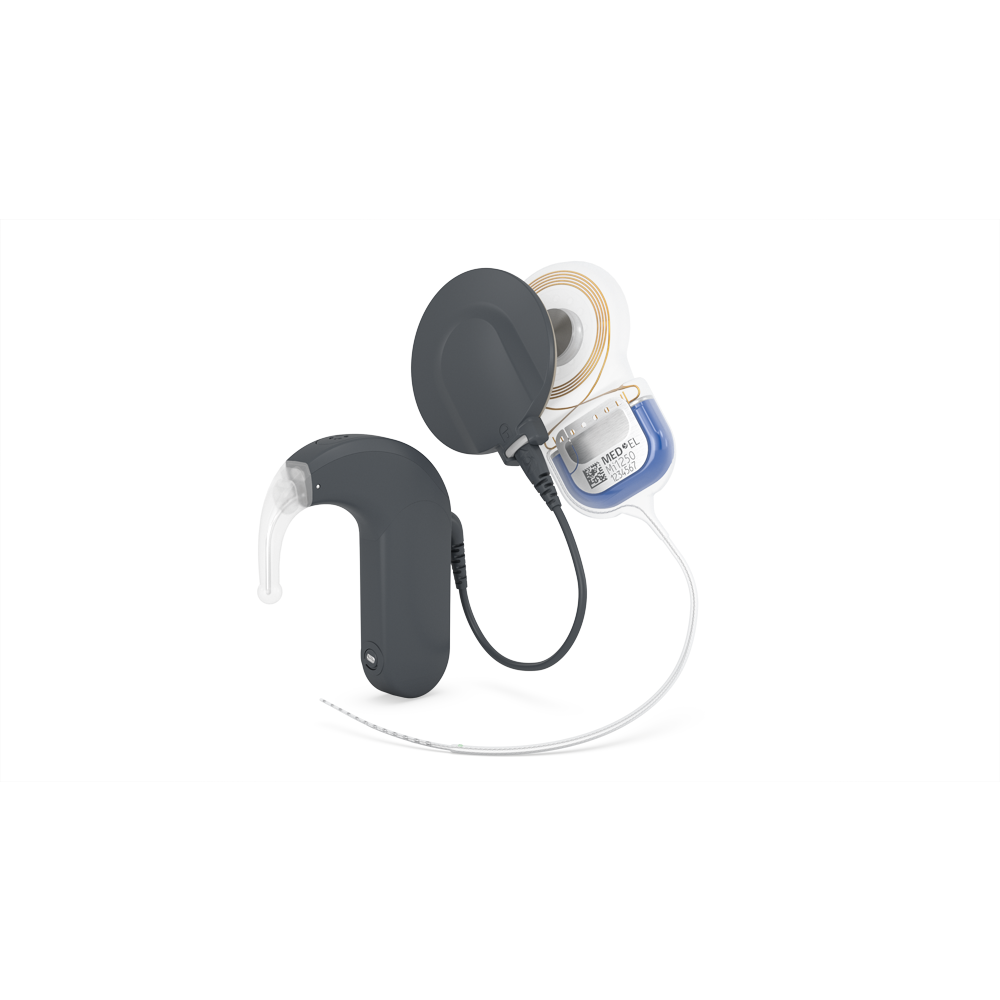
Cochlear Implants: While typically used for severe to profound sensorineural hearing loss originating in the cochlea, cochlear implants can be considered in specific retrocochlear cases if there is residual auditory nerve function. They bypass the damaged cochlea and directly stimulate the auditory nerve.
-
Auditory Brainstem Implants (ABIs): For individuals with complete absence of auditory nerve function (e.g., bilateral vestibular schwannomas), an ABI can be an option. This device bypasses both the cochlea and the auditory nerve, directly stimulating the cochlear nuclei in the brainstem. ABI surgery is complex and typically reserved for carefully selected patients.
-
The decision to pursue implantable hearing solutions is a significant one, requiring thorough evaluation of auditory nerve function, speech understanding capabilities, and overall health.
Ongoing Monitoring and Support
Regular follow-up with healthcare professionals is essential for monitoring the progression of the underlying condition and assessing the effectiveness of treatment. This includes ongoing audiological evaluations and, if necessary, further imaging.

When to Seek Professional Guidance
Prompt medical attention is crucial if you experience any of the following symptoms:
- Sudden hearing loss in one or both ears.
- New or worsening tinnitus, especially if it is unilateral.
- Persistent dizziness or balance problems.
- Difficulty understanding speech, particularly in noisy environments.
- Facial numbness or weakness.
- Any noticeable asymmetry in hearing between the ears.
Early detection and diagnosis of retrocochlear hearing loss can lead to more effective management and potentially prevent further progression of the condition.
Conclusion: Navigating the Complexities of Auditory Pathways
Retrocochlear hearing loss represents a significant challenge within the realm of audiology and neurology, affecting the critical pathways that carry sound from the inner ear to the brain. Its diverse causes, ranging from tumors to neurological disorders, necessitate a comprehensive and individualized approach to diagnosis and treatment. While the symptoms can be debilitating, impacting speech understanding, balance, and overall quality of life, advancements in diagnostic technology and therapeutic interventions offer hope. By understanding the nuances of this condition and recognizing its unique symptoms, individuals can proactively seek medical evaluation, leading to timely diagnosis and the implementation of appropriate management strategies to navigate the complex journey of auditory health.
Dr. Yi Ge, a Senior Manager of Medical Affairs at MED-EL, emphasizes the importance of a patient-centered approach, stating, "Understanding the intricate mechanisms of hearing loss, particularly those affecting the neural pathways, is vital for developing effective solutions. Our focus at MED-EL is on supporting individuals through comprehensive medical evaluation and exploring all potential avenues for hearing rehabilitation, ensuring that patient needs remain at the forefront of innovation."
The collaborative efforts of audiologists, otolaryngologists, neurotologists, and neurologists are instrumental in unraveling the complexities of retrocochlear hearing loss, offering a pathway towards improved auditory function and a better quality of life for those affected.