The Science of Thermal Stress
Understanding the impact of heat requires looking beyond the thermostat. A standard ambient temperature reading provides only a superficial understanding of the work environment. Occupational health experts emphasize that true heat exposure is a complex calculation involving four primary variables: air temperature, relative humidity, radiant heat from machinery or surfaces, and the metabolic intensity of the task being performed.
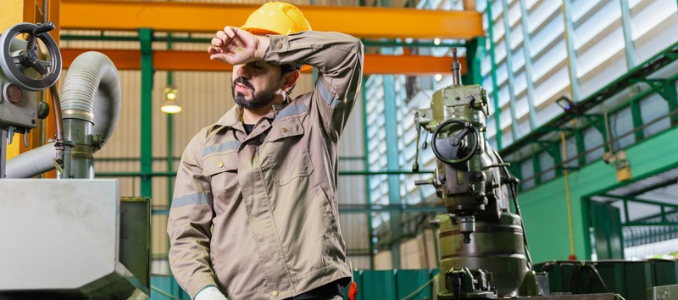
When humidity levels are high, the body’s primary cooling mechanism—evaporative sweat cooling—becomes ineffective. If the air is already saturated with moisture, sweat cannot evaporate, leaving the worker’s internal body temperature to rise unchecked. Radiant heat, often ignored in standard climate assessments, acts as an additional burden. Large industrial ovens, metal-processing equipment, and even uninsulated roofing materials act as radiators, transferring thermal energy directly to the worker regardless of the air temperature. When this is compounded by the necessity of heavy personal protective equipment (PPE), which traps heat against the skin, the risk of heat-related illness increases exponentially.
The Hidden Tax on Productivity
The "Heat Tax" is a term increasingly used by industrial psychologists and operations managers to describe the cumulative loss of output that does not appear on a financial ledger. This tax is paid through increased error rates, longer task completion times, and a higher turnover rate among staff members who find the working conditions unsustainable.
According to guidelines established by the National Institute for Occupational Safety and Health (NIOSH), the impact of heat on work-rest cycles is significant. For an employee performing heavy labor in standard clothing, the threshold for mandatory rest is surprisingly low. At 95°F (35°C), NIOSH suggests that workers may require a 15-minute rest period for every hour of activity. By the time the temperature reaches 100°F (37.8°C), that requirement shifts to a 30-minute work-to-rest ratio.

For a factory manager, this is a direct hit to operational capacity. A workforce operating under these constraints is, in effect, performing at 50% capacity, yet the overhead costs of the facility—lighting, machine operation, and facility maintenance—remain constant. When multiplied across a full shift, the lost man-hours represent a staggering financial burden that, while hidden, is inherently unsustainable.
Case Study: The Baton Rouge Fan Study
To quantify the impact of airflow on industrial performance, researchers recently conducted a study in Baton Rouge, Louisiana, focusing on two unconditioned manufacturing facilities. The study provided a controlled environment to observe 30 workers as they navigated their daily responsibilities under two distinct conditions: one with high-volume, low-speed fans running and one with them disabled.
The findings were unequivocal. The presence of artificial airflow significantly altered the workers’ perceived thermal comfort, effectively lowering the "feels-like" temperature by approximately 10 degrees. The implications for worker exertion were equally notable. With the fans active, workers reported lower physical strain and higher levels of effectiveness.

The data was reinforced by a post-study survey: 29 out of 30 participants completed the assessment, and 100% of those individuals identified the fans as a critical component of their working environment. Perhaps most tellingly, 79% of the workers reported a measurable increase in their perceived effectiveness when the fans were running. Conversely, the removal of the fans led to immediate feedback, with workers questioning the decision within minutes. This reinforces the anecdotal evidence common in industrial settings: workers are acutely sensitive to changes in their environment, and the removal of cooling systems is often interpreted as a decline in the quality of the working environment, leading to morale issues alongside physical discomfort.
Chronology of Workplace Heat Awareness
The transition from viewing heat as a "nuisance" to recognizing it as an "occupational hazard" has been gradual but accelerating.
- Early 2000s: Heat-related issues were largely treated as seasonal inconveniences, with management relying on ad-hoc solutions like breakroom water stations.
- 2010s: Increased focus on ESG (Environmental, Social, and Governance) standards led to the collection of more granular data regarding employee health and safety.
- 2017: NIOSH releases updated criteria for recommended standards in occupational exposure to heat and hot environments, formalizing the correlation between temperature, humidity, and necessary rest intervals.
- 2023-2026: Rising global mean temperatures and high-profile heatwaves have forced a shift in policy, with labor advocates pushing for stricter indoor heat exposure regulations, mirroring the standards already in place for outdoor workers in some jurisdictions.
Broader Implications and Management Strategies
The implications of ignoring heat extend beyond the factory floor. In an era where manufacturing firms are competing for skilled labor, the quality of the working environment has become a primary retention tool. Facilities that prioritize thermal comfort are increasingly viewed as "employers of choice," while those that ignore the issue face higher rates of absenteeism and workers’ compensation claims related to heat exhaustion or heat stroke.

To mitigate these risks, management must adopt a multi-tiered approach:
- Environmental Monitoring: Facilities should utilize Wet Bulb Globe Temperature (WBGT) monitors rather than standard thermometers. WBGT provides a comprehensive reading that accounts for humidity and radiant heat, offering a more accurate representation of the thermal load.
- Engineering Controls: Beyond fans, firms should consider insulation of hot equipment, the installation of reflective barriers to reduce radiant heat, and the optimization of natural ventilation pathways.
- Procedural Adjustments: Implementing flexible shift start times to avoid the peak heat of the afternoon and formalizing mandatory hydration and rest protocols can preserve the long-term health of the workforce.
- Data-Driven Scheduling: By analyzing production data against temperature logs, management can identify the "tipping point" at which productivity begins to decline, allowing for proactive, rather than reactive, scheduling adjustments.
Conclusion: The Cost of Inaction
The evidence is clear: heat is a tangible variable in the manufacturing equation. It influences the quality of the finished product, the safety of the staff, and the bottom-line profitability of the enterprise. While the initial capital expenditure for cooling, monitoring, and structural improvements may seem daunting, it pales in comparison to the hidden costs of reduced output, potential regulatory fines, and the loss of experienced personnel.
As the industrial sector continues to navigate a changing climate, the "Heat Tax" can no longer be dismissed as an unavoidable expense. By applying rigorous scientific monitoring and prioritizing the thermal comfort of the workforce, manufacturers can mitigate the risks, improve operational efficiency, and secure a more resilient future. The transition to a "cool" factory floor is, ultimately, a transition to a more profitable and human-centric industrial model.