
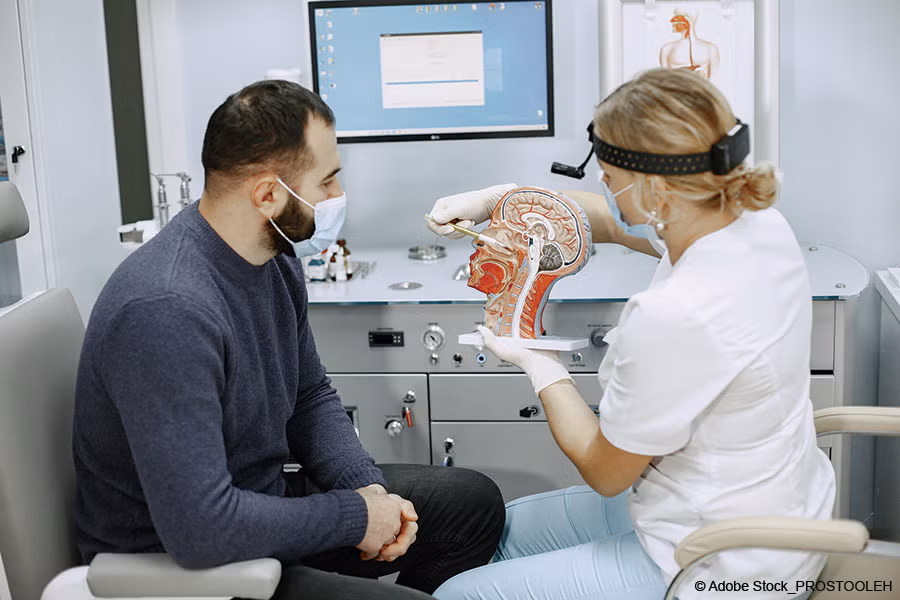
The Eustachian tube, a narrow passageway connecting the middle ear to the nasopharynx, plays a vital role in maintaining middle ear pressure and draining fluid. Dysfunction arises when this tube fails to open or close properly. Obstructive ETD, the more prevalent form, occurs when the tube does not open sufficiently, leading to negative middle ear pressure and a sensation of fullness or blockage. A temporary manifestation of this is baro-challenge, triggered by rapid changes in atmospheric pressure, such as during air travel or scuba diving. Conversely, patulous ETD is characterized by a Eustachian tube that remains abnormally open, allowing for an unintended flow of air and sound into the middle ear.
Unpacking the Nuances of Eustachian Tube Dysfunction
The 2026 COSM served as a crucial platform for leading otolaryngologists to disseminate practical strategies for managing ETD. Moderated by Tina C. T. Huang, MD, MS, a neurotologist and associate professor at the University of Minnesota Medical School, the panel featured insights from Dennis S. Poe, MD, PhD, a distinguished professor at Boston Children’s Hospital and Harvard Medical School specializing in otology/neurotology and skull base surgery. Dr. Poe, who leads the International Eustachian Tube Study Group and is a principal investigator for trials on balloon Eustachian tuboplasty, highlighted the underrecognized frequency of patulous ETD and the imperative to distinguish it from obstructive ETD.
The panel also included presentations on adult obstructive ETD, with Seilesh C. Babu, MD, an assistant professor at Michigan State University, providing data on the indications and evidence for balloon dilation. Judith E. C. Lieu, MD, MSPH, a professor at Washington University Medicine, addressed pediatric ETD, raising questions about the current utility and evidence base for balloon dilation in younger patients, noting the lack of clear criteria for candidacy.
Patulous ETD: More Prevalent Than Previously Believed
A significant takeaway from the COSM discussions was the critical importance of differentiating between obstructive and patulous ETD in adults. While obstructive ETD is a familiar diagnosis, patulous ETD is proving to be far more common than textbooks suggest, according to Dr. Poe. "Textbooks say that patulous ETD is rare, but it is not," Dr. Poe stated. "It is very common, but people don’t readily recognize it."
The hallmark symptom of patulous ETD is autophony, a condition where individuals can hear their own voice, breathing, or bodily sounds amplified within their ears. Dr. Poe vividly described this as akin to speaking through a rubber hose inserted directly into the ear. While often transient and associated with dehydration or exertion – earning it the colloquial term "runner’s ear" – chronic patulous ETD can be profoundly distressing. Patients may describe the sensation as "Darth Vader breathing in their ear," significantly impacting their quality of life, especially for those whose professions rely on vocal communication, such as teachers, singers, and performers.

The divergence in treatment strategies between obstructive and patulous ETD makes accurate diagnosis paramount. Misdiagnosing patulous ETD as obstructive and proceeding with balloon dilation, a treatment for the latter, can inadvertently worsen the patulous condition. Distinguishing between the two relies on a thorough patient history and objective clinical findings.
Recognizing the Subtle Signs of Patulous ETD
While obstructive ETD symptoms are well-documented, recognizing patulous ETD often requires a heightened awareness among clinicians. Patients with patulous ETD commonly report a sensation of ear "blockage" and often use the term "muffled" to describe their hearing, rather than a true hearing loss. Audiograms typically reveal normal hearing, with the muffled sensation attributed to altered middle ear resonance caused by the excess airflow through the abnormally open Eustachian tube.
Physical examination may reveal subtle movements of the tympanic membrane during active symptoms, which can be amplified by instructing the patient to breathe through the ipsilateral nostril – a maneuver Dr. Poe refers to as "ipsilateral nasal breathing." Tympanometry, particularly in the reflux decay mode, offers a more sensitive method to detect pressure changes associated with an open Eustachian tube. Dr. Poe described this as "our patulous test. We look at the Eustachian tube and can see the valve not closing." While endoscopic views of the Eustachian tube orifice are limited, observing tympanic membrane excursions with respiration or a positive tympanometric test are key diagnostic indicators.
A common pathway to patulous ETD, Dr. Poe explained, begins with chronic inflammation leading to obstructive ETD. Over time, this inflammation can cause damage to the mucosal lining of the Eustachian tube, leading to atrophy of secretory glands. This tissue degeneration can result in the valve becoming permanently stuck in an open position. "Patients keep saying, ‘I have a blocked ear,’ so the otolaryngologist is thinking they still have obstructive ETD, without questioning whether it may have turned patulous," Dr. Poe observed. "It is a very common condition, and we miss it all the time."
Patients with patulous ETD often discover that forceful sniffing can temporarily alleviate their symptoms. This sniffing action generates negative pressure, momentarily drawing the Eustachian tube valve shut. Dr. Poe identified frequent sniffing as a significant "red flag" for patulous ETD. Previously termed "habitual sniffing," this behavior is often an unconscious attempt by patients to manage their symptoms. When questioned, patients frequently report that sniffing "unblocks" their ear, a testament to the misleading terminology used to describe the sensation. This behavior can also lead to middle ear fluid, further complicating the diagnostic picture and potentially leading to a misdiagnosis of obstructive ETD.
To mitigate misdiagnosis, Dr. Poe strongly advises asking all patients presenting with blocked ear symptoms about autophony, frequent sniffing, and unusual ear popping or clicking. He also noted a significant association between chronic allergic rhinitis and patulous ETD, urging heightened suspicion in patients with a history of allergies.
Navigating Treatment for Obstructive and Patulous ETD in Adults
The therapeutic approach to ETD hinges on identifying the underlying cause, which a detailed patient history is crucial for uncovering. Table 2, presented at the meeting, outlines key comorbidities associated with both obstructive and patulous ETD and suggests initial treatment strategies.

For obstructive ETD, first-line management typically involves medical therapy targeting any suspected underlying etiology. This can include antihistamines, nasal steroid sprays, and reflux management. Surgical intervention may be considered for persistent and significant adenoid or tubal tonsil hypertrophy. Procedures such as endoscopic adenoidectomy, carefully performed to preserve the torus tubarius and fossa of Rosenmüller, and trimming of tubal tonsil tissue, while avoiding damage to cartilage and the tubal orifice, are options.
In cases of patulous ETD, the initial step focuses on ensuring adequate hydration, with a daily intake of two liters of water often recommended. Medications that may contribute to mucosal drying, such as certain antihistamines, nasal steroid sprays, and decongestants, should be minimized or discontinued if medically feasible. Chronic allergic rhinitis is a frequent comorbidity, and management often involves nasal saline irrigations, cromolyn sodium, environmental controls, allergy testing, and immunotherapy. "These measures typically get the allergy under control, and patients get better," Dr. Poe remarked.
The panel also discussed the impact of diuretics, noting their potential to exacerbate patulous ETD, particularly in women using birth control pills containing spironolactone. Weight loss, whether through GLP-1 agents, bariatric surgery, or other means, is increasingly associated with patulous ETD, though Dr. Poe cautioned against advising weight gain unless medically indicated, as it rarely resolves the condition.
Topical nasal drops can be highly effective in managing patulous ETD symptoms. Dr. Poe described an optimal application technique: lying supine with the head tilted 15-30 degrees, administering drops into one nostril, and then turning to the same side. A subtle twinge in the ipsilateral ear signals that the drops have reached the Eustachian tube orifice. These drops, often saline or hypertonic saline, aim to reduce airflow through the Eustachian tube valve, thereby drying the mucosa and potentially allowing the valve to regain competency. In some cases, lemon juice mixed with water has also proven effective as an irritant. Consistent daily use for several weeks can yield lasting benefits.
For patients whose patulous ETD is linked to temporomandibular joint dysfunction (TMD), referral to a dentist specializing in oral medicine is recommended. These specialists can address issues like jaw clenching or teeth grinding, which can tense the medial pterygoid muscle, an accessory dilator of the Eustachian tube. Dr. Poe emphasized the need for otolaryngologists to be more familiar with examining these muscles to facilitate appropriate referrals.
If conservative measures prove insufficient, surgical interventions, including paper patches or tympanostomy tubes to add mass to the tympanic membrane, may be considered, particularly for pediatric patients. Off-label procedures involving insertion of shims, fillers, or cartilage to augment the Eustachian tube walls are also performed.
Balloon Dilation: Defining the Ideal Candidate
While balloon dilation is contraindicated in patulous ETD, its efficacy in selected adults with obstructive ETD is supported by evidence. Dr. Babu’s research, presented at COSM, outlines the criteria for optimal candidates for this procedure. These include a normal otologic examination, a normal tympanogram, and the presence of aural fullness, with or without hearing loss. Crucially, these findings should be coupled with a failure to respond to appropriate medical therapy.

Red flags that contraindicate balloon dilation include symptoms of patulous ETD, nasopharyngeal masses, active inflammatory diseases affecting the Eustachian tube or nasopharynx, and craniofacial syndromes. Dr. Babu reiterated the critical importance of screening for patulous ETD, noting that approximately 7% of patients may develop patulous symptoms post-dilation, though most cases are mild and self-limiting. Factors such as repeat dilations and severe pre-operative inflammation may increase this risk.
Poor candidates for balloon dilation encompass individuals with normal examinations and tympanograms, and those presenting with nonspecific fullness. Conditions such as TMJ dysfunction, hydrops, superior canal dehiscence, migraine, or existing patulous physiology are also indicative of poor candidacy.
Evidence from four clinical trials, with follow-up periods ranging from one to nearly 30 months, supports the use of balloon dilation for appropriately selected adults. These studies consistently demonstrated improvements in quality of life, as measured by the Eustachian Tube Dysfunction Questionnaire (ETDQ-7), with patient satisfaction rates as high as 83% in longer-term follow-ups. Objective improvements in tympanometry and tympanic membrane function have also been reported. Systematic reviews, while acknowledging limitations such as small sample sizes and heterogeneous patient populations, generally support the procedure’s efficacy.
Serious adverse events associated with balloon dilation are rare in major adult trials, with minor and transient complications being more common. Reported rare complications include subcutaneous/cervicofacial emphysema and pneumomediastinum.
For otolaryngologists seeking to incorporate balloon dilation into their practice, meticulous documentation and accurate coding are essential for reimbursement. Payers often require detailed information regarding symptom duration and severity, objective findings, the history of directed medical therapy and its outcomes, the exclusion of differential diagnoses, and the response to prior tympanostomy tubes. The American Academy of Otolaryngology–Head and Neck Surgery (AAO-HNS) provides coding guidance for these procedures.
Pediatric Balloon Dilation: A Developing Landscape
The application of balloon dilation in pediatric patients remains an area requiring further investigation. Dr. Lieu emphasized the limited pediatric data and significant differences in the etiology of ETD in children compared to adults. "Trying to determine the standard criteria for when to consider balloon dilation in kids is still not determined, and a lot more work is needed to see if this will be a positive and effective treatment for kids," she stated.
In young children, ETD is frequently linked to recurrent upper respiratory infections, differing from the chronic obstructive or patulous forms seen in adults. Pediatric ETD is also more multifactorial, often improving with age as anatomical and immunological development progresses. The notion that a single balloon dilation can permanently resolve ear infections or fluid accumulation is considered overly simplistic by many in the field.

Challenges in pediatric balloon dilation include the necessity of anesthesia, which increases procedure time and cost compared to simple tympanostomy tube insertion. The expense of nasal endoscopy and the single-use balloon dilator, which can cost thousands of dollars, also present significant financial considerations.
Dr. Lieu reviewed five studies involving pediatric patients, highlighting their limitations, including small sample sizes and dissimilar comparison groups. The data, she concluded, does not yet conclusively support balloon dilation as a definitive treatment for children. Key unanswered questions include whether children benefit more from balloon dilation alone or in conjunction with ventilation tubes, how it compares to longer-term tube placement, and whether the cost-effectiveness justifies the expense when compared to traditional tube insertion, especially given the need for anesthesia.
To address the evidence gap, Dr. Lieu is collaborating with pediatric otolaryngologists to validate a quality-of-life survey specifically for children, acknowledging the current absence of such a tool. Currently, many clinicians consider balloon dilation for pediatric patients only after exhausting more traditional methods, such as multiple sets of ear tubes and adenoidectomy.
While the FDA expanded its approval for Eustachian tube balloon dilation to include children and adolescents aged 8 to 17 in 2023, panelists stressed that this expanded availability should not be misconstrued as a universal solution. In adults, precise diagnosis and documentation are paramount. In children, patient selection remains a significant challenge, and the evidence base continues to evolve, underscoring the need for continued research and careful clinical judgment.