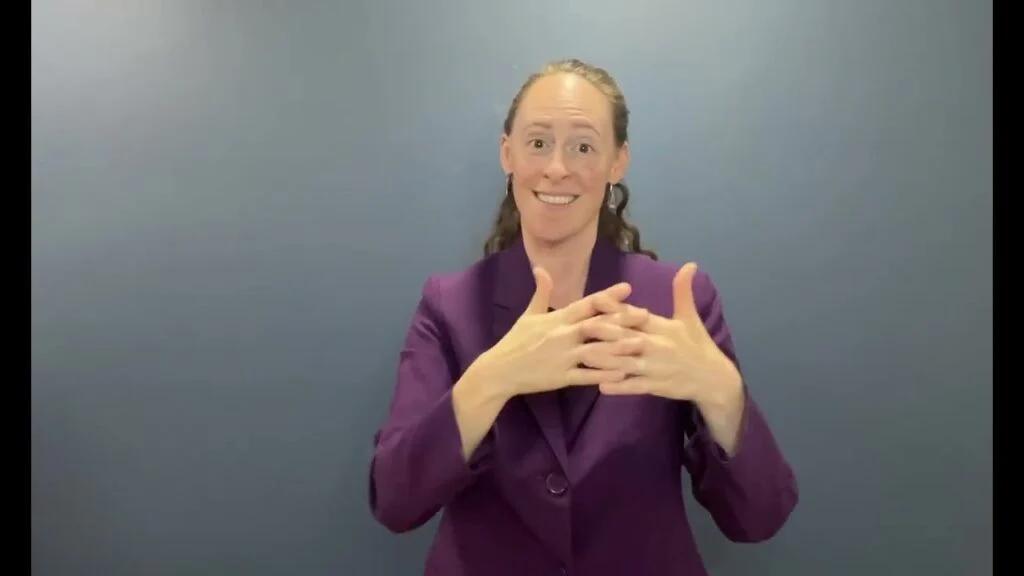
This upcoming hearing follows a November 2025 ruling by Judge Amir Ali, which ordered the administration to restore ASL services that had been discontinued earlier that year. The White House’s decision to challenge this injunction brings the matter to one of the most influential appellate courts in the country, setting the stage for a judicial review of how the Rehabilitation Act and constitutional equal protection principles apply to real-time government information dissemination in the digital age.
Chronology of the Conflict
The current litigation is rooted in a shift in White House policy that occurred in January 2025, when the administration abruptly ended the practice of providing ASL interpreters during official press briefings. This policy change drew immediate criticism from disability rights advocates, who argued that the lack of visual language access effectively silenced Deaf and hard of hearing citizens during critical moments of national discourse.
On May 28, 2025, the NAD and Derrick Ford initiated legal action, filing a lawsuit against the White House. The plaintiffs contended that the omission of ASL interpretation violated the rights of Deaf individuals to participate in the democratic process and receive vital information simultaneously with their hearing peers.
The legal foundation for their case rests heavily on the precedent established in the 2020 case National Association of the Deaf v. Trump. In that instance, a federal court ruled that the White House was required to provide ASL interpretation during COVID-19-related press briefings, recognizing that in a crisis, delayed access to information is, for all practical purposes, a denial of information. Judge Amir Ali’s November 2025 ruling reinforced this precedent, finding that the requirement for accessibility is not limited to emergency health scenarios but extends to the standard operations of the executive branch’s communications apparatus.
The Scope of the Accessibility Gap
The removal of ASL interpreters is not merely a matter of convenience; it represents a significant barrier to civic engagement. According to data from the National Institute on Deafness and Other Communication Disorders (NIDCD), approximately 15 percent of American adults report some degree of hearing loss. For those whose primary language is American Sign Language, English-language closed captioning—often touted as a technological alternative—is frequently inadequate.
Technical limitations inherent in automated captioning services, such as latency, inaccuracies in phonetic translation, and the failure to capture the nuance of tone and emotion, often leave Deaf viewers with incomplete or misinterpreted information. ASL interpretation provides a linguistic bridge that ensures equivalent access, allowing for the transmission of intent, urgency, and context that text-based systems often struggle to replicate in real-time environments.
Organizational Perspectives and Legal Stance
Nicholas Kiego, Chief Executive Officer of the National Association of the Deaf, has characterized the litigation as a fundamental civil rights issue. "This case is about whether Deaf and hard of hearing Americans can receive information from the White House at the same time as everyone else," Kiego stated. The organization views the government’s appeal not just as a procedural disagreement, but as an attempt to erode established standards for government transparency and inclusivity.
The NAD Law and Advocacy Center (LAC) has long operated as a primary force in impact litigation, pursuing cases that aim to address systemic discrimination. The organization’s legal strategy emphasizes that linguistic rights are human rights. By forcing this issue into the appellate courts, the NAD seeks to solidify a permanent expectation that federal entities must adapt their communication methods to accommodate the needs of a diverse citizenry, rather than expecting citizens to adapt to a non-inclusive status quo.
Implications for Federal Communication Policy
The outcome of the October 6, 2026, hearing will have broad implications for how federal agencies handle accessibility. If the D.C. Circuit upholds Judge Ali’s ruling, it will set a binding precedent that will likely compel all executive departments—not just the White House—to standardize the inclusion of ASL interpreters for public-facing briefings. Such a decision would solidify the legal interpretation of "effective communication" under the Rehabilitation Act, potentially forcing a massive overhaul of how government agencies manage public relations and digital accessibility.
Conversely, a ruling in favor of the White House could introduce ambiguity into the requirements for federal accessibility. It might allow for the argument that administrative agencies possess the discretion to choose between various "reasonable" methods of accommodation, even if those methods provide unequal access to information. This would likely trigger further litigation across various federal agencies, as advocates would be forced to challenge accessibility standards on a case-by-case basis.
The Role of Public Oversight
The upcoming oral argument is open to the public, a fact that the NAD has highlighted as an opportunity for the community to witness the judicial process firsthand. The association has encouraged supporters and allies to attend, while also reminding the public of the logistical hurdles inherent in entering federal courthouses, including rigorous security screenings.
The public nature of the proceeding underscores the transparency that the plaintiffs are advocating for. By bringing this debate into the courtroom, the participants are highlighting that the accessibility of the White House is not a discretionary benefit bestowed by the executive branch, but a necessary component of a representative government.
Historical Context of the NAD
Founded in 1880, the National Association of the Deaf has spent over 140 years fighting to protect the rights of the Deaf and hard of hearing community. From its inception, the organization has championed the preservation of American Sign Language as a core component of Deaf culture and identity. The current litigation is a modern extension of the same fight for linguistic autonomy and civil equality that defined the organization’s early history.
The LAC’s involvement in this case is funded through membership dues and charitable contributions. As the legal battle shifts to the appellate level, the costs of high-stakes litigation are significant. The NAD continues to solicit support from the public, emphasizing that the protection of civil rights requires ongoing vigilance and resource allocation.
Moving Forward
As the October 6 date approaches, both legal teams are preparing their final arguments. The government is expected to focus on the scope of executive authority and the feasibility of maintaining constant ASL services, while the NAD will emphasize the constitutional necessity of equal access to the democratic process.
Regardless of the court’s decision, the case has already succeeded in keeping the issue of accessibility at the forefront of the national conversation. It serves as a reminder that the evolution of technology, while promising, does not replace the necessity of human-led, culturally competent, and linguistically accurate communication. The final judgment will serve as a bellwether for the future of accessibility standards in the United States, determining whether the executive branch’s front door is truly open to all citizens, regardless of their hearing status.
For those interested in the ongoing proceedings, the NAD Law and Advocacy Center remains the primary source for updates on the litigation. Media inquiries and requests for information regarding the legal filings can be directed to the NAD’s legal team, which continues to manage the case with a focus on establishing a lasting precedent for the Deaf and hard of hearing community.