The Evolution of Construction Safety Protocols
The traditional approach to construction safety—often characterized by manual inspections, paper-based incident reporting, and static safety briefings—has long struggled to keep pace with the dynamic nature of modern jobsites. The current report marks a significant departure from these legacy practices. Over the past six years, the ABC report series has documented a steady climb in the adoption of “connected jobsite” systems.

These systems create a digital feedback loop. For instance, drones are no longer just tools for aerial photography; they are now programmed for automated perimeter surveillance and structural integrity scans that would be too dangerous or time-consuming for human inspectors to perform regularly. Furthermore, the integration of AI-driven risk assessment tools allows firms to identify patterns in near-miss reports that were previously invisible to human supervisors. By aggregating these data points, construction managers can now predict high-risk windows, such as the period following a shift change or during specific phases of heavy machinery operation.
Chronology of Technological Integration
The trajectory of this safety revolution can be traced through the annual findings of the ABC Tech Alliance.
- 2020-2021: The industry saw a surge in contactless monitoring solutions necessitated by the global pandemic, which inadvertently laid the groundwork for remote site monitoring.
- 2022: The focus shifted toward wearable devices, particularly those tracking movement patterns to prevent repetitive strain injuries.
- 2023: Artificial intelligence became a mainstream discussion, with firms beginning to experiment with software that analyzes video feeds to detect the absence of personal protective equipment (PPE).
- 2024-2025: The current iteration of the report highlights the maturation of environmental sensing, focusing on real-time heat exposure management and fatigue monitoring, which have become critical as climate change increases the frequency of extreme weather events.
Data-Driven Insights: Addressing Environmental Hazards
One of the most pressing concerns addressed in the sixth annual report is the management of heat-related illnesses. As the average global temperature continues to rise, construction workers—who perform strenuous labor in exposed environments—are at an elevated risk of heat stroke and exhaustion. The report details how smart-sensor technology is now being deployed to mitigate these risks.

Sensors placed on equipment and worn by personnel monitor core body temperature and ambient humidity levels. When these metrics cross established safety thresholds, the system triggers automated alerts to both the worker and the site supervisor. This real-time intervention is a significant improvement over the standard "buddy system," which relies on human observation and is susceptible to fatigue-induced oversight. According to occupational health data cited within the report’s case studies, firms utilizing these biometric monitoring systems have reported a measurable decrease in heat-related medical incidents, demonstrating a direct correlation between hardware implementation and workforce wellness.
The Human Element: Fatigue and Well-being
Beyond environmental hazards, the report places a renewed emphasis on worker fatigue. Construction remains one of the most dangerous sectors, with Bureau of Labor Statistics (BLS) data consistently ranking it among the highest for work-related injuries and fatalities. Fatigue is a primary contributor to these figures; a tired worker is less likely to recognize a hazard or adhere to complex safety protocols.
The case studies provided by ABC members reveal that companies are experimenting with software that tracks shift patterns against performance metrics. By analyzing how fatigue impacts hand-tool precision and reaction times, firms are better able to optimize scheduling. This is not merely an operational efficiency measure; it is a fundamental safety strategy. When workers are properly rested and alerted to their own physiological limits, the likelihood of mechanical incidents and human error decreases substantially.

Collaboration and Strategic Partnerships
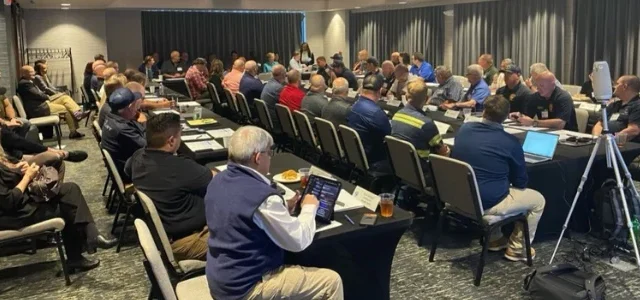
The development of this report was bolstered by a strategic partnership with Milwaukee Tool, a collaboration that underscores the industry’s commitment to bridging the gap between tool manufacturing and safety engineering. The "Tech Alliance" program serves as a collaborative hub where contractors, technology providers, and safety experts exchange information on what works in the field.
Industry analysts suggest that this collaborative model is the most effective way to drive innovation in a sector that is traditionally risk-averse. By sharing case studies, smaller construction firms are able to bypass the "trial and error" phase of adopting new technology, instead opting for solutions that have been vetted by peers in similar working environments. This ecosystem of shared knowledge is effectively shortening the adoption cycle for life-saving technologies.
Fact-Based Analysis: Implications for the Industry
The shift toward technology-managed safety carries profound implications for the future of construction. First, the cost of entry is falling. As sensors and AI software become more accessible, the barrier to adoption is no longer just financial; it is cultural. The report suggests that the most successful firms are those that integrate these tools into their organizational culture rather than treating them as external gadgets.

Second, the liability landscape is changing. With better data comes greater accountability. Firms that can document their proactive use of safety technology are increasingly favored by insurers and project owners. The ability to provide an audit trail of safety compliance—showing that a site was monitored for heat, that workers were equipped with functional sensors, and that AI-flagged risks were addressed within minutes—provides a significant competitive advantage in the bidding process.
However, the rapid influx of data also presents a challenge: information overload. The report cautions that safety managers must not become overly reliant on automated systems. Technology should be viewed as a support mechanism for human judgment, not a replacement for it. The most successful safety programs are those that combine digital alerts with strong interpersonal communication and consistent safety training.
Looking Toward the Future
As the construction industry approaches 2026, the integration of technology into the jobsite is expected to accelerate. The sixth annual report serves as a benchmark for where the industry stands and a roadmap for where it is headed. Key areas for future development include:

- Interoperability: Ensuring that drones, wearables, and site-management software can communicate seamlessly.
- Edge Computing: Processing safety data directly on the jobsite to reduce latency in emergency alerts.
- Predictive Analytics: Moving from monitoring current conditions to forecasting hazards before they manifest based on historical site data.
The Associated Builders and Contractors’ report underscores a critical realization: in an era of increasing complexity and environmental volatility, the traditional "hard hat and clipboard" approach is insufficient. The construction sector is evolving into a tech-forward industry where the most valuable asset on the jobsite—the worker—is protected by the full weight of modern innovation. Whether through the lens of a drone camera or the sensor on a wristband, the objective remains clear: to ensure that every worker returns home safely, regardless of the challenges posed by the project or the environment.
By standardizing these safety technologies and fostering a culture of transparency, the construction industry is not only protecting its workforce but also ensuring the long-term sustainability of the entire sector. As these technologies become more integrated into the daily workflows of contractors, they will likely become the industry standard, transforming what was once considered an "extra" safety feature into a fundamental requirement for responsible project management. The sixth annual report provides the evidence that this transition is already well underway, setting a new benchmark for safety excellence in the built environment.