The Urgency of the Mission: Addressing SIFs
The decision to formalize this alliance comes at a critical juncture for industrial and occupational safety. While overall injury rates in some sectors have seen marginal improvements over the decades, the prevalence of incidents resulting in permanent disability or death has remained stubbornly high. The National Serious Injury and Fatality Prevention Alliance is tasked with producing standardized training materials, disseminating best practices, and developing frameworks that allow safety professionals to distinguish between minor "near-misses" and the specific precursors that lead to catastrophic outcomes.
Industry experts emphasize that a minor trip-and-fall and a high-voltage electrical accident are governed by different safety mechanics. The alliance intends to provide the granular guidance necessary to help employers recognize that while the frequency of minor accidents may be higher, the severity of certain specific hazards requires a vastly different management approach.
Chronology of Collaborative Safety
The relationship between the NSC and OSHA is rooted in decades of regulatory cooperation. However, the formation of this specific alliance represents a pivot toward a more specialized, data-driven methodology.
- 1970: The Occupational Safety and Health Act is signed into law, establishing OSHA and fostering a national dialogue on worker safety that the NSC has supported since its founding in 1913.
- 2010s: The safety industry begins a measurable shift in focus, moving away from "Total Recordable Incident Rates" (TRIR) as the sole metric for safety, acknowledging that low incident rates do not necessarily correlate with the absence of fatal hazards.
- 2023-2024: Industry research groups, including the CSRA at the University of Colorado Boulder, publish findings suggesting that organizations often fail to see the "pre-cursor" events that precede a fatality.
- 2026 (October): The formal launch of the National Serious Injury and Fatality Prevention Alliance is announced, bringing together the nation’s leading safety advocacy organizations to codify the prevention of SIFs.
Data-Driven Perspectives on Workplace Safety
The necessity of this alliance is underscored by sobering statistics provided by the Bureau of Labor Statistics (BLS). According to recent annual census data on fatal occupational injuries, thousands of American workers lose their lives each year due to preventable causes. These include transportation incidents, falls, slips, and trips, as well as contact with objects and equipment.

Analysis from the NSC suggests that for every fatality, there are hundreds of SIF-potential incidents that go largely ignored because they do not result in significant time away from work. By ignoring these "high-potential" events, companies inadvertently create a blind spot in their safety management systems. The alliance’s primary goal is to reorient corporate safety culture to treat these high-potential events with the same rigor and investigative depth as a fatality, even when no injury occurs.
The inclusion of the AIHA and ASSP adds a layer of technical expertise that ensures the guidance provided is not merely theoretical but grounded in industrial hygiene and engineering controls. The University of Colorado Boulder’s CSRA brings an academic rigor to the table, ensuring that the methodologies for risk identification are supported by behavioral science and data analytics.
Official Responses and Strategic Intent
While the alliance is in its infancy, industry leaders have expressed strong support for the initiative. Advocates from the ASSP have noted that the partnership creates a unique "safety ecosystem" where regulatory requirements from OSHA are synthesized with the practical, on-the-ground expertise of the NSC.

"This is not just about compliance; it is about the evolution of safety culture," noted a spokesperson close to the partnership. The consensus among participants is that the traditional approach to safety—often centered on meeting minimum OSHA standards—is insufficient for modern, complex industrial environments. The alliance intends to develop "bridge" resources that explain how to interpret OSHA regulations in the context of advanced risk management, thereby making compliance a byproduct of a robust safety culture rather than the end goal.
The Technical Framework: Moving Beyond Compliance
A core pillar of the alliance’s strategy is the promotion of "Safety II" principles, which focus on understanding why work goes right rather than just why it goes wrong. By analyzing the conditions that exist during successful, hazard-free operations, the alliance hopes to help employers identify the "precursors" that, when present, significantly elevate the probability of a fatality.
The training materials expected to emerge from this collaboration will likely focus on:

- Hazard Identification: Moving beyond simple checklists to identify "energy sources" (kinetic, electrical, thermal, chemical) that could result in a fatal event.
- Control Hierarchy: Prioritizing engineering controls and administrative changes that physically remove workers from harm’s way, rather than relying on Personal Protective Equipment (PPE) as the first line of defense.
- Leadership Engagement: Equipping middle management and frontline supervisors with the tools to recognize and report SIF-potential hazards without fear of reprisal.
Broader Implications for the Workforce
The long-term impact of this alliance could be significant for the American labor market. By standardizing the language and methodology used to prevent SIFs, the alliance creates a universal benchmark for safety. For employers, this could translate to lower insurance premiums, increased productivity through reduced downtime, and improved employee retention.
For the average worker, the implication is a safer workplace where the focus is shifted toward identifying systemic risks before they cause harm. If successful, this initiative will provide the safety tools necessary to navigate the increasingly complex challenges of modern industrial operations, such as the integration of automated systems and the continued prevalence of legacy equipment.
Analysis: A Shift in Safety Philosophy
The alliance signals a fundamental shift in the OSHA-NSC dynamic. Historically, the relationship has been one of regulation and advocacy. This new structure represents a move toward active partnership in the creation of safety intelligence. By institutionalizing the prevention of serious injuries and fatalities, the alliance is acknowledging that "safety" is not a static state of being, but a continuous process of hazard identification and risk management.
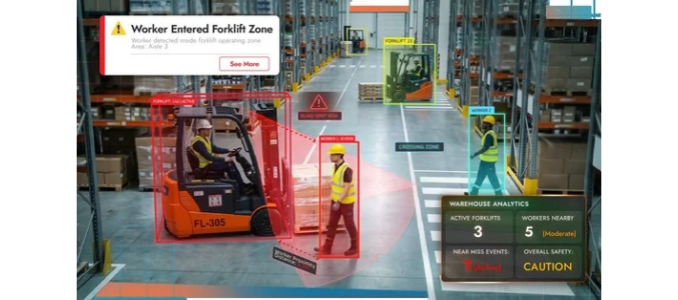
As the alliance begins its work, the challenge will be to ensure that these resources reach small and medium-sized enterprises (SMEs), which often lack the dedicated safety departments found in larger corporations. The involvement of the NSC—which has a broad reach into the small business community—will be vital in ensuring that the guidance is scalable and accessible to all employers, regardless of size or sector.
Conclusion
The National Serious Injury and Fatality Prevention Alliance marks a significant milestone in the ongoing efforts to make the American workplace safer. By uniting the regulatory authority of OSHA with the research-backed strategies of the NSC, AIHA, ASSP, and the University of Colorado Boulder, the initiative establishes a comprehensive, evidence-based approach to eliminating the most devastating workplace incidents. As the alliance begins its work, its impact will be measured not only by the reduction of SIFs but by the cultural shift it inspires within the workforce—a shift toward proactive, risk-aware, and data-informed safety management.
The focus remains clear: the recognition of dangerous conditions is the first step toward eradication. With this collaborative framework now in place, the path forward involves a concerted effort to translate complex safety research into actionable, everyday protocols that can be implemented by employers across the nation, ultimately ensuring that every worker returns home safely at the end of their shift. As the materials and guidance are rolled out, they will serve as the new gold standard for organizations striving to achieve excellence in occupational health and safety.