
The completion of recruitment for these pivotal trials represents a crucial juncture in the rigorous clinical evaluation of Cochlear’s next-generation hearing solution. These studies collectively involve 92 adult participants, contributing to a broader research program that has seen more than 100 individuals receive Cochlear’s fully implantable hearing technology since 2005, spanning three distinct generations of investigational devices. This extensive longitudinal research is designed to meticulously gather evidence regarding the safety, performance, and practical real-world utility of the fully implantable system, while also identifying the features and outcomes most valued by recipients, clinicians, and healthcare systems.
The Vision of Invisible Hearing: A Paradigm Shift in Cochlear Implants
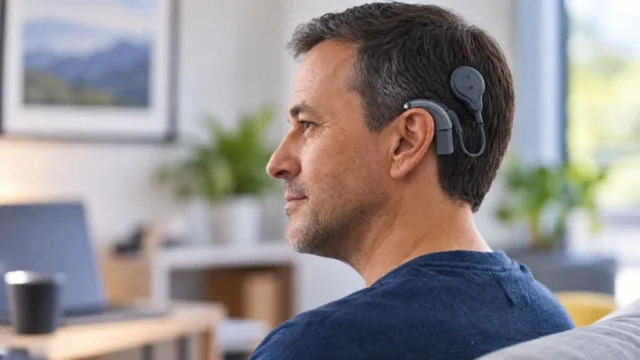
For decades, cochlear implants have revolutionized the lives of individuals with severe to profound hearing loss, offering access to sound where conventional hearing aids fall short. However, existing cochlear implant systems typically involve an internal implant coupled with an external sound processor worn behind the ear, which houses the microphone, battery, and digital signal processing unit. While remarkably effective, these external components can present challenges related to aesthetics, comfort, battery management, and limitations during activities like swimming or sleeping.
The pursuit of a fully implantable cochlear implant system represents the pinnacle of hearing technology innovation, promising to remove these external elements entirely. Such a device would operate seamlessly and invisibly beneath the skin, offering unparalleled convenience, discretion, and an enhanced quality of life for recipients. This ambitious endeavor requires overcoming substantial engineering and biological challenges, including developing miniaturized, biocompatible components, long-lasting internal power sources, and sophisticated internal microphones capable of capturing sound effectively without external air conduction. Cochlear’s extensive research and development in this area underscore its commitment to pushing the boundaries of what is possible in hearing restoration.
A Journey Spanning Decades: Cochlear’s R&D Commitment
Cochlear’s journey toward fully implantable technology is rooted in a deep legacy of innovation, stretching back to its founding in 1981. The company, which has already provided hearing solutions to over 800,000 people in more than 180 countries, reports investing more than A$3 billion in research and development to date. This substantial commitment has been instrumental in the continuous evolution of cochlear implant technology, from the earliest single-channel devices to today’s sophisticated multi-channel systems.
The current fully implantable research program itself has a long and detailed history, with initial feasibility studies dating back to 2005. The progression through three generations of investigational devices highlights an iterative design process, where early learnings informed subsequent refinements. For instance, initial clinical experiences with a totally implantable cochlear implant research device were documented as early as 2008, paving the way for more advanced iterations. These foundational studies, alongside the current pivotal trials, contribute to a comprehensive understanding of the technology’s performance and potential. The transition from feasibility studies to large-scale pivotal trials signifies a maturation of the technology and a move closer to potential commercialization.
Dig Howitt, Chief Executive Officer and President of Cochlear, emphasized the significance of this long-term commitment. “Fully implantable technology represents an exciting future direction for hearing care,” Howitt stated. “We now have more than 20 years of experience across three generations of investigational devices. This has given us a strong understanding of what recipients and clinicians need in everyday life. We’re committed to delivering meaningful real-world benefits for recipients.” This perspective underscores the company’s patient-centric approach, aiming to translate technological advancements into tangible improvements in daily living.
Insights from a Million Hours: Shaping Future Design
The accumulation of over one million hours of experience with investigational devices provides an invaluable dataset, offering profound insights into the long-term performance and user interaction with fully implantable systems. This extensive real-world usage data has been critical in identifying and refining four key areas of focus for future fully implantable hearing technology:
- All-Day Hearing Performance and Implant Battery Longevity: The challenge of powering an internal device for extended periods without requiring frequent recharging or surgical intervention is paramount. The goal is to ensure consistent, high-quality hearing throughout the day and night, coupled with a battery life that meets user expectations for convenience and reliability.
- Internal Dual-Microphone Technology Designed for Body Noise Cancellation: Unlike external processors, fully implantable devices must contend with sounds transmitted through the body, such as chewing, breathing, or even heartbeats. Advanced internal dual-microphone technology is being developed to intelligently filter out these "body noises," ensuring that environmental sounds are captured clearly and naturally.
- Surgical Simplicity and Streamlined Programming: While the implant itself is complex, Cochlear aims to maintain a familiar surgical approach that minimizes additional operating room and anesthesia time, thereby reducing the burden on both patients and healthcare providers. Furthermore, the programming interface must be intuitive and efficient for clinicians to optimize the device’s performance for individual recipients.
- Confidence Supported by Long-Term Clinical Data and Recipient Experience: The long-term safety and effectiveness of any implantable medical device are critical. The extensive data from the research program, including the one million hours of experience, is building a robust evidence base to instill confidence in the technology among patients, clinicians, and regulatory bodies.
Howitt further articulated the company’s dedication: “We are excited by the progress being made and remain focused on delivering technology that is safe, grounded in science and clinical evidence, and shaped by the needs of people living with hearing loss.” This statement reinforces the rigorous scientific and clinical foundation underpinning the development process.
The Pivotal Studies: ELEVATE and ENTERPRISE
The ELEVATE and ENTERPRISE trials are meticulously designed to evaluate the safety and effectiveness of an investigational totally implantable cochlear implant system in adults diagnosed with moderately severe to profound sensorineural hearing loss. These studies are crucial for gathering the comprehensive data required for potential regulatory submissions in various global markets.
- ELEVATE Study: This trial is being conducted across 11 clinical trial sites within the United States, enrolling 56 adult participants. The U.S. market is a significant target for advanced medical technologies, and successful outcomes from ELEVATE will be vital for future market entry.
- ENTERPRISE Study: This study includes 36 adult participants across five sites located in Australia and France. Its inclusion of both European and Australian centers reflects the global nature of Cochlear’s operations and its commitment to diverse patient populations.
With recruitment now complete for both studies, the focus shifts to ongoing participant follow-up and meticulous data collection. A primary analysis of safety and effectiveness is scheduled at the six-month mark post-implantation, providing an early indication of the technology’s performance. Participants will then be followed for a full 12 months to gather additional longer-term data and deeper insights into real-world performance and patient satisfaction. The combined total of 117 patients enrolled across these two pivotal studies and three earlier feasibility studies dating back to 2005 represents a substantial and sustained investment in clinical research.
Professor Craig Buchman, MD, FACS, from the University of Utah Health, an investigator in the program, underscored the importance of these trials: “This pivotal program is building a robust evidence base on safety, performance and recipient outcomes – critical to advancing fully implantable hearing technology with clinical confidence.” His statement highlights the need for rigorous scientific validation before such a novel technology can be widely adopted.
Echoing this sentiment, Professor Christophe Vincent, head of otology and otoneurology at Lille University Hospital and an investigator in the ENTERPRISE study, spoke to the practical benefits. “ENTERPRISE will show how fully implantable hearing technology performs in everyday life and its potential to give people greater freedom and choice in how they hear throughout the day,” Vincent noted. This emphasizes the transformative potential for users to live without the constant awareness or management of an external device.
Broader Implications and the Path Forward
The successful development and potential commercialization of a fully implantable cochlear implant system could usher in a new era for hearing restoration. For patients, it promises unprecedented discretion, comfort, and the freedom to engage in activities without concern for external components. This could significantly improve quality of life, reduce stigma, and enhance overall psychological well-being. For clinicians, it could simplify long-term management by reducing issues related to external processor maintenance. For health systems, while initial costs might be higher, the long-term benefits in terms of patient independence and reduced support needs could prove advantageous.
However, Cochlear and its collaborating investigators responsibly emphasize that this fully implantable system remains investigational. It is not yet approved for commercial distribution, and its safety and effectiveness have not yet been definitively established by regulatory bodies. Extensive regulatory evaluation will be required before any commercial availability, a process that can be lengthy and demanding for novel medical devices.
Crucially, Professor Buchman also issued a caution to potential recipients: “Fully implantable technology holds great promise, but people who could benefit from a cochlear implant today should not wait for these future devices. Current cochlear implant technology is proven and can provide meaningful access to sound, improvements in communication and quality of life now, while research into fully implantable systems continues.” This critical advice ensures that individuals currently eligible for and benefiting from existing cochlear implant technology do not delay treatment in anticipation of future devices, which are still years away from broad availability. Cochlear’s latest commercially available cochlear implant technology, the Cochlear® Nucleus® Nexa® System, continues to offer state-of-the-art hearing restoration for eligible candidates.
This dual focus – on pioneering future solutions while ensuring immediate access to proven current technologies – underscores Cochlear’s comprehensive approach to addressing the global burden of hearing loss. The successful completion of recruitment for these pivotal trials marks a significant step on a long, but ultimately rewarding, path towards a future where hearing loss can be addressed with even greater discretion, convenience, and effectiveness. The insights gleaned from a million hours of user experience and the robust data from the ELEVATE and ENTERPRISE studies will undoubtedly shape the next generation of hearing care, pushing the boundaries of what is possible for millions worldwide.
About Cochlear
Cochlear Limited (ASX: COH) is the global leader in implantable hearing solutions. The company develops innovative hearing technologies that have provided access to sound for more than 800,000 people in over 180 countries since 1981. With a global workforce of more than 5,500 employees, Cochlear is committed to long-term research and development, having invested more than A$3 billion to date in advancing hearing science and technology. The company’s mission is to help people "Hear now. And always," delivering a lifetime of hearing solutions.
References
- ClinicalTrials.gov. NCT07139327 and NCT07287124.
- Briggs RJ, Eder HC, Seligman PM, et al. Initial clinical experience with a totally implantable cochlear implant research device. Otol Neurotol. 2008;29(2):114-119.
- Briggs R, Tari S, Rousset A, English R, Hersbach A, Cowan R. Evaluation of a Totally Implantable Cochlear Implant in Adults With Bilateral Sensorineural Hearing Loss: A Feasibility Study. Ear Hear. 2025 Nov 17. Epub ahead of print. PMID: 41243136.
- ClinicalTrials.gov. A study to explore improved features and a simplified treatment approach for a totally implantable cochlear implant (TICI) research system in adults with severe hearing loss. NCT06642935.