The Strategic Importance of GAAD 2025
Global Accessibility Awareness Day serves as a pivotal moment for designers, developers, and event planners to focus on digital access and inclusion. Since its inception, the day has aimed to get people talking, thinking, and learning about digital access and people with different disabilities. As we approach the 2025 milestone, the focus has shifted from basic compliance to the creation of "born-accessible" experiences. This means integrating accessibility into the very DNA of event planning rather than treating it as a post-production checklist.
The upcoming GAAD comes at a time when the regulatory landscape is tightening. In the United Kingdom, the Public Sector Bodies (Websites and Mobile Applications) (No. 2) Accessibility Regulations 2018 already mandate that public sector websites and mobile apps must be accessible. While these regulations primarily target static content, the spirit of the law—and the expectations of the public—increasingly extends to live digital interactions. Organizations that fail to provide accessible online environments risk not only legal scrutiny but also the exclusion of a significant portion of the population, often referred to as the "Purple Pound" demographic, which holds an estimated spending power of £274 billion in the UK alone.
Phase One: Planning and Pre-Event Preparation
The foundation of an inclusive event is laid long before the first slide is presented. Comprehensive planning requires a proactive approach to understanding the diverse needs of a potential audience.
Audience Insight and Requirement Gathering
The first step in planning is the distribution of pre-event surveys. These surveys should go beyond standard dietary requirements to ask specifically about digital accessibility needs. Questions should cover requirements for British Sign Language (BSL) interpretation, live captioning, or the need for materials in alternative formats such as Braille or large print. By identifying these needs early, organizers can allocate the necessary budget and technical resources to meet them.
Agenda Design and Cognitive Load
Inclusivity also applies to the structure of the event. Standard meeting formats often overlook the cognitive and physical fatigue that can affect participants with chronic illnesses or neurodivergent conditions. Creating accessible agendas involves scheduling frequent, meaningful breaks. Experts suggest that a 10-minute break may be insufficient for individuals who need to manage medication, perform physical therapy, or simply decompress from the sensory input of a digital screen. A more inclusive approach involves 15-to-20-minute intervals every hour or 90 minutes.
Platform Evaluation and Technical Testing
Not all video conferencing tools are created equal. Before committing to a platform, organizers must evaluate its compatibility with assistive technologies. This includes testing whether the interface is navigable via keyboard alone—essential for users with motor impairments who cannot use a mouse—and ensuring compatibility with screen readers like JAWS or NVDA.
Testing should be rigorous. Live captions should be checked for accuracy and latency, and interactive features like polls, Q&A boxes, and chat functions must be vetted for accessibility. If a platform’s "raised hand" feature is not announced by a screen reader, a blind participant is effectively silenced in a group discussion.
Phase Two: Communication and Promotional Strategy
The way an event is marketed determines who feels invited. If promotional materials are inaccessible, many potential attendees will assume the event itself will be equally exclusionary.
Accessible Marketing Materials
All digital assets, from social media graphics to PDF invitations, must adhere to Web Content Accessibility Guidelines (WCAG) 2.2 standards. This includes maintaining a high color contrast ratio (at least 4.5:1 for normal text) to assist users with low vision or color blindness. Furthermore, font choices should prioritize readability; sans-serif fonts like Arial or Calibri are generally preferred over more decorative, serif-heavy typefaces.
Multiple Formats and Early Disclosure
Information regarding the event should be available in various formats. Providing an "Easy Read" version of the agenda—which uses simple language and imagery—can significantly benefit individuals with learning disabilities. Additionally, all pre-event communications should clearly outline the accessibility features that will be provided, such as "This event will include live BSL interpretation and automated closed captions."
Providing advanced notice of group work or breakout sessions is also vital. For individuals with social anxiety or certain neurodivergent traits, knowing the format of interaction in advance allows for mental preparation, reducing the barrier to entry.
Phase Three: Execution During the Live Event
The live execution of an event is where the theoretical planning meets the practical reality of inclusion.
Audio-Visual Clarity
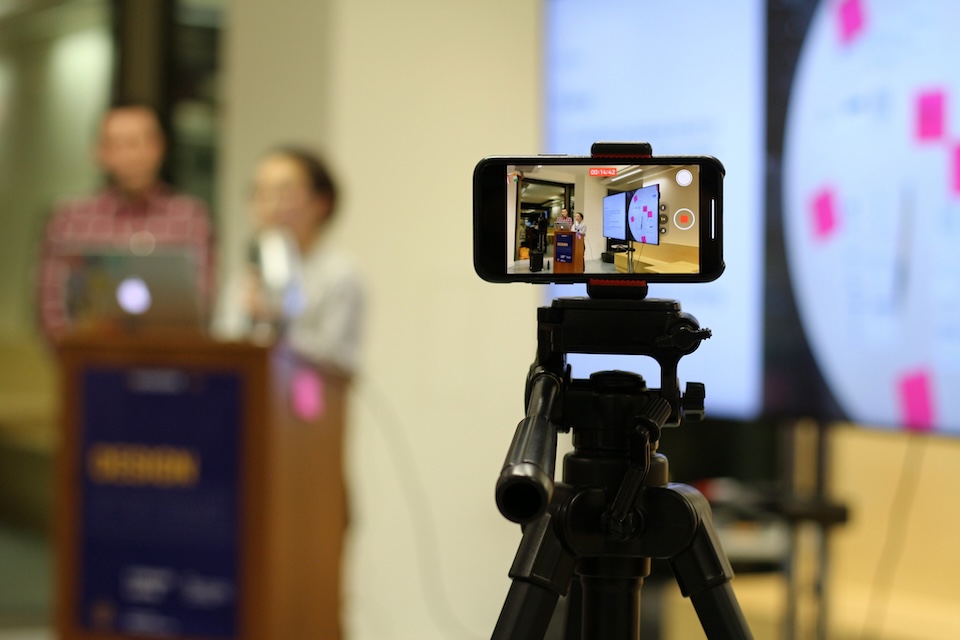
Presenters play a critical role in the accessibility of a session. It is recommended that speakers use a high-quality external headset rather than a built-in computer microphone to ensure audio clarity, which is vital for both hearing-impaired participants and the accuracy of live captioning software. Lighting is equally important; a well-lit face allows participants who rely on lip-reading to follow the speaker more effectively.
Real-Time Support and Sign Language
Whenever possible, live events should feature Sign Language interpreters. In the UK, BSL is a recognized language, and its inclusion is a cornerstone of accessibility for the Deaf community. The interpreter must be "pinned" or spotlighted so they remain visible even when a screen is being shared.
Live captioning is another essential feature. While AI-driven captions have improved, human-generated Communication Access Realtime Translation (CART) remains the gold standard for accuracy, especially in technical or specialized discussions. Captions benefit not only the d/Deaf and hard-of-hearing but also those for whom English is a second language or individuals joining from noisy environments.
Active Monitoring
Organizers should designate a specific staff member to monitor the chat for accessibility-related issues. If a participant reports that the captions have stopped working or that a screen reader is not picking up a poll, the issue must be addressed immediately. This responsiveness demonstrates a genuine commitment to inclusion rather than a "tick-box" exercise.
Phase Four: Post-Event Accountability and Data Analysis
The conclusion of the live stream does not mark the end of the accessibility journey. Post-event actions are crucial for reinforcing the information shared and improving future iterations.
Transcripts and On-Demand Access
Providing a full transcript and a recording of the event is a requirement for true accessibility. These resources allow participants to review complex information at their own pace. Recordings should be edited to include permanent "burned-in" captions if the original platform’s captions were not saved.
Feedback Loops
Following up with participants who requested specific accommodations is a critical step. Asking, "Did the BSL interpretation meet your needs?" or "Were the slides compatible with your screen reader?" provides invaluable data. This feedback should be synthesized into a post-event report to inform the strategy for the next gathering.
Analysis: The Broader Impact of Digital Inclusion
The shift toward accessible online events is part of a broader movement toward "Universal Design"—the concept that products and environments should be designed to be usable by all people, to the greatest extent possible, without the need for adaptation.
From a socio-economic perspective, the data is clear. According to the UK’s Office for National Statistics (ONS), the disability employment gap remains a significant challenge, with disabled people being substantially less likely to be in employment than non-disabled people. Accessible online events play a role in narrowing this gap by ensuring that professional development, networking, and corporate communication are open to all. When a government department or a corporation hosts an inaccessible webinar, they are effectively placing a "No Entry" sign on the door of professional advancement for millions of citizens.
Furthermore, the "Curb-Cut Effect" suggests that accessibility features often benefit the entire population. Just as sidewalk ramps (curb cuts) designed for wheelchairs ended up benefiting parents with strollers and travelers with luggage, digital accessibility features like captions benefit people in quiet libraries or loud trains. Accessible design is simply better design.
Chronology of Accessibility Standards
To understand the current requirements, it is helpful to look at the timeline of digital accessibility evolution:
- 1999: The first Web Content Accessibility Guidelines (WCAG 1.0) are released.
- 2008: WCAG 2.0 is published, introducing the four principles of accessibility: Perceivable, Operable, Understandable, and Robust (POUR).
- 2018: The UK introduces the Public Sector Bodies (Websites and Mobile Applications) Accessibility Regulations.
- 2023: WCAG 2.2 is finalized, adding new criteria to support users with cognitive and learning disabilities, as well as users with low vision on mobile devices.
- 2025: Global Accessibility Awareness Day serves as the first major global checkpoint for organizations to demonstrate compliance with the expanded WCAG 2.2 standards in live event settings.
Conclusion: A Call to Action for 2025
As we move toward May 15, 2025, the message from GDS and accessibility advocates is clear: accessibility is a journey, not a destination. It requires constant learning, testing, and empathy. By implementing the strategies of thorough planning, clear communication, technical diligence, and post-event reflection, organizations can transform their digital presence.
Hosting accessible meetings is not just about avoiding legal risk; it is about fostering a culture where every voice can be heard and every participant is valued. In an increasingly fragmented digital world, inclusive events serve as the bridge to a more equitable and connected society. The tools and guidelines are available; the responsibility now lies with event organizers to ensure that "everyone is welcome" is a reality, not just a slogan.