

As artificial intelligence and robotics continue to reshape the modern supply chain, the San Mateo legislation acts as a critical case study in municipal governance. By forcing companies to account for the human cost of automation and the inherent risks of advanced hardware, the county is establishing a template that other jurisdictions grappling with similar technological shifts may soon look to replicate.
The Scope of the Ordinance: Defining Covered Technology
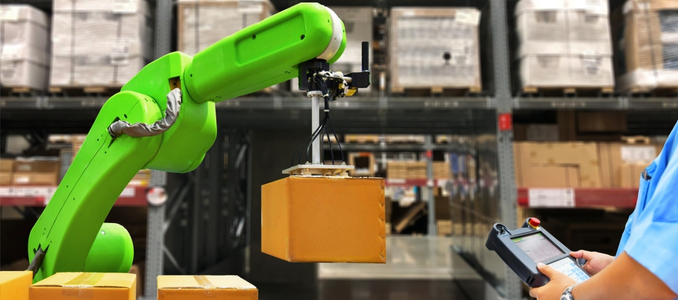
The proposed ordinance is specifically tailored to address the complexities of modern robotics. Under the current draft, the regulations apply to businesses deploying "covered robots"—a classification defined by three primary criteria. First, the machines must utilize sophisticated sensors or camera arrays to navigate their environments. Second, they must be capable of operating, at least in part, without direct human intervention in spaces shared with workers or the general public. Finally, the regulation specifically targets machines powered by rechargeable lithium-ion batteries, a component that has introduced unique safety hazards in recent years.
By focusing on these specific technical characteristics, the county has cast a net that includes everything from autonomous pallet jacks and inventory-scanning drones to sidewalk delivery bots. The legislation is designed to ensure that as businesses trade manual labor for autonomous efficiency, the transition does not occur in a regulatory vacuum.
Mitigating Labor Displacement: The Three-Pillar Approach
Perhaps the most significant aspect of the ordinance is its focus on workforce protection. Recognizing that the deployment of robotics often leads to the displacement of human workers, the board has mandated that employers provide one of three distinct remedies for those affected.

The first remedy is mandatory redeployment, requiring businesses to offer displaced workers alternative roles within the company at equal or greater pay. This is intended to facilitate "upskilling" or horizontal movement rather than termination. If redeployment is not feasible, the employer must provide a comprehensive severance package, including at least 60 days of notice, to allow workers sufficient time to transition to new employment.
The third option involves a financial contribution to the public sector. Businesses may elect to pay a "County Automation Impact Fee" into a newly established workforce retraining fund. This fund would be earmarked for regional programs designed to equip displaced laborers with the skills necessary to work alongside autonomous systems or transition into higher-growth sectors. This multi-tiered approach acknowledges that while technological progress is inevitable, the economic shock to the local workforce can be managed through structured institutional support.
Addressing the Lithium-Ion Safety Challenge
Beyond labor concerns, the ordinance tackles the technical safety risks posed by lithium-ion battery technology. Recent industrial reports have highlighted the volatility of these batteries, particularly the risk of "thermal runaway"—a condition where a battery cell enters an uncontrollable, self-heating state. Such fires are notoriously difficult to extinguish, often reigniting hours or even days after initial suppression, and frequently release toxic gases that pose severe risks to both first responders and the general public.

The ordinance requires businesses to disclose the manufacturer and historical safety records of their robotic fleets. Furthermore, applicants must demonstrate compliance with strict fire safety, accessibility, and privacy protocols. The revenue generated from the aforementioned impact fees will also be directed toward the acquisition of specialized firefighting equipment and the development of training modules for local emergency services, ensuring that the county’s public safety infrastructure is prepared for the specific challenges of a robotic workplace.
The Chronology of Legislative Action
The path to this ordinance began with a surge in warehouse automation projects across Northern California. As major retailers and logistics providers began scaling their robotic fleets, residents and local advocacy groups raised concerns regarding both the speed of job losses and the lack of transparency surrounding the safety of these machines.
In the months leading up to the 4-0 vote, the Board of Supervisors held a series of stakeholder workshops involving labor unions, logistics industry representatives, and workplace safety experts. These discussions highlighted a disconnect between corporate deployment timelines and the county’s ability to conduct oversight. The drafting of the ordinance involved an iterative process of balancing business operational needs—such as the requirement for streamlined permitting—against the government’s duty to ensure public health and economic stability. Following the successful vote, the measure is currently undergoing final administrative review before it returns to the board for a formal adoption vote. Should it pass, the ordinance will take effect 30 days post-adoption, providing a transition period for businesses to audit their existing fleets.

Economic and Societal Implications
The implications of the San Mateo ordinance extend far beyond the county lines. From an economic perspective, the ordinance forces companies to internalize the costs of automation that were previously treated as externalities. By attaching a financial price tag to job displacement and safety oversight, the county is effectively incentivizing companies to prioritize human-robot collaboration over wholesale replacement.
However, industry analysts warn that such measures could potentially slow the adoption of beneficial technologies if the permitting process becomes too cumbersome. There is a delicate balance to be struck between protecting the workforce and fostering an environment conducive to innovation. If the administrative burden becomes too great, some businesses might choose to relocate operations to jurisdictions with less stringent oversight. Conversely, supporters of the measure argue that the legislation provides much-needed clarity. By establishing a clear set of rules, the county is creating a predictable regulatory environment where companies that invest in safety and workforce development can thrive without facing unfair competition from those that cut corners.
Industry and Labor Perspectives
While the business community has expressed concerns regarding the potential for increased operational costs, labor advocates have praised the board’s foresight. Union representatives have noted that the 60-day notice requirement and the focus on retraining are essential components of a "Just Transition" policy. They argue that as robots take over the "dull, dirty, and dangerous" tasks of the warehouse, the human worker should not be left behind but should instead be elevated to higher-value roles, such as robot maintenance, software oversight, and complex problem-solving.

From the perspective of public safety, the focus on lithium-ion safety has received broad support from local fire districts. The specialized nature of battery-related fires requires unique equipment—such as fire-suppression blankets and specialized containment trailers—which are often beyond the budgetary reach of standard municipal departments. The provision in the ordinance to fund these resources through fees paid by the operators of the robots is viewed as a pragmatic solution to an emerging industrial risk.
Data-Driven Regulation
The reliance on an "economic impact assessment" as a prerequisite for permitting suggests a data-driven approach to future policy adjustments. By requiring businesses to report on the efficacy of their workforce mitigation plans, the county will essentially be building a database of outcomes. This data will be invaluable in determining whether the retraining funds are effectively closing the skill gap or if further intervention is required.
Furthermore, the requirement to report on robot manufacturers and safety records creates a feedback loop that could hold equipment providers to higher standards. If a specific model of robot shows a pattern of safety failures or technical malfunctions in San Mateo County, that data could be used to trigger wider recalls or influence national safety standards.

Looking Toward Implementation
As the ordinance moves toward its final adoption, the focus of the Board of Supervisors is shifting toward the logistics of enforcement. The county will need to designate a department to oversee the permitting process, conduct regular safety audits, and manage the workforce retraining fund. This will require not only financial investment but also the recruitment of personnel with expertise in both robotics and labor law.
The success of this initiative will likely be measured by its ability to integrate technology without stalling local economic growth. If San Mateo County can demonstrate that a regulated environment for robotics leads to safer workplaces and a more adaptable workforce, the ordinance may serve as a blueprint for other counties and municipalities across the United States.
In the broader context of the 21st-century economy, the San Mateo ordinance is a reminder that the rapid pace of technological change does not exempt corporations from the social contract. By codifying protections for workers and the public, the board is asserting that innovation should serve the community, and that the transition to an automated future must be managed with care, transparency, and a commitment to the people whose livelihoods are being affected. As the final vote approaches, all eyes remain on the Silicon Valley region to see if this proactive legislative model will successfully bridge the gap between the promise of automation and the reality of the human labor force.