The Honda Prize: Celebrating Human-Centric Technological Progress
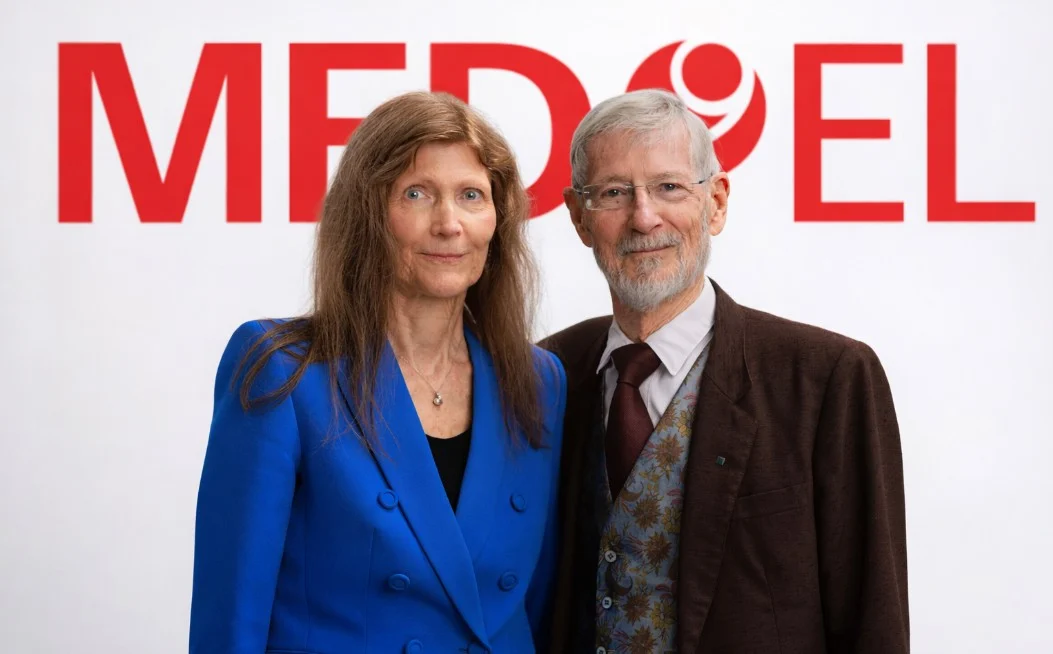
Established in 1980 by the Honda Foundation, the Honda Prize is one of Japan’s most prestigious international science and technology awards, dedicated to recognizing achievements that contribute significantly to human welfare. Dr. Ingeborg Hochmair shares the 2026 Honda Prize with Australian physician and cochlear implant researcher Dr. Graeme Clark. The Foundation specifically lauded Dr. Hochmair’s instrumental contributions to the foundational research, intricate development, successful clinical application, and widespread global adoption of multichannel cochlear implant technology. Her journey in cochlear implant research commenced in the 1970s, a period when the concept of directly stimulating the auditory nerve was still largely experimental. Collaborating with Dr. Erwin Hochmair, she spearheaded the development of a groundbreaking microelectronic multichannel cochlear implant, which achieved its first successful implantation at the University of Vienna in 1977. This pivotal achievement laid the groundwork for modern cochlear implant systems and ultimately led to the establishment of MED-EL, a company synonymous with innovation in hearing technology.
Reflecting on this momentous honor, Dr. Ingeborg Hochmair remarked, "It is a great honor to be named a recipient of the Honda Prize. The award’s vision that scientific and technological progress should ultimately serve people resonates strongly with the field of cochlear implants. This recognition reflects the dedication of many researchers, clinicians, engineers, rehabilitation specialists, and, most importantly, implant recipients who have contributed to the development and advancement of cochlear implant technology over the past decades. Together, we have helped create opportunities for people around the world to hear, communicate, and participate more fully in life." Her words encapsulate the collaborative spirit and patient-centric philosophy that have driven the evolution of cochlear implant technology.
The Honda Prize ceremony for 2026 is slated for November 16 in Tokyo, where the laureates will receive a medal, a certificate, and share a ¥10 million cash prize. This international recognition not only highlights the global impact of the Hochmairs’ work but also places their contributions among the most significant technological advancements of our era.
The Merkin Prize: Acknowledging Collective Biomedical Breakthroughs
Adding to their distinguished accolades, Dr. Ingeborg and Dr. Erwin Hochmair have also been named recipients of the 2026 Richard N. Merkin Prize in Biomedical Technology, administered by the Broad Institute of MIT and Harvard. This award is unique in its recognition of collective contributions, with the Hochmairs sharing the honor with Dr. Graeme Clark, Dr. Michael Merzenich, and Dr. Blake Wilson. The Merkin Prize, accompanied by a substantial $400,000 cash prize, is specifically designed to celebrate biomedical technologies that have demonstrated a tangible and profound impact on human health, along with the visionary individuals whose relentless efforts made these technologies possible.
Harold Varmus, Nobel Laureate and chair of the Merkin Prize Selection Committee, emphasized the multifaceted nature of this achievement: "The success of the cochlear implant depended on multiple scientific and engineering breakthroughs achieved across disciplines and countries over many decades. The Merkin Prize recognizes individuals whose contributions were essential to one of the most impactful medical technologies of our time." His statement underscores the complex interdisciplinary collaboration inherent in the development of such sophisticated medical devices.
The Hochmairs’ seminal work commenced at the Technical University of Vienna in the 1970s, driven by an ambitious vision: to harness electrical stimulation of the auditory nerve to provide sound access for individuals grappling with severe-to-profound hearing loss. This pioneering research culminated in the transformative 1977 implantation, which subsequently paved the way for significant advancements in multichannel cochlear implant technology.
Expressing her gratitude for the Merkin Prize, Dr. Ingeborg Hochmair stated, "We are deeply honored to receive this recognition. The cochlear implant is the result of decades of collaboration between engineers, scientists, clinicians, and hearing implant recipients. This award celebrates what can be achieved when innovation is guided by the goal of improving people’s lives." Dr. Erwin Hochmair further elaborated on the journey: "Developing the cochlear implant required perseverance, curiosity, and the willingness to challenge conventional thinking. We are grateful to see how this technology has evolved and how many people around the world have benefited from it." These sentiments resonate with the profound impact their innovation has had on global health.
A Legacy Forged in Austria: The Hochmairs’ Pioneering Journey
The story of the Hochmairs’ contribution to cochlear implant technology is a testament to perseverance and visionary scientific pursuit. In the early 1970s, while the broader scientific community was grappling with the complexities of hearing loss, the Hochmairs embarked on a path that would redefine audiological intervention. Their work at the Technical University of Vienna focused on the fundamental challenge of how to design an electronic device that could effectively bypass damaged hair cells in the inner ear and directly stimulate the auditory nerve, thereby conveying sound information to the brain.
At the time, single-channel implants were in nascent stages, offering limited speech understanding. The Hochmairs’ insight was to develop a multichannel device, capable of stimulating different parts of the auditory nerve independently. This approach was critical for providing a richer, more nuanced representation of sound, essential for speech comprehension. Their development of a microelectronic multichannel cochlear implant, successfully implanted in 1977, was a monumental step. This device was not merely a proof of concept; it was a functional prototype that demonstrated the viability and superior performance of multichannel stimulation. This breakthrough marked a significant departure from earlier, simpler designs and set the standard for future advancements in the field. The success of this early implant spurred the Hochmairs to co-found MED-EL in 1990, driven by a commitment to translate their research into widely accessible, life-changing technology. From its humble beginnings, MED-EL has grown into a global leader, continuously pushing the boundaries of hearing implant technology.
Evolution of the Cochlear Implant: A Timeline of Transformation
The development of the cochlear implant is a narrative spanning centuries, beginning with rudimentary experiments in electrical stimulation of the ear.
- 18th Century: Alessandro Volta’s experiments with electrical currents in the ear provided early insights into the potential of electrical stimulation for hearing.
- 1950s: French surgeons André Djourno and Charles Eyriès performed the first known cochlear implantation in a deaf patient, albeit with a single electrode and limited success.
- 1960s: Dr. William House in the U.S. began implanting single-channel devices, offering some awareness of sound but generally poor speech understanding.
- 1970s: This decade proved pivotal. The Hochmairs’ work on multichannel implants at the Technical University of Vienna, culminating in the 1977 implantation, was a paradigm shift. Simultaneously, Dr. Graeme Clark in Australia was also making significant strides in multichannel implant development, leading to the first multi-channel implant in Australia in 1978. These parallel developments underscored the global scientific pursuit of effective hearing solutions.
- 1980s: The first multi-channel cochlear implants received regulatory approvals in various countries, including FDA approval in the U.S., opening the door for broader clinical application. Continued research focused on speech processing strategies and miniaturization of devices.
- 1990s: Cochlear implants became an established intervention for profoundly deaf adults and children. MED-EL, founded by the Hochmairs, emerged as a key player, continually innovating in areas like electrode design, sound coding strategies, and implant reliability.
- 2000s onwards: Significant advancements include bilateral implantation (implants in both ears), bimodal hearing (CI in one ear, hearing aid in the other), improved speech processors offering better sound quality in noisy environments, MRI compatibility, and integration with wireless technologies. Candidacy criteria have also expanded to include individuals with partial hearing and single-sided deafness, demonstrating the ongoing evolution of the technology and its application.
Beyond Technology: The Profound Impact on Human Lives
Nearly five decades after the Hochmairs’ initial breakthroughs, cochlear implantation has evolved into an established, highly effective intervention for children and adults with severe-to-profound hearing loss. The impact extends far beyond simply restoring the ability to hear; it profoundly transforms lives. For children born with hearing loss, early implantation provides access to sound during critical periods of language development, enabling them to attend mainstream schools, develop spoken language, and integrate fully into society. Studies consistently show that children implanted early achieve language and speech outcomes comparable to their hearing peers.
For adults who lose their hearing later in life, cochlear implants can reconnect them to their families, communities, and professions, mitigating the social isolation, cognitive decline, and reduced quality of life often associated with untreated hearing loss. The ability to communicate effectively, participate in conversations, and enjoy music and other auditory experiences fundamentally improves mental health and overall well-being.
The World Health Organization (WHO) estimates that over 430 million people worldwide suffer from disabling hearing loss, a figure projected to rise significantly in the coming decades. Untreated hearing loss carries a substantial economic burden, impacting education, employment, and healthcare systems globally. The work of pioneers like the Hochmairs, by providing a robust solution for a significant portion of this population, offers not just medical intervention but a pathway to socio-economic participation and a higher quality of life, thereby contributing immensely to global public health.
Statements and Tributes: Voices from the Scientific Community
The dual recognition of Dr. Ingeborg and Dr. Erwin Hochmair with the Honda Prize and Merkin Prize has resonated deeply within the scientific, medical, and engineering communities. These awards serve as a powerful testament to the enduring impact of their work and the collaborative spirit that characterizes biomedical innovation. The Honda Foundation, in bestowing its prize, emphasizes the humanitarian aspect of scientific endeavor, aligning perfectly with the mission of cochlear implants. The Broad Institute, through the Merkin Prize, highlights the interdisciplinary breakthroughs essential for such complex technologies.
Beyond the formal citations, there is a widespread appreciation for the Hochmairs’ unique blend of scientific rigor, engineering prowess, and unwavering commitment to patients. Their entrepreneurial spirit in founding MED-EL ensured that their research transcended academic papers and became tangible, accessible solutions. Leaders in otolaryngology and neuroprosthetics often cite the cochlear implant as a prime example of successful neurotechnology, demonstrating how electrical stimulation can functionally replace a damaged sensory organ. Patient advocacy groups and recipients themselves frequently express profound gratitude for the opportunities afforded by this technology, underscoring the real-world significance of these scientific achievements.
Implications for Future Biomedical Research
The recognition of the Hochmairs’ work has significant implications for the future of biomedical research and development. It underscores several critical lessons:
- Importance of Foundational Research: Their journey highlights that long-term, curiosity-driven research, even without immediate commercial application, can lead to revolutionary breakthroughs.
- Interdisciplinary Collaboration: The success of the cochlear implant is a powerful case study for the necessity of collaboration across engineering, medicine, audiology, neurobiology, and materials science.
- Translational Science: The transition from laboratory discovery to clinical application and widespread patient access, as exemplified by MED-EL, is crucial for maximizing the societal benefit of scientific advancements.
- Neuroprosthetics as a Field: The cochlear implant stands as a benchmark for other neuroprosthetic devices, such as retinal implants or brain-computer interfaces, demonstrating the potential to restore lost sensory or motor functions.
- Patient-Centric Innovation: The consistent focus on improving patient outcomes and quality of life, as articulated by Dr. Hochmair, serves as a model for ethical and impactful medical device development.
The continued expansion of cochlear implant candidacy, coupled with ongoing research into personalized medicine, improved sound processing algorithms, and next-generation implantable devices, ensures that the field remains dynamic and promises further advancements. The Hochmairs’ pioneering work has not only changed millions of lives but has also inspired generations of scientists and engineers to pursue bold solutions to complex medical challenges.
More information about the Richard N. Merkin Prize is available from the Merkin Prize, while additional information about the Honda Prize is available from the Honda Foundation.
About MED-EL
MED-EL is an Austrian-based, privately owned hearing implant company co-founded by Dr. Ingeborg and Dr. Erwin Hochmair. Driven by a passion for innovation and a commitment to overcoming hearing loss, the company develops a comprehensive range of hearing solutions. These include cochlear and middle ear implant systems, electric-acoustic stimulation systems, auditory brainstem implants, and both surgical and non-surgical bone conduction devices. With a global footprint, MED-EL employs more than 3,300 individuals representing approximately 90 nationalities across 30 locations worldwide, reflecting its dedication to serving diverse populations and advancing hearing healthcare globally.
Source: MED-EL