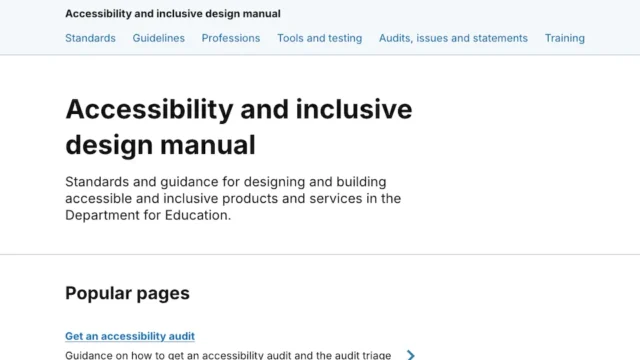
Traditionally, information architects are responsible for the structural design of shared information environments. Within the GDS, this role involves planning, designing, and executing research activities that allow delivery teams to gain a profound understanding of how users interact with public services. However, as the digital landscape grows more complex, the role of the IA has expanded to include the ethical and functional necessity of ensuring that these structures do not inadvertently exclude users with disabilities.
The Strategic Integration of Accessibility in Information Architecture
For organizations just beginning to prioritize accessibility, the GDS experts advocate for a multi-level cultural shift. Becky Ashley, Lead Information Architect at the Government Digital Service, argues that accessibility must be embedded at every level of an organization, transcending individual skill sets. She suggests that a collective mindset, supported by structured internal workflows and continuous education, is essential for creating intuitive and inclusive architectural designs. This approach moves away from "bolting on" accessibility features at the end of a project, instead treating it as a core requirement of the design process.
Building advocacy among stakeholders is another critical component. Sally Creasey, Senior Information Architect at GDS, highlights the importance of transparency and involvement. By sharing sitemaps, ontologies, and knowledge organization systems with colleagues and end-users early in the process, IAs can ensure that stakeholders understand the rationale behind specific structural choices. Creasey notes that without this collaborative approach, there is a significant risk that the final product will fail to meet the actual needs of the user base, particularly those with complex access requirements.
The Three Pillars of Accessible IA: Ontology, Taxonomy, and Choreography
Rik Williams, Senior Information Architect at GDS, provides a technical framework for understanding how accessibility manifests in IA through three distinct pillars: ontology, taxonomy, and choreography. This structured approach allows teams to address different aspects of the user experience with precision.
- Ontology (The Meaning): This focuses on what the information is and the concepts it represents. Accessible ontologies use clear, consistent connections that assist users with cognitive disabilities, learning differences, or limited domain knowledge in understanding the relationships between different pieces of information.
- Taxonomy (The Organization): This involves how information is categorized and labeled. Inclusive taxonomies prioritize predictable and logical structures, which are vital for users who rely on screen readers or those with mobility impairments who navigate via keyboard.
- Choreography (The Interaction): This dictates how users move through information across different channels and contexts. Effective choreography ensures a logical tabbing order for keyboard users, clear focus indicators, and consistent navigation patterns that reduce the mental effort required to complete a task.
Williams asserts that when these three pillars are addressed both individually and cohesively, the resulting system becomes "deeply usable," which he identifies as the fundamental basis of accessibility.
Educational Frameworks and the POUR Principles
To bridge the gap between different disciplines—such as developers, content creators, and designers—the GDS experts recommend using shared frameworks. Becky Ashley points to the POUR principles (Perceivable, Operable, Understandable, and Robust) as a universal language that can be applied across workstreams.
- Perceivable: Information and user interface components must be presentable to users in ways they can perceive (e.g., providing text alternatives for non-text content).
- Operable: User interface components and navigation must be operable (e.g., making all functionality available from a keyboard).
- Understandable: Information and the operation of the user interface must be understandable (e.g., making text readable and predictable).
- Robust: Content must be robust enough that it can be interpreted reliably by a wide variety of user agents, including assistive technologies.
Sally Creasey emphasizes that IAs must "be the change they want to see," championing the user in every meeting. This includes focusing on both "front-end" users (citizens) and "back-end" users (civil servants). For instance, ensuring that a Content Management System (CMS) is accessible to a government employee with a disability is just as important as ensuring the public-facing website is accessible to a citizen.
Methodology and the Role of User Research
A core tenet of the GDS approach is the rejection of design in isolation. The experts utilize various tools and processes to validate their architectural decisions. Sally Creasey highlights "noun and verb foraging," card sorting, and tree testing as essential techniques for discovering the language and mental models of users. These methods help determine how much information is appropriate for a single view and what terminology resonates most with the public.
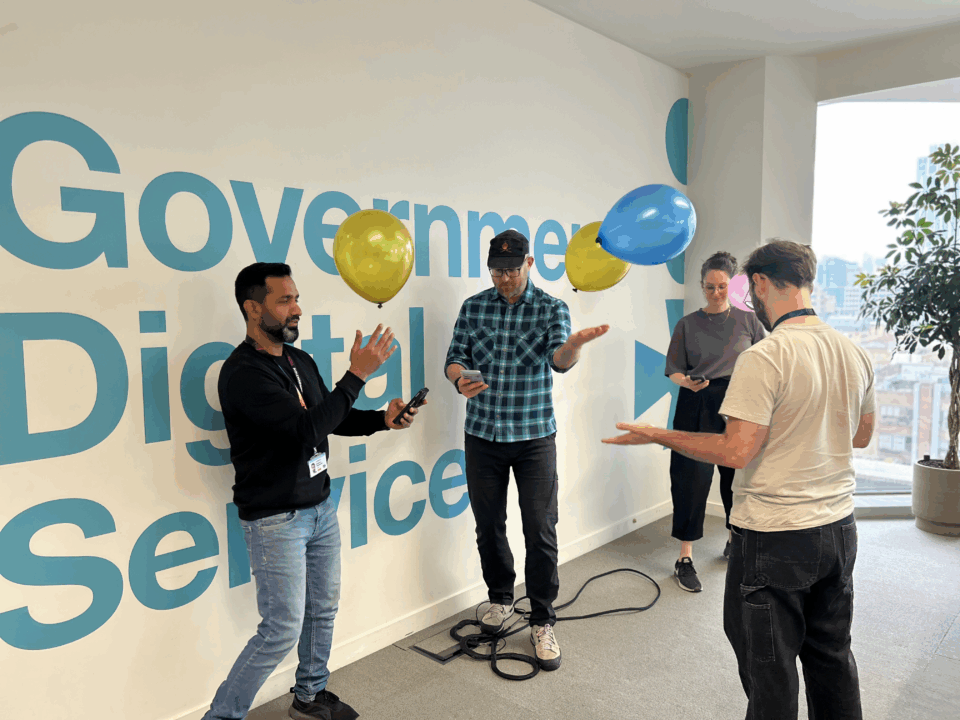
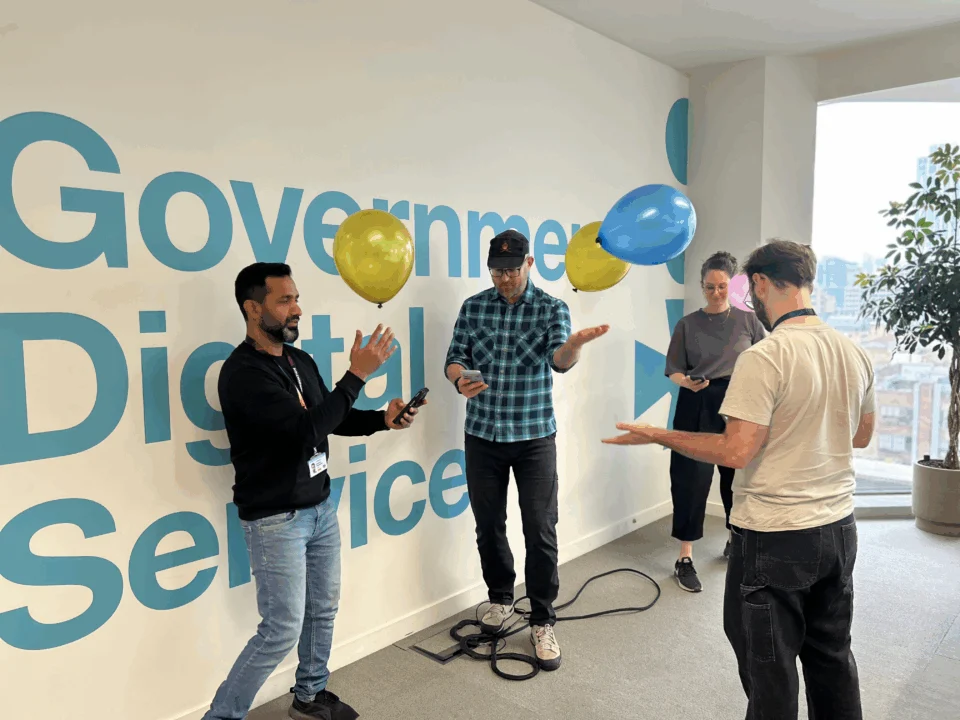
Furthermore, the team employs simulations to build empathy within design teams. Rik Williams mentions "empathy balloons"—a low-cost game designed to simulate the frustrations of users with cognitive or dexterity issues—as well as the use of vision-impairing glasses or motor-control limiting gloves. However, the experts offer a significant caveat: simulations are tools for building empathy and identifying glaring issues, but they are not a substitute for direct research with people who have lived experience of disabilities.
Supporting Data: The Scale of the Accessibility Challenge
The focus on accessibility is supported by significant demographic data. According to the World Health Organization (WHO), approximately 1.3 billion people—or 1 in 6 people worldwide—experience significant disability. In the United Kingdom, data from the Family Resources Survey indicates that over 16 million people live with a disability, representing roughly 24% of the population.
From an economic and functional perspective, the "Click-Away Pound" survey has previously found that 71% of disabled web users will abandon a website that is difficult to use. For government services, where users often have no alternative provider, poor information architecture doesn’t just lead to a lost "customer"—it leads to the total exclusion of a citizen from essential services, such as applying for benefits, renewing a passport, or accessing healthcare information.
Common Pitfalls and the Paradox of Choice
The GDS experts identify several recurring traps that organizations fall into when designing information structures. One of the most prevalent is "stakeholder-centric design," where a website’s hierarchy reflects the internal department structure of the organization rather than the needs of the user. This often leads to the use of jargon and the creation of sections with overlapping purposes.
Sally Creasey warns against the "paradox of choice," where providing too many similar options creates a mental burden that can overwhelm users, particularly those with neurodivergent conditions. To combat this, IAs use "controlled vocabularies" to ensure language remains consistent across all touchpoints.
Becky Ashley adds that a major pitfall is viewing information architecture as a one-time project. She argues that information systems must be adaptive, utilizing continuous feedback loops to ensure that as user needs evolve, the underlying code and content can flex accordingly.
Broader Impact and the Future of Universal Design
The principles shared by the GDS information architects align with the vision of Web founder Tim Berners-Lee, who famously stated that "the power of the Web is in its universality." By applying these principles, GDS aims to move beyond simple compliance with the Web Content Accessibility Guidelines (WCAG) and toward a model of "universal design" that benefits everyone.
The implications of this work extend into the realm of emerging technologies. As the government explores the integration of Artificial Intelligence (AI) and advanced metadata, the foundational work of information architects becomes even more vital. Properly structured data allows AI to serve highly relevant, tailored content to users via their preferred channels, potentially automating the "progressive disclosure" of information based on a user’s specific cognitive or physical needs.
The "Unlocking Accessibility" series continues to serve as a roadmap for public and private sector organizations alike. By demonstrating that accessibility is a structural, rather than decorative, requirement, the GDS information architects are redefining how digital services are built for the modern age. Their approach suggests that the most effective way to ensure no one is left behind is to design the very foundations of our digital world with everyone in mind.