

The Critical Importance of Early Detection
Hearing is fundamental to a child’s development, profoundly influencing their ability to communicate, learn, and engage with the world. Identifying hearing impairments in infancy is not merely about addressing a medical condition; it is about unlocking a child’s full potential. The first few years of life are a critical window for auditory and language development. Delays in diagnosis and intervention can lead to irreversible impacts on cognitive, social, and emotional growth. Organizations like the World Health Organization (WHO) emphasize that early identification and intervention for hearing loss can significantly improve speech, language, and educational outcomes for children.
Defining Infant Hearing Loss: Temporary Versus Permanent
Infant hearing loss is characterized by a reduced or absent ability to hear sounds. This condition can manifest in one ear (unilateral) or both ears (bilateral) and can be either temporary or permanent. Understanding the distinction between these two categories is crucial for effective management.
Temporary Hearing Loss: This form is often transient and can be caused by factors such as fluid accumulation in the middle ear, recurrent ear infections, or obstructions within the ear canal. Fortunately, temporary hearing loss may resolve with appropriate medical treatment, often involving medication or minor procedures to clear the blockage or treat the infection.

Permanent Hearing Loss: In contrast, permanent hearing loss typically stems from damage to the inner ear structures or issues with the auditory nerve. This type requires long-term support and management strategies to ensure the child can access sound and develop vital communication skills. A thorough diagnosis by a specialist is the definitive method for determining the precise nature and type of hearing loss.
Unraveling the Types of Hearing Loss in Babies
Hearing loss in infants can be categorized by its nature and severity:
- Conductive Hearing Loss: This occurs when sound waves are blocked from reaching the inner ear. Common causes include middle ear infections (otitis media), fluid buildup, or structural abnormalities of the outer or middle ear.
- Sensorineural Hearing Loss: This type results from damage to the inner ear (cochlea) or the auditory nerve pathways to the brain. Genetic factors, infections, or exposure to certain medications can contribute to this form.
- Mixed Hearing Loss: This is a combination of both conductive and sensorineural hearing loss, where issues exist in both the outer/middle ear and the inner ear or auditory nerve.
Recognizing the Subtle Signs: Hearing Loss Indicators in Infants and Toddlers
Observing a baby’s development is an instinctual part of parenting. Recognizing the early signs of hearing loss is paramount, and these signs often align with developmental milestones, though they can vary significantly with age. Trusting parental intuition is key; if something feels amiss regarding a child’s hearing, seeking professional evaluation is always the best course of action.
Birth to 3 Months:
- Does not startle at loud noises.
- Does not awaken to loud sounds.
- Does not seem to recognize your voice.
- Does not turn their eyes or head toward a sound.
3 to 6 Months:

- Does not babble or make vocalizations.
- Does not laugh.
- Does not seem to listen when spoken to.
- Does not respond to their name being called.
- Does not show interest in new sounds.
6 to 12 Months (and Toddlers):
- Does not respond to their name consistently.
- Does not turn toward sounds they cannot see.
- Does not imitate speech sounds.
- Delayed or absent babbling.
- Limited or no use of gestures like waving bye-bye.
- Appears to respond to sound inconsistently.
- Delayed speech and language development.
These signs may also become apparent later in toddlerhood, especially if the hearing loss develops gradually over time.
The Genesis of Infant Hearing Loss: Understanding the Causes
The origins of hearing loss in newborns can be multifaceted, with genetic factors, prenatal infections, and birth complications being among the most common culprits. Globally, an estimated 1 in 1,000 newborns are born with hearing loss, and up to 4 in 1,000 are born with it by the age of one year, according to the Centers for Disease Control and Prevention (CDC).
Genetic Factors: A significant portion of infant hearing loss is inherited. These genetic predispositions can be present at birth or may lead to progressive hearing loss later in childhood, even without a known family history.
Prenatal Infections: Certain infections contracted by the mother during pregnancy can profoundly impact fetal development. Conditions like congenital cytomegalovirus (CMV), rubella, herpes simplex virus, and toxoplasmosis can damage the developing inner ear or auditory nerve, leading to permanent or progressive hearing loss. Congenital CMV is the most common infectious cause of non-genetic sensorineural hearing loss in newborns.

Prematurity and Low Birth Weight: Infants born prematurely or with very low birth weights are at an elevated risk for hearing loss. This increased vulnerability is often linked to the need for intensive medical care in the Neonatal Intensive Care Unit (NICU).
NICU Complications: Babies requiring NICU care may experience hearing loss due to factors such as oxygen deprivation, severe infections, or exposure to medications that can have ototoxic effects (damaging to the ear).
Birth Complications: Severe jaundice, a condition where bilirubin levels are excessively high, or reduced oxygen levels during delivery can sometimes compromise parts of the auditory system.
Structural Differences: Some infants are born with variations in the anatomy of their outer, middle, or inner ear, which can impede the normal transmission of sound.
Ototoxic Medications: Exposure to certain medications known to harm hearing, whether taken by the mother during pregnancy or administered to the infant after birth, can contribute to hearing loss.
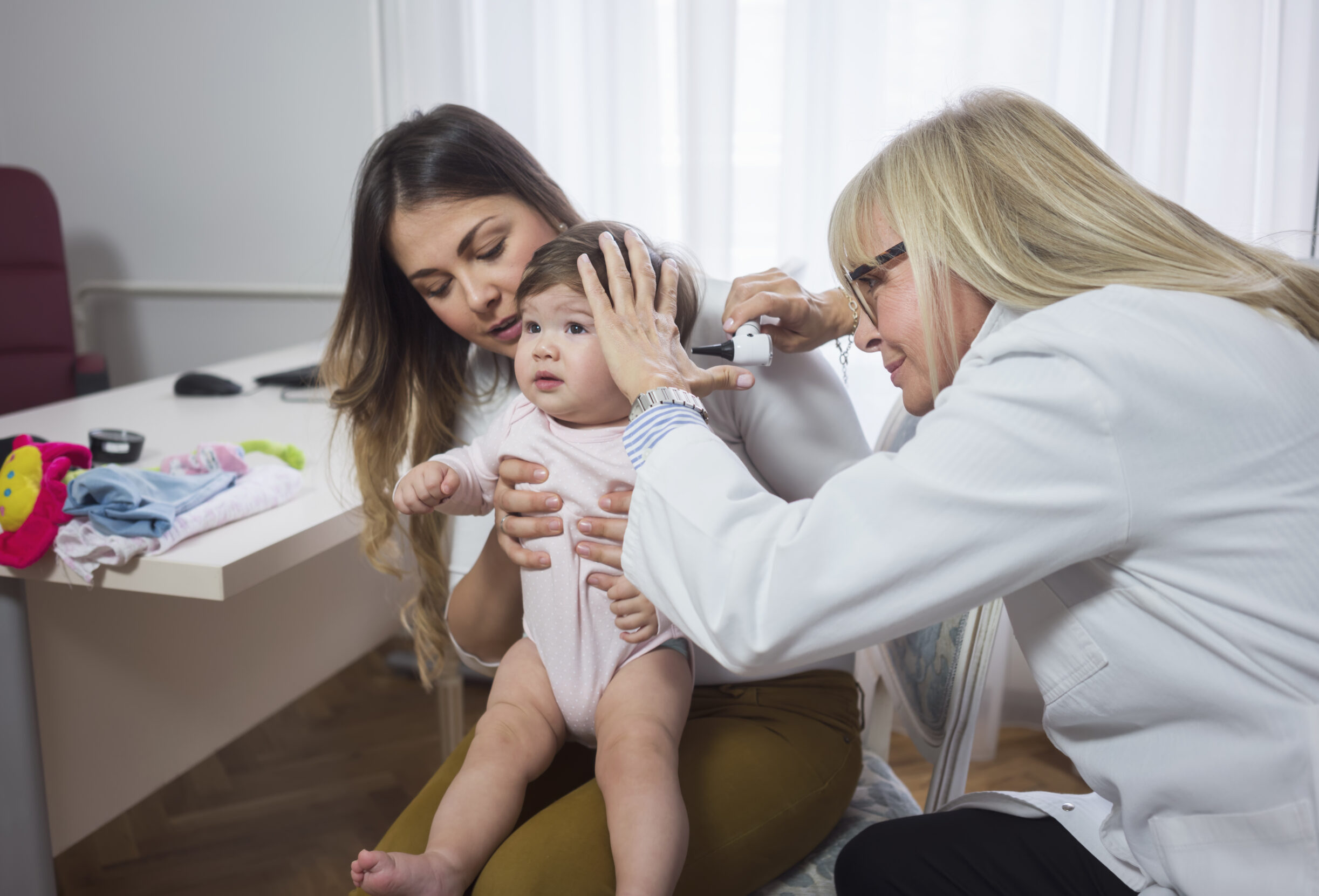
Temporary Conditions: Fluid in the middle ear or recurrent ear infections, while often treatable, can cause temporary hearing difficulties that require attention.
It is important to note that in some instances, medical professionals may not be able to pinpoint an exact cause for infant hearing loss. Regardless of the origin, early diagnosis and appropriate support are vital for fostering robust speech, language, and communication development.
Newborn Hearing Screening and Diagnostic Pathways
The vast majority of infants undergo a newborn hearing screening shortly after birth, typically before hospital discharge or within the first month of life. These screenings are quick, non-invasive, and highly effective in identifying potential hearing issues in newborns. Two common screening methods are:
- Automated Auditory Brainstem Response (AABR): This test uses small sensors placed on the baby’s head and a soft earpiece to measure the brain’s response to sound.
- Otoacoustic Emissions (OAE): This test involves a small probe placed in the baby’s ear canal, which emits sounds and measures the "echoes" (otoacoustic emissions) produced by the inner ear in response.
Screening Results:
- Pass: Indicates no concern for hearing loss at the time of screening.
- Refer: Suggests that further diagnostic testing is needed to determine if a hearing loss is present.
The Nuance of Screening Results: Passing and Later Concerns
It is crucial for parents to understand that a "pass" on a newborn hearing screening does not definitively rule out the possibility of hearing loss developing later. This phenomenon is known as delayed-onset or progressive hearing loss. A passed screening confirms that no hearing concerns were detected at that specific moment, but it does not preclude changes in hearing that may emerge during infancy or childhood. Therefore, continuous monitoring of a child’s hearing and communication development remains essential.

Navigating a "Refer" Result: The 1-3-6 Rule
If a baby does not pass a hearing screening, it does not automatically signify permanent hearing loss. Many infants "refer" due to temporary factors such as residual amniotic fluid in the ear canal or movement during the test. However, prompt follow-up testing is imperative. Early intervention is key to ensuring that if hearing loss is confirmed, the child receives the necessary support during the critical stages of speech and language development.
The 1-3-6 Rule provides a vital timeline:
- By 1 Month: A baby should have had their initial hearing screening.
- By 3 Months: If the baby "referred" on the initial screening, diagnostic evaluations should be completed.
- By 6 Months: If hearing loss is identified, appropriate intervention, such as hearing aids or other listening devices, should be initiated.
Adhering to this timeline significantly increases the likelihood of positive developmental outcomes for children with hearing loss.
Understanding Unilateral Hearing Loss
Infant hearing loss in one ear, medically termed unilateral hearing loss, means a baby has normal hearing in one ear but impaired hearing in the other. While one ear functions effectively, this condition can still present challenges:
- Difficulty locating the source of sounds: This can impact spatial awareness and safety.
- Trouble hearing in noisy environments: Background noise can make it difficult to discern speech.
- Potential impact on speech and language development: While less severe than bilateral loss, it can still influence auditory processing.
- Impact on academic performance: In later schooling, difficulty in noisy classrooms can be a challenge.
The developing brain relies on bilateral auditory input for balanced pathway development. Reduced input from one ear can influence how the brain processes sound over time. A baby with hearing loss in one ear can still benefit immensely from early support and monitoring.
Comprehensive Treatment Options for Infant Hearing Loss
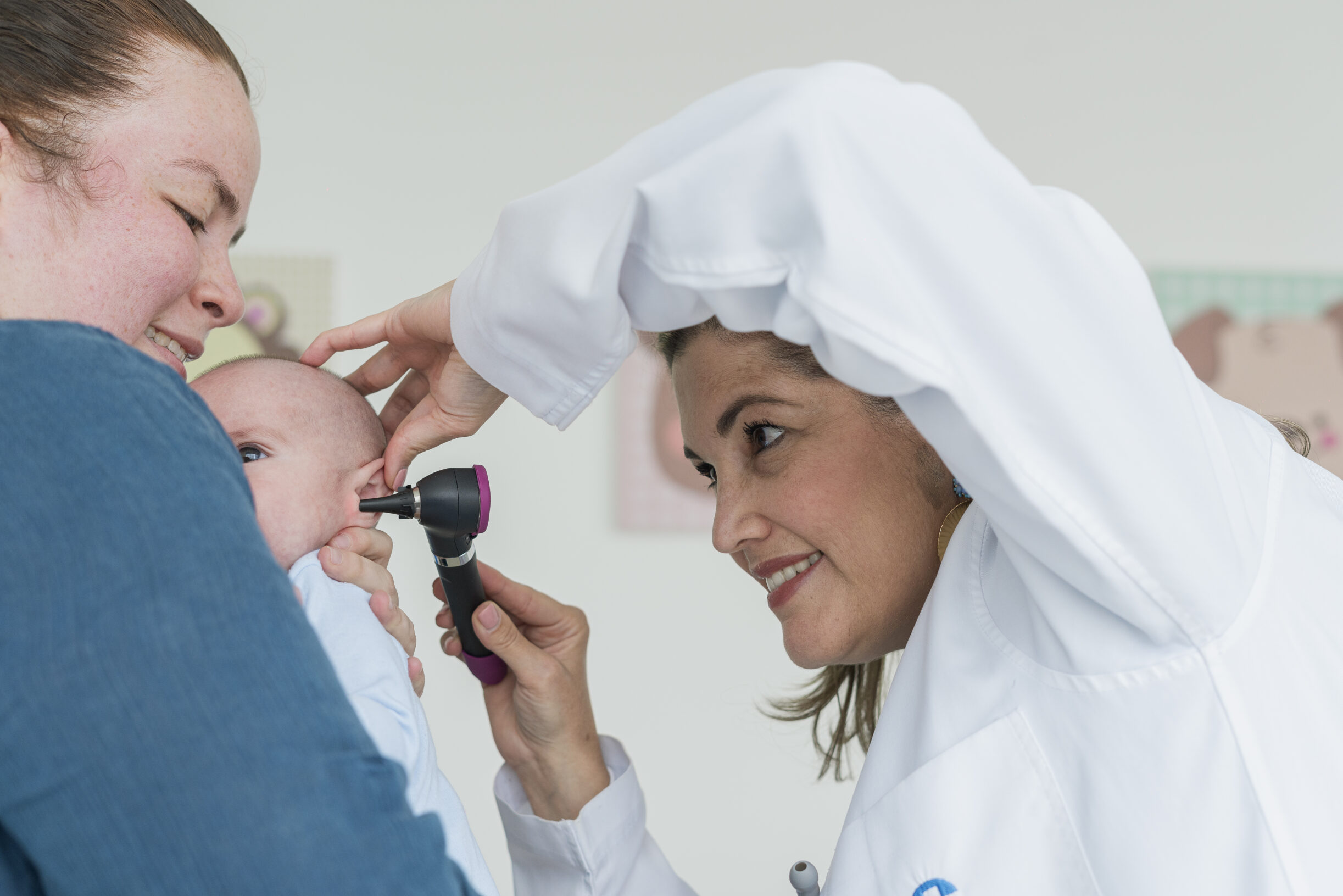
The treatment approach for infant hearing loss is tailored to the specific cause, type, and severity of the condition. A multidisciplinary team of specialists, including audiologists, ENTs, and early intervention professionals, works collaboratively to develop the most effective care plan.
Medical Treatment for Temporary Causes: Hearing issues stemming from fluid buildup or ear infections can often be resolved with medication or minor medical interventions designed to clear the ear canal or treat the infection.
Early Intervention Programs: These programs are foundational for infants with hearing loss. They provide crucial speech, language, and listening therapy, helping children build essential communication skills during their most formative developmental periods.
Support From Specialists: Audiologists play a key role in diagnosing hearing loss, fitting hearing devices, and monitoring progress. Ear, Nose, and Throat (ENT) specialists manage medical aspects, while early intervention professionals guide families through the developmental journey.
Hearing Aids: For infants with mild to moderate hearing loss, hearing aids can amplify sounds, making speech and environmental noises more accessible and clearer. Modern hearing aids are sophisticated devices designed for infants, offering comfort and effective sound amplification.
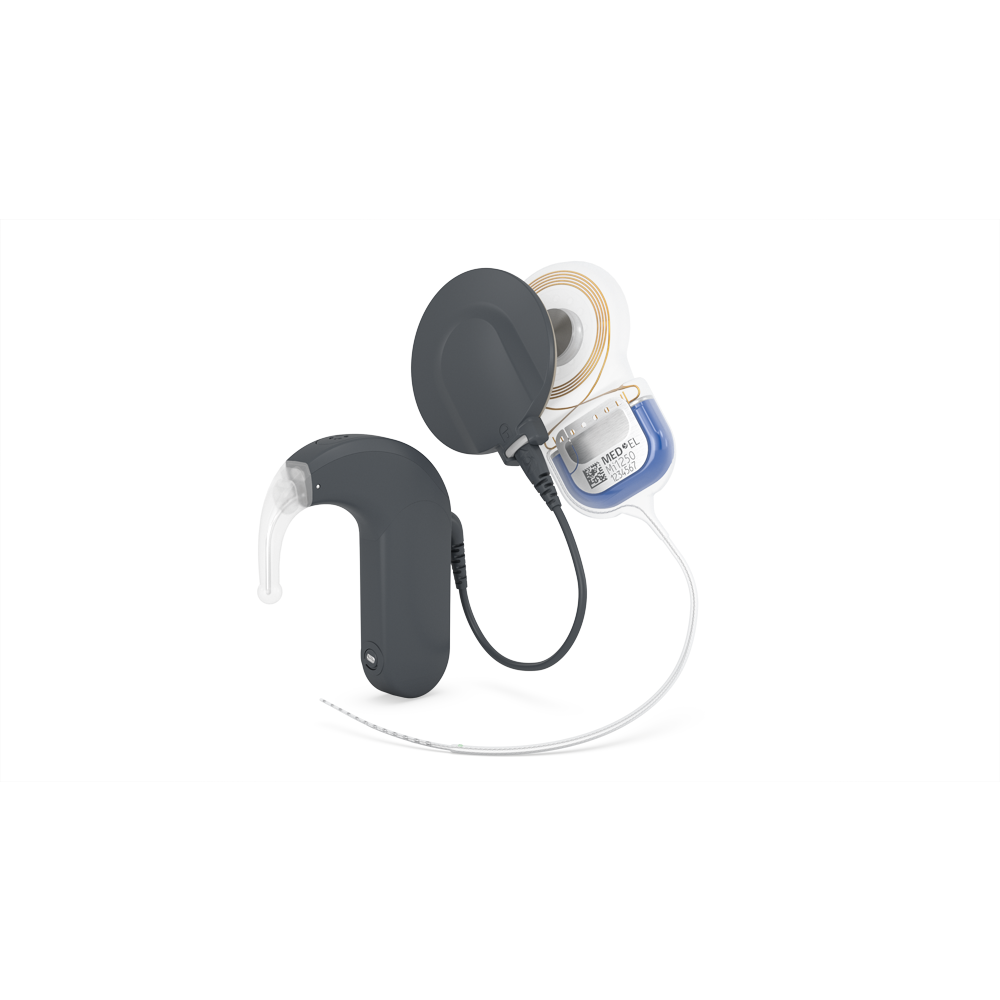
Cochlear Implants: For children with severe to profound sensorineural hearing loss, where hearing aids do not provide sufficient auditory access, cochlear implants are a life-changing option. These devices bypass damaged parts of the inner ear and directly stimulate the auditory nerve, providing a sense of sound. MED-EL is a leading provider of cochlear implant systems, offering solutions designed for infants and children.
The overarching principle guiding all treatment strategies is the paramount importance of early action. Timely diagnosis and intervention are consistently linked to significantly improved communication abilities and overall developmental outcomes for children with hearing loss.
Empowering Parents: The Next Steps
If you have concerns about your baby’s hearing, taking proactive steps is essential:
- Communicate with your pediatrician: Discuss your observations and concerns with your child’s doctor.
- Schedule a hearing screening: If your baby hasn’t had one, or if you have ongoing concerns, arrange for a professional hearing test.
- Follow up on screening results: If your baby "refers," ensure you attend all recommended diagnostic appointments promptly.
- Seek specialist evaluation: Consult with an audiologist and an ENT specialist for a comprehensive assessment.
- Engage with early intervention services: If hearing loss is diagnosed, connect with local early intervention programs for support and therapy.
While the prospect of infant hearing loss can feel daunting, it is important to remember that with early diagnosis, expert guidance, and the right support systems in place, children can develop strong communication skills and lead fulfilling lives.
Frequently Asked Questions About Infant Hearing Loss
What are the early signs of hearing loss in infants?
Early signs can include not startling at loud sounds, not turning toward voices, not responding to their name, delayed babbling, or delayed speech development. Signs can vary by age, so it is important to watch hearing and communication milestones over time.

What does it mean if my baby does not pass the newborn hearing screening?
A "refer" result means your baby needs follow-up testing. It does not always mean permanent hearing loss, but it is important to schedule the next evaluation promptly so doctors can better understand your baby’s hearing needs.
Can a baby pass screening and still have hearing loss?
Yes. A baby can pass a newborn hearing screening and still develop hearing loss later. This is called delayed-onset or progressive hearing loss, which is why parents should continue monitoring hearing, speech, and language milestones as their child grows.
What causes hearing loss in babies?
Hearing loss in babies can be caused by genetics, infections during pregnancy, prematurity, NICU-related factors, jaundice, structural differences in the ear, or temporary conditions such as fluid or ear infections. In some cases, the exact cause is not known.
How is hearing loss in infants treated?
Treatment depends on the cause and severity of the hearing loss. Options may include medical treatment, hearing aids, cochlear implants when appropriate, speech and language support, and follow-up care with hearing specialists. Early intervention can help support communication and language development.
This article was reviewed by Dr. Yi Ge, Senior Manager of Medical Affairs at MED-EL Innsbruck, a certified otolaryngologist with extensive experience in hearing implant systems and medical affairs. Her work focuses on patient-centered innovation in hearing healthcare.