The Clinical Catalyst: Challenging Traditional Therapy Models
The theoretical framework underpinning VOZ SOS CAAPAZ is a direct response to longstanding questions regarding the efficacy of traditional, speech-centric language therapy. Historically, many clinical models for individuals with complex communication needs have operated within an ableist paradigm, where the primary objective was often to approximate verbal speech. Ordóñez’s project challenges this by questioning the validity of isolated, one-on-one sessions that often lack the naturalistic, multimodal environment necessary for authentic language acquisition.
By analyzing the limitations of therapy sessions conducted twice weekly by speaking communication partners, the project highlights a crucial gap in the development of AAC users: the lack of peer-to-peer interaction. The central query guiding the project is whether current therapeutic models provide sufficient exposure to diverse communication styles and whether they prioritize the specific needs and desires of the users themselves.
Chronology of Development and Pilot Implementation
The journey toward the realization of VOZ SOS CAAPAZ began with three fundamental pillars of professional and personal development. The first was Ordóñez’s involvement with the "CAAmigos Angelman" program, a virtual, evidence-based initiative focused on neuroaffirmative practices and comprehensive literacy. This experience served as a catalyst for dismantling traditional clinical prejudices, providing a template for naturalistic, group-based engagement.
The second pillar was the 2025 publication of "Nothing About AAC Users Without AAC Users" in the ISAAC journal. Authored by non-speaking AAC user Gran Blasko, the article served as a rallying cry for the active inclusion of users in the development and evaluation of communication services. Finally, the integration of "Relationship-Based Learning" provided the pedagogical foundation for the project, emphasizing that connection, interaction, and horizontal power dynamics are essential for meaningful communication.
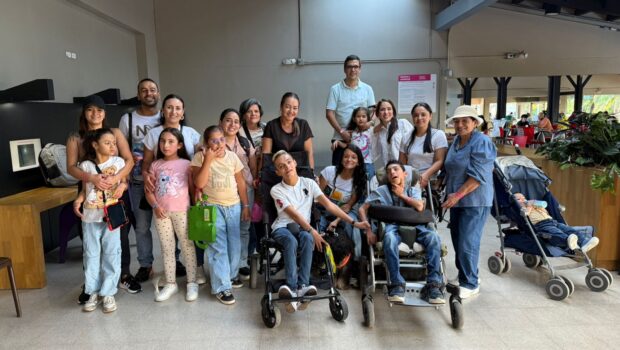
The pilot phase commenced in October 2025, timed to coincide with AAC Awareness Month. The inaugural gathering at Parque Comfama in Rionegro brought together six AAC users, ten family members, and various professional facilitators. The diversity of the systems represented—including Td Snap, Communicator 5 with Eye Tracking, Proloquo2go, and Grid 3—demonstrated the necessity of accommodating a wide array of technological modalities in a single social space.
Data and Demographic Impact
The impact of these gatherings is reflected in both the quantitative participation rates and the qualitative feedback from attendees. The October 2025 session included six primary users and ten family members, while the subsequent February 2026 session, held in a public library, focused specifically on shared literacy. This second gathering involved three users at an "emergent" stage of literacy development, supported by their families and the clinical team.
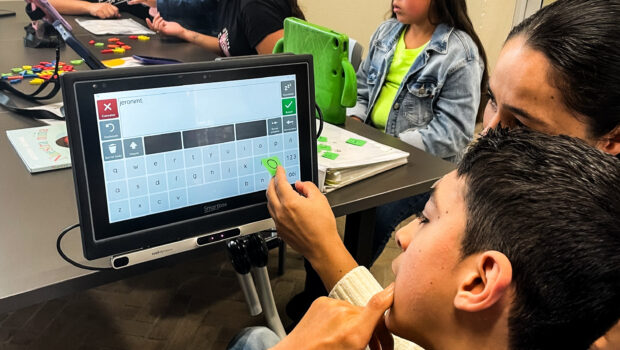
The shift from an amusement park setting to a library signifies a broader, more ambitious goal: the implementation of the "Comprehensive Literacy" model. According to expert Erin Sheldon, this model focuses on providing meaningful interactions with print for all individuals, regardless of their communication modality. The data from these initial meetings suggests a high level of engagement, with participants reporting that the gatherings offer a rare opportunity to socialize with peers who share similar communication challenges and technological dependencies.
Professional and Societal Implications
The broader implications of the VOZ SOS CAAPAZ project suggest a potential evolution in the role of the Speech-Language Pathologist. In this model, the clinician transitions from a "director" of therapy to a facilitator of community-based learning. This shift is vital for families who often find that traditional systems place "ceilings" on the potential of individuals with communication challenges.
By promoting the principle of "presuming competence," the project aligns with global movements advocating for the neurodiversity paradigm. This approach asserts that every individual possesses an inherent right to communicate and to be literate, regardless of their preferred modality. The project’s emphasis on "unlearning" ableist biases among professionals is particularly significant, as it acknowledges that the burden of adaptation should not rest solely on the AAC user, but also on the communication partners and the society at large.
Future Projections and Sustainability
As the VOZ SOS CAAPAZ project moves toward a monthly meeting schedule, its sustainability will depend on continued community interest and the identification of accessible, inclusive venues. The current model relies on a collaborative effort between the specialist and the families of the users, ensuring that the logistics remain grounded in the specific, individual needs of each participant.
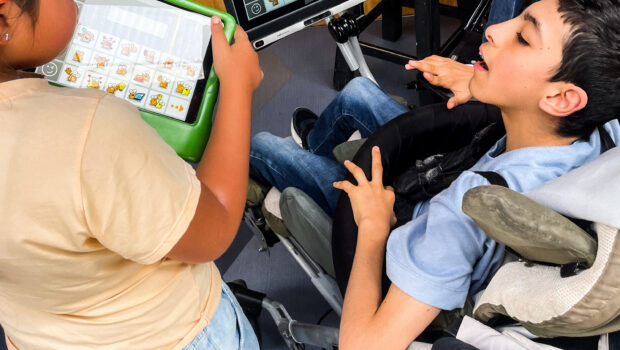
The project also highlights the critical need for systemic changes in professional training. The call for communication partners to be trained as active learners of the AAC system—rather than just trainers—suggests a need for updated curricula in speech-language pathology programs. If programs like VOZ SOS CAAPAZ can serve as a proof-of-concept for similar initiatives across Latin America, the cumulative effect could be a more robust and inclusive communication infrastructure for the Spanish-speaking AAC community.
Conclusion: A Rights-Based Approach
At its core, VOZ SOS CAAPAZ is built on the premise that communication is a fundamental human right. By creating spaces where users can project their own voices through their preferred tools, the project is helping to dismantle the barriers that have historically silenced non-speaking individuals. As the project continues to evolve, its focus remains clear: to provide an environment where AAC users are treated not as patients, but as active participants in a communicative community.
Through ongoing efforts in Rionegro, Colombia, the initiative serves as a reminder that the path to true communication inclusion requires not only technological access but also the active, joyful, and meaningful participation of a community dedicated to the principle that everyone has something to say, provided they have the tools to be heard.