
The Endurance Athlete’s Mantra: A Foundation for Growth
The axiom "get comfortable being uncomfortable" has become a cornerstone of preparation for many young individuals pursuing demanding physical endeavors. For families with children engaged in endurance sports, this phrase serves as a frequent touchstone during rigorous pre-season training. Coaches utilize this mantra to recalibrate athletes’ perceptions of discomfort, reframing it not as an obstacle to be avoided, but as an intrinsic component of the training process itself. This perspective underscores a fundamental truth: significant performance improvement and the achievement of ambitious goals are inextricably linked to pushing beyond established comfort zones. The psychological and physical adaptations cultivated through this mindset in athletics often translate into invaluable life skills, equipping individuals with the fortitude to face adversities in academic, professional, and personal spheres.
The physiological benefits of pushing physical limits are well-documented. For instance, in marathon training, gradual increases in mileage and intensity lead to cardiovascular improvements, enhanced muscular endurance, and greater lactate threshold. These adaptations, while initially uncomfortable, are essential for achieving race-day success. This parallel to professional development highlights how confronting challenges, even when they induce stress or uncertainty, fosters the growth necessary for higher levels of performance and achievement.
Reflecting on the Residency Journey: A Ceremony of Transformation
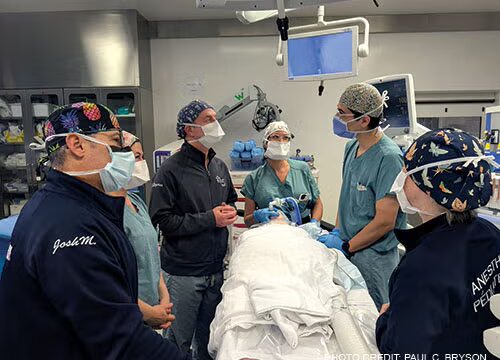
A poignant illustration of this principle in action was observed at the recent resident and fellow graduation ceremony at Massachusetts Eye and Ear. This annual event, a highlight for many involved in medical education, typically features graduating chief residents reflecting on their transformative experiences. Their narratives frequently encompass memorable patient encounters, particularly those that were complex or challenging, the arduous nature of overnight calls, and the pivotal roles played by mentors, colleagues, family, and friends in guiding them through the demanding residency period. These reflections often articulate how these formative experiences have profoundly shaped their evolving identities as physicians and educators, instilling in them the qualities they aspire to embody in their future practices.
However, an observation consistently made during these ceremonies is the notable absence of self-acknowledgment from the graduating residents. While they readily credit external support systems and acknowledge the impact of external challenges, they often overlook their own internal journey of overcoming adversity. This oversight, while perhaps unintentional, underscores the profound personal growth that occurs when individuals are consistently pushed beyond their perceived limits.
The Evolution of a Physician: From Anxiety to Confidence
For over two decades, the privilege of training residents at Massachusetts Eye and Ear has provided a unique vantage point from which to witness this developmental arc. The transformation of eager interns into compassionate, confident surgeons is a consistently rewarding aspect of medical education. Each July, a new cohort of interns arrives, characterized by their intelligence, diligence, and, understandably, a palpable sense of anxiety. Their initial concerns often revolve around the possibility of making mistakes, the pressure of presenting cases during rounds, or the apprehension of performing procedures for the first time.

The remarkable trajectory of these individuals is evident years later. The same interns who once grappled with uncertainty are now confidently leading surgical teams, adeptly seeking assistance when necessary, managing complex patient cases with composure, mentoring junior residents, and making critical decisions under immense pressure. This evolution is not a result of discomfort disappearing; rather, it stems from a learned capacity to embrace and navigate it.
The Role of Discomfort in Skill Acquisition and Resilience
Residency programs impart far more than anatomical knowledge and surgical techniques. Each challenging patient interaction, each unexpected clinical outcome, every demanding overnight call, and every mistake that is followed by thorough reflection and learning contributes to the development of resilience. Confidence, in this context, is not a byproduct of comfort but a direct consequence of repeated exposure to and successful navigation of challenging situations. This iterative process of confronting and overcoming difficulties builds a robust foundation of self-efficacy.
Data from medical education research consistently highlights the correlation between challenging clinical experiences and the development of physician competence. A study published in the Journal of the American Medical Association (JAMA) in 2018 found that residents who reported more frequent exposure to complex and unexpected cases, coupled with structured debriefing and feedback, demonstrated higher levels of diagnostic reasoning and decision-making skills compared to their peers with less exposure. This suggests that the "discomfort" of facing novel or difficult situations, when properly managed, is a critical driver of skill acquisition.
Graduation: A Milestone and a New Horizon of Uncertainty
Ironically, the achievement of graduation often ushers in a new wave of anxiety for residents as they prepare for fellowship training or independent practice. While their technical proficiencies will continue to refine throughout their careers, they have already acquired the most crucial skill for sustained success: the capacity to learn, adapt, recover from setbacks, and persevere in the face of uncertainty. This meta-skill, honed through the crucible of residency, is the bedrock upon which future professional growth is built.
The medical field is in perpetual motion, constantly demanding that practitioners embrace the role of a novice. Emerging technologies necessitate continuous learning, leadership responsibilities expand, and the landscape of patient care evolves. Navigating difficult conversations, making ethically complex decisions, and adapting to constant change are inherent aspects of the profession. In essence, professional growth in medicine almost invariably commences with a degree of discomfort.
The "A, B, and C" Goals: A Framework for Navigating Imperfection
Endurance athletes often approach races with a tiered goal system: an "A" goal representing the ideal outcome, a "B" goal acknowledging success under imperfect conditions, and a "C" goal focused on completion, learning, and emerging stronger from the experience. The practice of medicine mirrors this framework. Not every surgical procedure, patient interaction, research endeavor, or leadership initiative will achieve its optimal "A" goal. The true measure of professional success lies in one’s willingness and ability to adapt, learn from these experiences, and continue moving forward. This adaptive mindset is critical in a field where outcomes are often influenced by a myriad of variables beyond a practitioner’s direct control.
The Enduring Wisdom of Embracing Discomfort
As a new academic year commences, with fresh cohorts of interns entering hospitals and recent graduates embarking on the next chapter of their careers, the most profound advice that can be imparted remains consistent with that offered by endurance coaches for decades: "Get comfortable being uncomfortable." This is not an endorsement of unnecessary hardship, but a recognition that growth, learning, and ultimately, excellence, are often found just beyond the boundaries of our current comfort. Discomfort is not the antithesis of progress; it is, in fact, the very pathway to becoming the accomplished physician and well-rounded individual one aspires to be. The ability to embrace the inherent uncertainties and challenges of medicine is what distinguishes competent practitioners from truly exceptional ones, fostering a career characterized by continuous improvement and meaningful impact.