
Chronology of the Incident and Investigative Findings
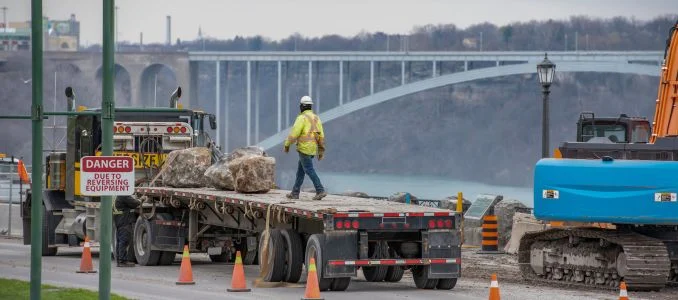
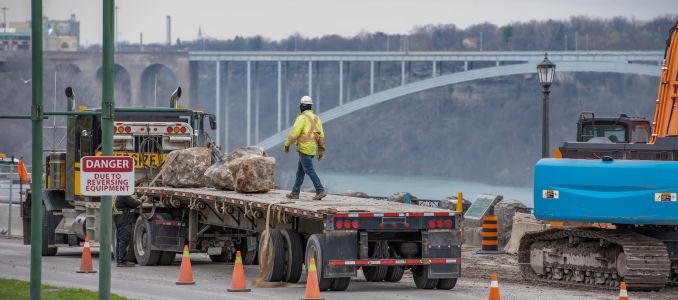
The fatal event took place during a mid-day operation where a team was tasked with loading heavy landscaping materials onto a standard flatbed trailer. Preliminary findings indicate that the primary cause of the incident was a combination of unstable equipment positioning and a catastrophic failure in the load-securing sequence.
According to the official investigative narrative, the operator began the loading sequence without the implementation of adequate ground-level stabilization measures. As the heavy load was being transitioned from the ground to the trailer deck, the trailer—which had not been properly chocked—shifted laterally. This movement created a dangerous instability in the center of gravity. As the equipment transitioned onto the trailer bed, the shift in weight distribution caused the trailer to tip, resulting in the equipment dislodging and pinning the operator.

The investigation highlights a three-stage failure process:
- Preparation Failure: The failure to secure the trailer wheels against accidental movement on an uneven grade.
- Execution Failure: The operator attempted to maneuver the heavy machinery onto the trailer without the guidance of a spotter or a secondary safety monitor.
- Securement Failure: The use of improper or insufficient tie-down hardware meant that even as the trailer began to tilt, there was no secondary system to arrest the equipment’s momentum.
Statistical Context of Loading Dock and Trailer Accidents
Industry data from the Occupational Safety and Health Administration (OSHA) and the Bureau of Labor Statistics (BLS) underscores the gravity of these risks. Across the construction and freight sectors, transportation-related incidents remain a leading cause of workplace fatalities. Statistics suggest that nearly 15% of all loading-dock-related injuries involve some form of equipment rollover or trailer departure during the loading process.

Furthermore, research indicates that incidents involving flatbed trailers are statistically more lethal than those involving enclosed van trailers. This is largely attributed to the lack of side containment on flatbeds, which provides no barrier for equipment or materials should a shift occur. When human error is introduced into this environment—such as failing to verify the ground surface integrity or neglecting to use standardized chocking—the probability of a fatal outcome increases exponentially. Experts estimate that approximately 40% of loading accidents occur in "ad-hoc" environments, such as remote construction sites or landscaping projects where standard loading docks are unavailable.
Regulatory Guidance and Safety Protocol Enhancements
In the wake of this investigation, safety experts are calling for a strict adherence to a "Zero-Tolerance Loading Protocol." This framework moves beyond basic compliance and focuses on active risk mitigation.

The Four Pillars of Safe Loading:
- Ground-Level Integrity: Before any loading begins, the surface grade must be inspected. If the trailer is not on a level, hardened surface, supplemental support stands (often called "trailer jacks") must be deployed to prevent the landing gear from sinking or shifting.
- Active Restraint Systems: The reliance on human memory to chock wheels is no longer sufficient. Investigators recommend the use of automated vehicle restraint systems or, at a minimum, high-visibility, heavy-duty wheel chocks on both sides of the trailer wheels.
- The Spotter Mandate: No heavy machinery is to be moved onto a trailer without a dedicated spotter who is in constant communication with the operator. This individual acts as the "eyes" on the ground, monitoring for any initial signs of trailer instability or shifting.
- Hardware Certification: Tie-down straps, chains, and binders must be inspected before every single use. The investigation found that worn, frayed, or underrated hardware was a contributing factor in the load’s inability to remain fixed during the trailer’s initial tilt.
Industry Implications and Management Responsibility
The implications of this investigation extend far beyond the specific site where the accident occurred. Safety managers across the logistics and construction spectrum are being urged to treat these findings as a catalyst for a comprehensive audit of current site protocols.

"The tragedy serves as a stark reminder that in the logistics industry, convenience is often the enemy of safety," noted one industry safety consultant. "When crews are under pressure to meet tight deadlines, they tend to bypass the foundational steps of securement. This investigation proves that those steps are the only thing preventing a minor equipment shift from becoming a fatality."
Management is now tasked with implementing formal training programs that go beyond generic safety videos. Modern training must include hands-on simulation of trailer loading, including "worst-case scenario" drills where operators learn to identify the early warning signs of trailer instability. Furthermore, companies are being encouraged to integrate the findings of this investigation into their "toolbox talks"—the daily safety briefings held on construction sites to remind workers of the risks associated with the day’s specific tasks.

The Role of Technology in Hazard Prevention
While human procedure remains the primary line of defense, technological advancements are offering new ways to mitigate risk. Smart-sensor technology, which can detect when a trailer is off-balance or when landing gear is not properly engaged, is becoming increasingly accessible. Some firms are beginning to pilot "active monitoring" systems that link trailer weight sensors to the operator’s remote control, automatically halting the loading process if the trailer exceeds a predetermined tilt angle.
However, investigators warn that technology should not be seen as a replacement for fundamental safety training. "There is no sensor that can replace the disciplined judgment of a well-trained operator," the report states. The goal is a hybrid approach where technology acts as a failsafe, but the primary protocol relies on a culture of safety-first decision-making.

Moving Toward a Culture of Safety
The conclusion of this investigation is not merely a list of technical requirements but a plea for a cultural shift in the construction and transportation sectors. The fatal loading incident serves as a grim marker of the consequences of complacency. For the industry to move forward, it must embrace a holistic view of safety—one that accounts for the human element, the physical environment of the site, and the rigorous maintenance of the machinery involved.
As safety investigators continue to analyze the data from this event, the consensus remains clear: fatal loading accidents are largely preventable. By formalizing these loading protocols, mandating the use of spotters, and enforcing strict equipment inspection standards, site managers can significantly reduce the risk of future tragedies. The responsibility now lies with leadership to ensure these lessons are not just read, but ingrained into the daily operations of every crew, ensuring that every worker returns home safely at the end of the shift. As the industry evolves, the focus on trailer hazard prevention must remain a non-negotiable priority, anchoring all operations in the fundamental truth that no deadline is more important than the lives of those performing the work.