The Evolution of a Clinical Shift
The genesis of VOZ SOS CAAPAZ lies in a critical self-reflection regarding the limitations of conventional clinical interventions. For years, the standard approach to speech-language pathology focused heavily on individual therapy sessions. While these sessions provided technical instruction, they often failed to address the broader social and functional needs of AAC users.
Ordóñez identified a series of systemic flaws in traditional practice models. Most notably, the reliance on one-on-one therapy conducted by speaking clinicians often reinforces an ableist hierarchy where speech is prioritized over other modalities of communication. Furthermore, the limited exposure to multimodal communication in naturalistic settings often leaves users without the social confidence required to navigate public life. By transitioning from the clinical office to public spaces, the VOZ SOS CAAPAZ project addresses the urgent need for peer-to-peer interaction among AAC users—a demographic that is frequently excluded from mainstream social design.
Chronology of Implementation
The development of this initiative was marked by three distinct intellectual and professional milestones that occurred between 2024 and 2026.
In 2024, Ordóñez joined the "CAAmigos Angelman" program, a virtual, evidence-based initiative directed by Claudia Marimón. This collaboration served as a practical laboratory, allowing Ordóñez to observe the efficacy of Comprehensive Literacy models in diverse Latin American populations. The experience facilitated a necessary "unlearning" process, where the clinician moved away from the traditional, speech-centric pedagogical frameworks she had been trained in.
In 2025, the intellectual foundation of the project was further solidified by the discourse presented in the journal of the International Society for Augmentative and Alternative Communication (ISAAC). A pivotal article by non-speaking advocate Gran Blasko, titled "Nothing About AAC Users Without AAC Users," acted as a call to action. It demanded that AAC research and service development move beyond tokenism, insisting that non-speaking individuals hold the primary agency in the development of the systems they use to interact with the world.
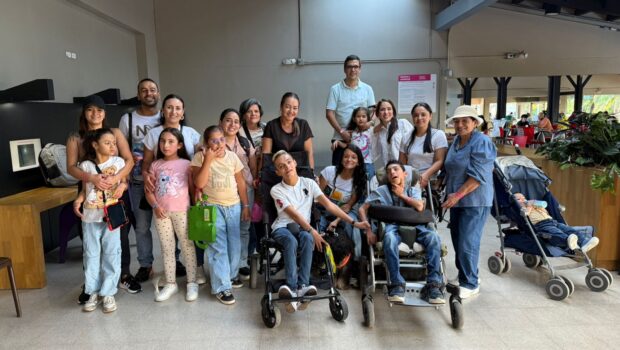
These influences culminated in the formal launch of VOZ SOS CAAPAZ in October 2025. The pilot event, held at the Parque Comfama in Rionegro, marked a departure from clinical isolation, moving into a public, high-traffic environment where communication systems could be tested in real-world conditions.
Data and Participation Demographics
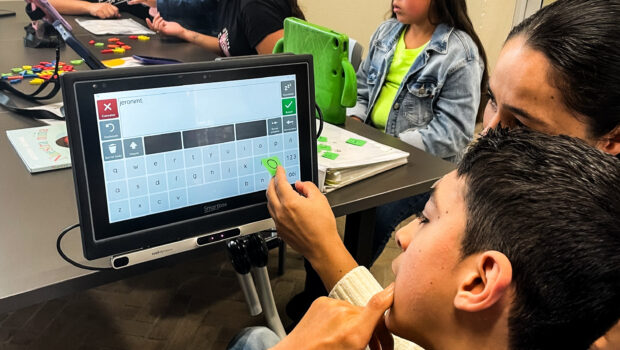
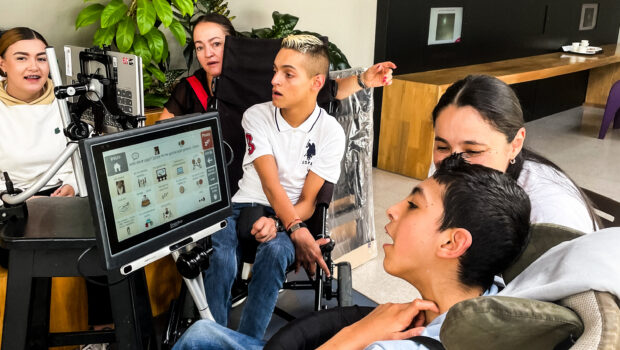
The success of the initiative is measured not just by the presence of participants, but by the diversity of the AAC systems employed. The October 2025 gathering involved six primary AAC users, showcasing a variety of high-tech and mid-tech solutions. The hardware utilized included Td Snap, Communicator 5 with Eye Tracking, Proloquo2go, and Grid 3 with specialized eye-gaze technology.
Beyond the primary users, the event saw the participation of ten family members and various members of the public, creating an organic educational environment. By normalizing the presence of these devices in a recreational setting, the initiative provided an unintended service to the broader community: the education of bystanders, shopkeepers, and park staff on the validity and necessity of alternative communication.
A follow-up session in February 2026, held at a public library in Rionegro, focused on shared reading and literacy development. This session included three users at the "emergent" stage of literacy, underscoring the project’s commitment to the principle that literacy is a fundamental human right, regardless of an individual’s primary mode of expression.
The Neuro-Affirmative Framework
The project operates under the philosophy of "presuming competence." This neuro-affirmative stance rejects the notion that a lack of speech equates to a lack of intellectual capacity. Instead, the initiative posits that the environment, rather than the individual, is often the source of the "disability."
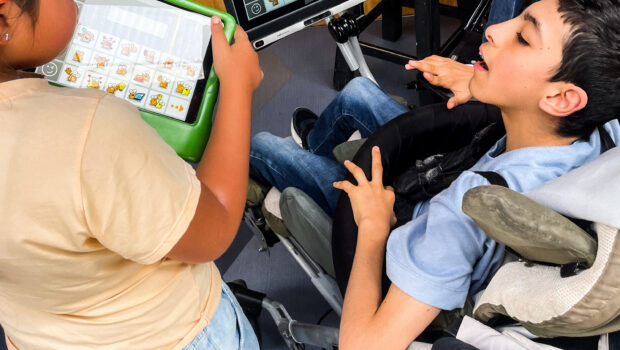
The name "VOZ SOS CAAPAZ" is a play on the Spanish words for "Voice," "You are," and "Capable." It serves as a reminder that every person possesses a voice, and it is the responsibility of the community and service providers to ensure the necessary tools are accessible for that voice to be projected. By treating the communication partner—the clinician and the family—as a constant learner, the project ensures that the power dynamic remains horizontal rather than vertical.
Implications for Future Practice
The implications of the VOZ SOS CAAPAZ model are significant for the broader field of speech-language pathology and special education.
- Social Integration as Therapy: The initiative demonstrates that social, public interaction is a valid and necessary component of therapy. When AAC users interact with peers who utilize similar technologies, the "isolation gap" is bridged, and users gain critical social capital.
- The Role of the Family: By involving families in the logistical planning and execution of gatherings, the project creates a support network that extends beyond the clinic, ensuring that communication strategies are reinforced in the home.
- Challenging Professional Norms: The project acts as a critique of current therapeutic standards. It highlights that if therapy sessions do not lead to meaningful, community-based communication, they may be failing the user.
- Policy and Access: The focus on public spaces—libraries, parks, and community centers—raises questions about universal design. For society to be truly inclusive, public infrastructure must support individuals who communicate through eye-gaze, switches, and other alternative methods.
Testimonials and Long-term Goals
The impact on individual participants is perhaps best illustrated by the feedback from the users themselves. Pablo Andrés Calderón Gómez, a participant who utilizes Tobii eye-tracking technology, noted following the October 2025 event that the gathering was significant because it provided a rare opportunity to engage with peers who shared his experience. "We need more people with this Right to Communication," Gómez stated. His feedback highlights the underlying deficit in current services: a lack of communal space for AAC users to simply exist and interact.
As the program moves forward, Ordóñez and her team plan to transition from monthly meetings to a more sustainable, recurring schedule. The goal is to expand the reach of the initiative, encouraging other communities in Colombia and Latin America to adopt the VOZ SOS CAAPAZ framework. By prioritizing the autonomy of the user and the necessity of literacy, the project serves as a model for a more inclusive, communicative future.
In conclusion, the VOZ SOS CAAPAZ initiative represents a necessary evolution in how society treats individuals with communication challenges. It is a transition from viewing the non-speaking person as a subject of clinical study to recognizing them as an active, capable member of the public sphere who requires nothing more than access to the tools of their own agency. Through this work, the organizers are not only teaching AAC users how to communicate; they are teaching the community how to listen.