
The Complex Landscape of Difficult Airway Management
Managing a difficult airway is one of the most critical and high-stakes scenarios in medicine, demanding a confluence of expertise, precise execution, and seamless teamwork. When a patient’s airway becomes compromised, the window for intervention is often narrow, and missteps can have profound, even fatal, consequences. Experts emphasize that while the goal is always a successful and uneventful airway secured, the path to achieving this is fraught with potential challenges that require meticulous attention.
The inherent complexity arises from the diverse etiologies of difficult airways, ranging from congenital anomalies and trauma to tumors, infections, and the sequelae of previous medical interventions like radiation therapy. These factors can dramatically alter airway anatomy and physiology, transforming a routine procedure into an emergency. The surgeons interviewed for this report represent leading voices in the field, offering a collective wisdom honed through years of experience in managing the most challenging cases. Their insights underscore a fundamental principle: proactive preparation and a multidisciplinary approach are not merely best practices, but essential components for patient safety.
Communication Breakdowns: The Silent Threat
One of the most pervasive and insidious pitfalls in difficult airway management is the breakdown of communication among the multidisciplinary teams involved. With specialists from otolaryngology (ENT), anesthesiology, pulmonology, and critical care often converging on a single patient, clarity and coordination are paramount.
Dr. Paul C. Bryson, Director of the Cleveland Clinic Voice Center and Section Head of Laryngology in Ohio, stresses that failing to review a patient’s prior airway management history, especially challenging intubations, represents a significant lost opportunity. "When we don’t share information about previous difficulties, we’re essentially walking into a potential crisis without a map," Dr. Bryson stated. This lack of historical context can lead to repeated errors or a failure to anticipate recurring issues.
Furthermore, the pre-procedural visualization of airway anatomy is crucial. Dr. Bryson highlights the underutilization of diagnostic tools like CT scans and video laryngoscopy. "These exams provide incredibly useful conversation points in terms of what the upper airway looks like before you initiate airway care," he explained. "They don’t prevent or fix every difficulty, but you will be far better prepared when a routine case deteriorates, and emergency interventions are needed." This proactive imaging allows teams to identify anatomical variations, potential obstructions, or scar tissue that might impede intubation.
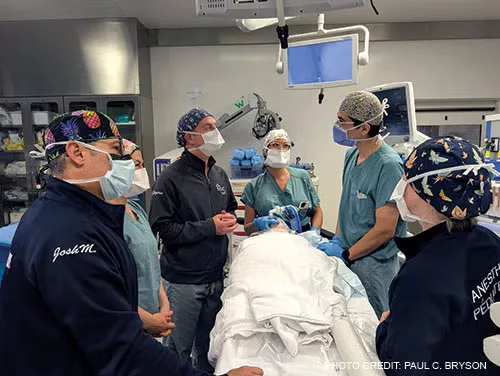
The concept of airway management as a "team sport" is frequently invoked by these specialists. Dr. Bryson emphasizes the ENT surgeon’s role not just as a clinician but as a "coach," responsible for assembling the right players. At Cleveland Clinic, this involves close collaboration with interventional pulmonologists for their expertise in rigid bronchoscopy, recognizing them as vital partners in complex airway surgery.
Dr. Mathieu Bergeron, a pediatric otolaryngologist at CHU Sainte-Justine Hospital in Montreal, echoes this sentiment, routinely reviewing case details with nursing, anesthesia, ENT, and OR technicians. "To ensure we are all on the same page and to build trust and rapport," he notes. His philosophy is that "the best airway rescue is the one that you never have to use because you anticipated the problems before even starting the case." This forward-thinking approach minimizes the need for reactive emergency interventions.
To institutionalize this communication, Dr. Taher Valika, Medical Director of the Aerodigestive Program at Ann & Robert H. Lurie Children’s Hospital of Chicago, and his team implement daily focused ENT/anesthesia airway huddles. These discussions cover potential intubation challenges, mask ventilation feasibility, equipment needs, and the optimal ventilation strategy (spontaneous vs. paralysis). "We also discuss the intra-operative plan, backup options, and post-operative airway strategy," Dr. Valika added, illustrating a comprehensive planning process that extends beyond the immediate procedure.
Underestimating the Fragility of Younger and Vulnerable Patients
A particularly perilous pitfall is the underestimation of the physiological fragility of certain patient populations, most notably children and individuals with significant pre-existing medical conditions. Dr. Valika warns that children with difficult airways can present a deceptive appearance of stability. "They can appear stable until they suddenly are not," he stated. The limited airway reserve in pediatric patients means that "a seemingly controlled airway situation can rapidly devolve into an emergency."
Dr. Valika recounted a case at Lurie Children’s where a child, initially appearing to hum in the exam room, was found to have biphasic stridor, indicating a severely compromised airway. "When we evaluated him, this child had a pinpoint airway," Dr. Valika said. "At that point, he could not safely go home." This case served as a stark reminder that "severe airway obstruction can be deceptively subtle, and that some children are compensating right up until the moment they no longer have a functioning airway." This highlights the importance of thorough, objective assessment rather than relying solely on subjective patient presentation.
The Minefield of Pre-existing Conditions
Pre-existing medical conditions transform an otherwise manageable airway into a complex minefield. Dr. Jonathan M. Bock, a professor at the Medical College of Wisconsin, points to cancer patients who have undergone radiation therapy, leading to airway fibrosis. In such cases, he employs a technique of probing the airway with a large-bore IV catheter or needle filled with saline. "Pulling back until you get air," he describes, allowing for precise localization of the airway within scar tissue.

Congenital disorders present another significant challenge, especially in pediatric patients. Dr. Bergeron identifies children with complete tracheal rings (CTR) as particularly vulnerable. These patients have a rigid, cylinder-like airway that is "very unforgiving." Even minor swelling or secretions can lead to rapid obstruction, making safe intubation extremely difficult. Dr. Bergeron has witnessed instances where teams, lacking full knowledge of CTR, attempted repeated intubations, exacerbating edema and worsening the airway.
More effective strategies in these cases include the use of heliox, a lighter breathing gas mixture that reduces turbulence and resistance in narrowed airways, or extracorporeal membrane oxygenation (ECMO) in severe situations. Dr. Bergeron stresses that "all possible interventions need to be on the table to ensure optimal outcomes," even if they initially seem dramatic.
The challenge extends to adult patients with congenital anomalies. Dr. Tyler Crosby, from the University of California, San Francisco, cautions that conditions like micrognathia and macroglossia, often associated with congenital disorders, can complicate both mask ventilation and tracheal intubation in adulthood. These patients "tend to be more hypotonic, and they don’t emerge from anesthesia as well," he noted, underscoring that "they’re not easy cases."
The Hesitation to Embrace Tracheostomies
A common pitfall, according to Dr. Bryson, is a reluctance to recommend and manage tracheostomies when appropriate. He has become increasingly willing to suggest this surgical airway for patients with difficult airways to ensure safety, with the subsequent focus on developing a plan for safe decannulation. This approach is particularly beneficial for patients with airway scarring from cancer treatment, bilateral vocal cord paralysis, or multi-level airway obstruction. "We can still meet their functional needs—they can still work and live with the tracheostomy," he stated. Moreover, for patients living far from specialized centers, a pre-existing tracheostomy can be lifesaving during emergent situations.
Dr. Bock further identifies a related pitfall: the disengagement of ENT surgeons from the long-term care of tracheostomy patients. "As otolaryngologists, we are masters of the upper airway," he asserted. "We have more experience managing these structures and sequelae than almost anyone else in the hospital." He argues that this expertise confers a responsibility, urging colleagues to embrace, rather than resent, requests for long-term management. "They’re asking because we are the experts."
Overlooking the Benefits of Awake Intubation
The strategy of awake intubation, performed with minimal sedation, is an effective but sometimes underutilized technique for managing difficult airways. Dr. Bock emphasizes that "sometimes the only thing that is keeping a patient from rapidly declining is their own respiratory drive." This approach is supported by guidelines, such as those from the Difficult Airway Society, which highlight its benefits in preserving spontaneous ventilation and airway tone while maintaining patient cooperation and protective reflexes.
Dr. Bryson concurs, citing patients with upper airway tumors, obstructions, or post-radiation changes where awake intubation allows for navigation around challenging anatomy while avoiding the potential airway collapse that can occur with anesthesia-induced relaxation.
Delays in ENT Surgeon Consultation
A critical delay that frequently compromises patient outcomes is the late involvement of ENT surgeons. "Sometimes, we get called into a case as the surgical airway team of last resort, when a patient is already in grave trouble," Dr. Bryson observed. The ideal scenario, he insists, is early consultation. "Bring us in early so we can help with a more thorough assessment and anticipate and avoid problems before they occur."
Dr. Crosby shared a concerning instance where his team received a "heads-up" call regarding a cancer patient scheduled for an interventional radiology procedure, only after the patient had been sedated. Upon assessing the patient’s neck, which was indurated from radiation with no palpable landmarks, his team informed the radiology department that an emergent surgical airway would have been "highly challenging to manage." The perception that ENT specialists are merely "down the hall" and available to "save the day" is a dangerous misconception. "That’s not a viable management plan," Dr. Crosby asserted. "We need to be consulted far earlier to ensure optimal outcomes."
Not Trusting Resident Expertise
A subtle yet significant communication issue arises when experienced residents are sidelined during airway emergencies. Dr. Bock has observed situations where residents, possessing extensive experience in procedures like awake intubations, are overlooked. "Yet I’ve been in way too many situations where a resident at the bedside offers help during an airway emergency and is sidelined," he said. When he intervenes, encouraging the resident to proceed, they often successfully secure the airway. This underscores the importance of fostering an environment where residents’ expertise is recognized and leveraged, especially in high-pressure situations where their familiarity with specific techniques or equipment might be superior to that of other team members.
Poor Equipment Planning: A Recipe for Disaster
The selection and utilization of endotracheal tubes represent a major source of long-term sequelae. Dr. Crosby emphasizes the need for critical care colleagues to be "really thoughtful about the size tube you’re using, how long you’re leaving it in, and the damage it could cause." Improper tube selection can lead to severe laryngeal injuries and stenosis, necessitating lifelong tracheostomies.
A common fallacy is the assumption that morbidly obese patients require larger tubes to maintain airway pressure. Dr. Crosby clarifies that "a patient’s height determines how big their airway is, not their weight." He has treated short, heavily built patients who were intubated with tubes two sizes too large, resulting in significant airway complications.

Dr. Valika highlights the development of a Rapid Difficult Airway Response (RaDAR) team at Lurie Children’s, supported by a dedicated instrument cart. This cart ensures immediate availability of specialized personnel and essential pediatric airway equipment at the bedside. The RaDAR team’s protocol follows a structured algorithm, prioritizing oxygenation, supraglottic rescue devices, video laryngoscopy, fiberoptic techniques, and front-of-neck access. The team composition—including anesthesia, ENT, and a skilled technician—ensures that expertise and tools arrive together, enabling swift and effective intervention.
Dr. Bergeron learned the hard way about poor equipment planning when a pediatric case required a specific-sized tracheostomy tube that was not readily available. "What I wanted was a size three, but the nurse handed me a size five, which actually is about four times too large," he recounted. This experience led him to never take difficult airway equipment and planning for granted again.
Crucial pediatric airway equipment like video laryngoscopes or rigid endoscopes, such as the Hopkins rod, are described as "lifesavers" by Dr. Bergeron. These tools allow direct visualization of tube placement, enabling immediate confirmation of correct positioning and prompt escalation to other interventions if the patient doesn’t respond.
Dr. Crosby stresses the importance of familiarity with available equipment. "It’s something we can take for granted, but it’s important to be familiar with the airway equipment your hospital has, where it is, and how to set it up," he advises. He recommends mentally walking through the surgical plan and contingencies, ensuring all necessary equipment is present and functional before the patient even enters the operating room. The absence of critical items like a functional light source, suction, or a dilator during a time-critical phase of a case can be catastrophic.
The challenge of "high acuity, low frequency" cases at many centers means teams may not have extensive experience. Therefore, "minimizing chance and guesswork is critical," Dr. Crosby emphasizes.
Transferring Patients Without Adequate ENT Workup
A concerning trend observed by Dr. Crosby is the transfer of patients for ENT management without a foundational airway assessment. The assumption that a relatively stable patient, with acceptable oxygen saturation, is safe to transfer is a dangerous one. "We need to perform at least a foundational airway assessment before sending a patient elsewhere," he urges. "Even a simple bedside flexible scope can provide valuable information."
Poor Patient Positioning: An Overlooked Detail
Even experienced airway teams can fall prey to the pitfall of poor patient positioning during intubation attempts. Dr. Bock notes instances where anesthesiologists attempt procedures with the patient lying flat. He advocates for a more advantageous position, suggesting, "Why don’t we try moving this patient forward to a different position so that we can better visualize their airway." He points out that in clinic settings, patients are often positioned sitting forward, which significantly enhances visualization of the airway. "It’s so much easier and effective," he concludes, highlighting this fundamental but often overlooked aspect of airway management.
Enhancing Airway Management Through Education and Training
The consistent theme emerging from these expert discussions is the indispensable role of robust training and education in mastering difficult airway management. Two prominent initiatives exemplify this commitment: the Chicago Advanced Airway Course and the "ENT! 911!" lecture series.
The Chicago Advanced Airway Course, co-led by Dr. Taher Valika, has been held annually for six years. This multidisciplinary program brings together trainees and faculty from anesthesiology, pediatric surgery, and otolaryngology across the Midwest. Through simulation models and board-style emergency scenarios, participants hone both technical skills and team-based decision-making critical for pediatric difficult airway management. The course deliberately simulates "high-stress, worst-case airway scenarios" to prepare trainees for the reality of emergencies. Dr. Valika emphasizes that simulation provides a safe environment to practice decision-making under pressure and build the "muscle memory" needed for real-life critical events.
Dr. Jonathan M. Bock’s "ENT! 911!" lecture series aims to equip the next generation of ENT surgeons with essential airway management skills, with a particular focus on emergency cases. Dr. Bock acknowledges the potential for chaos in these situations, where multiple teams may be present, making coordination difficult. His strategy involves mental preparation, instructing trainees to approach the patient as if they have "already passed." This reframing aims to reduce the overwhelming pressure of individual outcomes and emphasize the collaborative nature of the surgical team. He also advises trainees to "take their own pulse at the bedside before they even consider intervening" to foster a calm, rational approach to decision-making.
These educational initiatives underscore a broader understanding within the medical community: that preventing and managing difficult airways is a skill that requires continuous learning, interdisciplinary collaboration, and a steadfast commitment to patient safety. By addressing these common pitfalls through improved communication, meticulous planning, and comprehensive training, healthcare providers can significantly enhance outcomes for patients facing complex airway challenges.