
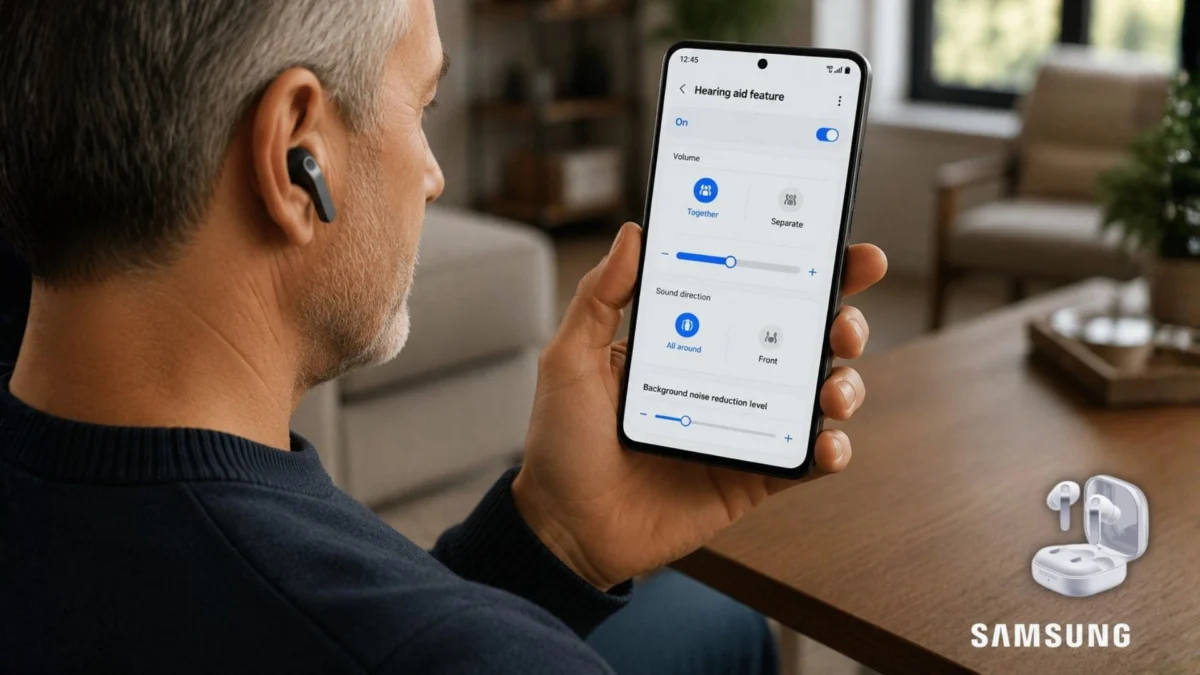
This groundbreaking clearance marks a significant convergence of advanced consumer audio technology and regulated medical devices, aligning with the FDA’s broader initiative to enhance the accessibility and affordability of hearing healthcare. The feature is meticulously designed for individuals who often find themselves struggling to follow conversations, particularly in challenging noisy environments, and can be utilized without the traditional requirements of a prescription or a specialized clinic visit. Complementing this, Samsung is also rolling out a sophisticated Hearing Test feature on the same compatible Galaxy Buds models. This test, registered as Software as a Medical Device (SaMD), is touted to deliver medical-grade results, providing users with an immediate and reliable assessment of their hearing profile.
The FDA’s Landmark Decision and Samsung’s Entry into OTC Hearing Aids
The pathway for Samsung’s innovative offering was paved by the FDA’s final rule on over-the-counter hearing aids, enacted in October 2022. This regulatory framework was a direct response to a 2017 Congressional mandate aimed at fostering greater innovation, reducing costs, and increasing access to hearing aids for millions of Americans. Prior to this, hearing aids were exclusively prescription-only medical devices, necessitating consultations with audiologists or other hearing healthcare professionals, often involving multiple visits and significant out-of-pocket expenses. The average cost of traditional hearing aids, often ranging from $2,000 to $7,000 per pair and frequently not covered by insurance, presented a substantial barrier for many.
The FDA’s OTC category created a new regulatory pathway for certain air-conduction hearing aids to be sold directly to consumers, without a medical exam, prescription, or a fitting by an audiologist. This was specifically targeted at adults with perceived mild to moderate hearing loss, addressing a critical unmet need. Estimates suggest that over 30 million adults in the U.S. could benefit from hearing aids, yet only about one-fifth of those who could benefit actually use them. The high cost and stigma associated with traditional devices have historically been major deterrents. Samsung’s entry, leveraging its globally recognized brand and vast distribution network, is set to significantly disrupt this landscape, offering a discreet and familiar form factor in the shape of wireless earbuds.
Galaxy Buds: Bridging Consumer Tech and Medical Devices
At the core of Samsung’s new hearing health ecosystem are two seamlessly integrated features: the Hearing Test and the Hearing Aid functionality. Hon Pak, Senior Vice President and Head of the Digital Health Team for the Mobile eXperience (MX) Business at Samsung Electronics, underscored the company’s commitment, stating, “Hearing health is a vital component of our overall well-being, profoundly impacting how we communicate, connect with loved ones and engage with the world. With the latest clearance from the FDA, we are expanding access to hearing support and making proactive care effortless by integrating Hearing Test and Hearing Aid functionality directly into the Galaxy Buds.”

Unlike many traditional hearing aid solutions that require separate applications or external devices, Samsung’s approach centers on direct integration. Users can access the Galaxy Buds menu within their device’s Settings and complete a self-administered Hearing Test in approximately five minutes. This streamlined process eliminates friction, making proactive hearing health checks an effortless part of routine device management.
A Deeper Dive into the Technology and Validation
The Hearing Test feature employs pure-tone audiometry, a standard clinical method for evaluating hearing sensitivity. During the test, the software individually assesses each ear by presenting tones at various frequencies and intensities, generating an audiogram. This audiogram visually represents the user’s hearing thresholds and allows Samsung’s system to categorize the user’s hearing as normal, mild, moderate, severe, or profound hearing loss. The precision of this test, registered as SaMD, signifies its adherence to rigorous medical device standards, providing users with trustworthy results.
Building upon these individualized results, the Hearing Aid feature is engineered to amplify sounds that the user has difficulty hearing, meticulously personalizing amplification according to their unique hearing profile. This personalized approach is crucial, as hearing loss manifests differently in each individual, often affecting specific frequency ranges more than others. The system dynamically adjusts the sound output to compensate for these deficiencies, aiming to restore a more balanced and comprehensive auditory experience.
Furthermore, Samsung has incorporated advanced acoustic technologies commonly found in dedicated hearing aids. These include sophisticated noise reduction algorithms, which actively filter out distracting background sounds, and beamforming technology. Beamforming is particularly effective in noisy environments, as it emphasizes sounds originating from in front of the listener while simultaneously reducing competing background noise, thereby enhancing speech clarity and user focus during conversations.
Crucially, the Galaxy Buds leverage NAL-NL2, a widely recognized and clinically validated fitting prescription for hearing aids. This integration ensures that the amplification strategies employed by the Galaxy Buds are based on established audiological principles, optimizing sound quality and user comfort. Samsung’s development of this OTC hearing solution was a collaborative effort, involving the expertise of the National Acoustic Laboratories (NAL) in Australia, a world leader in hearing research, and the Samsung Medical Center. To further validate the efficacy and reliability of its solution, Samsung conducted extensive clinical validation studies at prestigious institutions, including Vanderbilt University Medical Center, San Jose State University, and the University of Memphis. These rigorous studies underscore the medical-grade intent and performance of the Galaxy Buds’ hearing features.
Samsung’s Expanding Footprint in Hearing Health
This latest FDA clearance is not an isolated development but rather a significant milestone in Samsung’s multi-year strategic commitment to digital health and hearing-related functionality. The company began integrating hearing support into its earbuds several years ago, demonstrating a foresight into the potential of consumer electronics in this space. In 2020, Samsung introduced a Personal Sound Amplification Product (PSAP) feature on its Galaxy Buds+. PSAPs are consumer electronic devices intended to amplify sounds for non-hearing impaired consumers, but they laid the groundwork for future medical applications.

By 2021, Samsung announced that its PSAP feature had undergone clinical validation as a support tool for daily communication among individuals with hearing loss. This early validation was instrumental in establishing the scientific and clinical foundation necessary for the subsequent development and regulatory approval of the more advanced Hearing Aid feature. Beyond direct amplification, Samsung also integrates hearing-related information, such as noise exposure levels and Hearing Test results, into its comprehensive Samsung Health app. This allows users to monitor their hearing health alongside other vital wellness metrics, fostering a holistic approach to personal well-being. This continuous evolution highlights Samsung’s long-term vision to embed health capabilities into its mainstream devices, making health monitoring and intervention more accessible and user-friendly.
Addressing the Global Challenge of Hearing Loss
The imperative for such accessible solutions is underscored by the global prevalence of hearing loss. According to the World Health Organization (WHO), over 1.5 billion people worldwide experience some degree of hearing loss, and this number is projected to rise to nearly 2.5 billion by 2050. Untreated hearing loss carries significant personal and societal burdens, including communication difficulties, social isolation, cognitive decline, reduced quality of life, and economic disadvantages. The estimated annual global cost of unaddressed hearing loss is a staggering $980 billion. In the U.S. alone, about 15% of American adults (37.5 million) aged 18 and over report some trouble hearing. The majority of these cases are mild to moderate, making them prime candidates for OTC solutions.
The stigma associated with traditional hearing aids has historically been a major barrier to adoption. Many individuals delay seeking help for years, often missing out on critical interactions and experiences. Integrating hearing aid functionality into a device as ubiquitous and socially accepted as wireless earbuds offers a powerful avenue for destigmatization. Users can access hearing support discreetly, without drawing attention to their hearing needs, thereby encouraging earlier intervention and broader acceptance.
Market Implications and Industry Transformation
Samsung’s entry into the OTC hearing aid market with FDA-cleared earbuds is poised to create significant ripples across the hearing healthcare industry. Traditional hearing aid manufacturers, accustomed to a high-margin, prescription-based model, will face new competition from consumer electronics giants. This will likely drive innovation, potentially leading to more affordable and technologically advanced solutions across the board. The average cost of the Galaxy Buds3 Pro and Galaxy Buds4 Pro is significantly lower than traditional hearing aids, making professional-grade hearing support accessible to a much broader demographic.
Beyond Samsung, this development signals a broader trend where major consumer electronics manufacturers are increasingly incorporating sophisticated health assessment and amplification capabilities into their mainstream earbuds and wearable devices. Companies like Apple, Google, and others are also exploring similar integrations, recognizing the immense potential of the health tech market. This expansion will diversify the range of options available to adults with perceived mild to moderate hearing loss, empowering consumers with more choices and potentially lowering the overall cost of entry into hearing healthcare.
Accessibility, Affordability, and Destigmatization: A Triple Impact

The primary beneficiaries of this shift are consumers. The convenience of purchasing a hearing aid directly without a prescription, combined with the familiarity and comfort of using an earbud, removes significant logistical and psychological barriers. For many, the ability to self-test and personalize their hearing experience through a device they already own or are familiar with will be a game-changer. This democratizes access to hearing support, particularly for underserved populations who may lack access to specialized clinics or cannot afford the high costs of traditional devices.
The discreet nature of earbuds also plays a crucial role in destigmatizing hearing aid use. Unlike traditional hearing aids, which can sometimes be visible and carry a social stigma, wireless earbuds are widely accepted and fashionable. This subtle integration encourages earlier adoption, allowing individuals to address their hearing loss before it progresses or significantly impacts their quality of life.
The Role of Professional Care and Limitations
While the advent of OTC hearing aids is a significant step forward, it is crucial to understand their intended scope and limitations. Samsung, along with the FDA, emphasizes that the new Hearing Aid feature is specifically intended for adults aged 18 and older with perceived mild to moderate hearing loss. It is explicitly stated that this feature is not a substitute for professional diagnosis or treatment by a qualified clinician. Individuals experiencing severe or profound hearing loss, sudden hearing loss, pain, discharge, or other complex symptoms should always consult with a hearing healthcare professional.
Audiologists and other hearing specialists will continue to play a vital role, especially for those with more complex hearing needs, children, or individuals requiring comprehensive diagnostic evaluations, rehabilitation, and long-term care. The OTC pathway is designed to serve a segment of the population that has historically been underserved, not to replace the entire professional hearing healthcare ecosystem. It is anticipated that increased awareness and accessibility through OTC options might even lead more people to seek professional help once they recognize the benefits of amplification.
Availability and Future Outlook
The Hearing Aid and Hearing Test features are anticipated to become available on the Galaxy Buds3 Pro and Galaxy Buds4 Pro in the United States and select approved international markets during the fourth quarter of 2026. Full support for these features will require a compatible Galaxy device running One UI 8 or later, ensuring optimal integration and performance within Samsung’s ecosystem. Samsung has noted that availability may vary by market, model, or paired device, reflecting the complexities of global regulatory clearances and product rollouts.
This development by Samsung is more than just a product launch; it represents a significant paradigm shift in how hearing health is perceived and accessed. By merging cutting-edge consumer electronics with stringent medical device standards, Samsung is not only expanding its digital health portfolio but also empowering millions to take proactive steps towards better hearing and overall well-being. The future of health tech increasingly points towards integrated, accessible, and user-centric solutions, and Samsung’s Galaxy Buds are now at the forefront of this transformative movement.