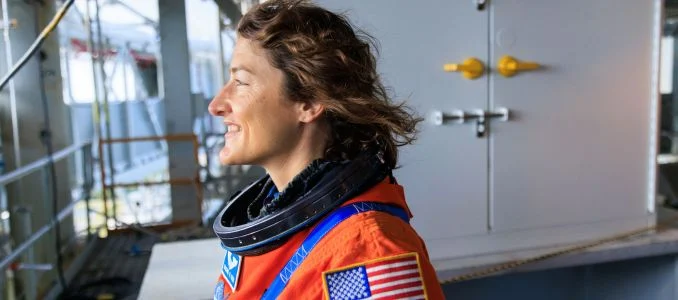
As NASA prepares for the Artemis II mission—the first crewed voyage to orbit the Moon in over half a century—the agency is increasingly relying on a complex, domestic supply chain that demands the highest standards of occupational health and safety. By highlighting Koch’s career trajectory, the state labor department intends to inspire a new generation of workers to pursue careers in the skilled trades, positioning North Carolina as a vital contributor to the modern aerospace economy.
The Artemis II Mission: A New Era of Exploration
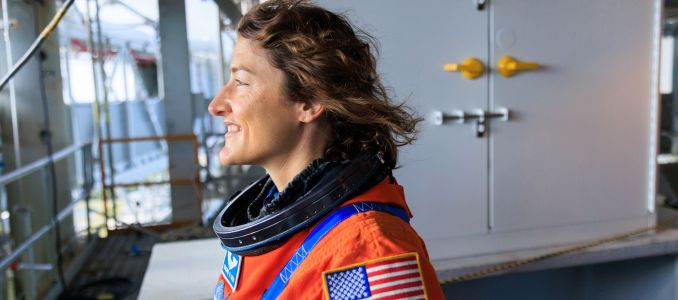
The Artemis II mission is scheduled to be a defining moment in the 21st-century space race. Unlike the rapid, high-risk development cycles of the 1960s, the current lunar exploration initiative is characterized by a deliberate, long-term approach to safety, sustainability, and technological integration. Christina Koch, a veteran of the International Space Station (ISS) and a record-holder for the longest single spaceflight by a woman, was selected for this mission due to her extensive experience in complex engineering environments.
The mission, which will carry four astronauts around the Moon and back, serves as a critical flight test for the Orion spacecraft and the Space Launch System (SLS) rocket. For the North Carolina Department of Labor, the mission is an opportunity to illustrate that the safety standards applied on a factory floor in Raleigh or Charlotte are functionally related to the safety systems protecting astronauts in the vacuum of space. The precision required to weld a rocket component or program a navigation system is rooted in the same culture of safety that keeps workers in terrestrial manufacturing safe from harm.
The Role of Skilled Trades in Deep Space
A primary focus of the upcoming event is the "skilled trades" sector, which has faced significant labor shortages across the United States. According to recent data from the U.S. Bureau of Labor Statistics, there is a persistent demand for skilled technicians in advanced manufacturing—the very sector tasked with building the components for the Artemis program.

The event will spotlight several key sectors that form the backbone of the space industry:
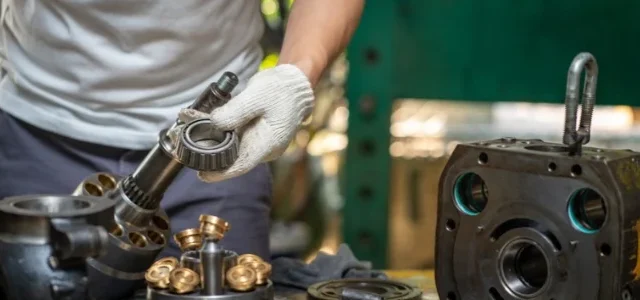
- Advanced Manufacturing: The fabrication of heat shields, avionics enclosures, and propulsion components.
- Construction and Infrastructure: The development of launch pad facilities and specialized ground support equipment.
- Systems Engineering: The integration of hardware and software to ensure fail-safe operations under extreme conditions.
By linking these industries to the Artemis II mission, state officials aim to demonstrate that technical education is a viable, high-prestige pathway. The message is clear: whether one is working on a construction site or in a clean-room facility at a NASA contractor site, the principles of risk mitigation, standard operating procedures, and continuous training remain universal.
Chronology of the Artemis Program
To understand the significance of Koch’s visit, one must view the current mission within the broader timeline of NASA’s return to the Moon:

- 2017: The Space Policy Directive-1 is signed, officially directing NASA to return humans to the Moon.
- 2020: NASA selects the Artemis Team, a group of astronauts who will prepare for the upcoming missions.
- 2022: The successful completion of the uncrewed Artemis I mission, which tested the SLS rocket and Orion capsule in deep space.
- April 2023: NASA announces the four-person crew for Artemis II, with Christina Koch named as a mission specialist.
- 2025–2026 (Projected): The launch of Artemis II, representing the first crewed lunar mission since Apollo 17 in 1972.
The inclusion of Koch in this mission signifies a transition toward a more diverse and inclusive workforce in the aerospace sector, mirroring the broader efforts by state and federal labor departments to diversify the trade industries.
Workplace Safety as a Foundation for Innovation
The North Carolina Department of Labor’s involvement highlights a critical truth in industrial engineering: innovation cannot exist without safety. In the context of aerospace, a minor failure in a supply chain component—due to poor oversight or inadequate training—could result in catastrophic failure during flight.
"The standard of excellence we demand from our state’s workers is the same standard that allows humanity to push beyond our planetary boundaries," said a representative close to the department’s planning committee. By focusing on "Safety, Skilled Trades, and the Artemis II Workforce," the event will examine how state-level safety regulations influence the quality of the products delivered to NASA.

Safety metrics, such as Total Recordable Incident Rates (TRIR) and Days Away, Restricted, or Transferred (DART) rates, are being highlighted as indicators of a company’s operational maturity. Industry leaders will discuss how maintaining low incident rates correlates with higher product reliability, a metric that is of paramount importance to NASA’s prime contractors.
Economic and Educational Implications
The broader economic implication of the Artemis II mission for North Carolina is substantial. With a growing aerospace and aviation hub in the state, initiatives that promote vocational training are essential for maintaining a competitive edge. The event will bring together educators, industry executives, and policymakers to discuss how to better align trade curricula with the high-tech requirements of aerospace manufacturing.
For the students attending the event, the presence of an astronaut like Koch serves as a tangible link between the classroom and the cosmos. The event will feature interactive sessions where attendees can learn about the specific certifications and skill sets required to work on NASA-grade hardware. This is not just a call to join the aerospace industry; it is a call to view vocational training as a critical component of national security and scientific progress.

Analysis: The Interconnection of Industry and Space
The collaboration between NASA and state-level labor departments represents a shift in how we conceive of "work." Historically, space exploration was viewed as a federal government function, isolated from the daily concerns of state labor boards. However, the commercialization of space—often referred to as the "NewSpace" era—means that the supply chain for lunar missions is now deeply embedded in the private sector.
When an astronaut steps into an Orion capsule, they are relying on the work of thousands of individuals across the country. The quality of their work is overseen by local and state labor authorities, making workplace safety a matter of national interest. This analysis suggests that as the Artemis program moves toward long-term lunar habitation, the role of local labor departments will only become more vital. Ensuring that the workforce is well-trained, safe, and equipped with the latest technical knowledge is the only way to sustain such a complex, high-risk endeavor.
Looking Toward the Future
As the date for the Artemis II mission approaches, the narrative surrounding the mission has shifted from one of pure exploration to one of workforce readiness. By hosting this event, the North Carolina Department of Labor is signaling that it understands its role in the next era of human history.

The upcoming visit of Christina Koch will likely serve as a catalyst for renewed investment in trade schools and apprenticeship programs throughout the region. By framing the skilled trades as the foundation of lunar exploration, the state is effectively elevating the status of vocational careers, proving that a career in the trades is a career in the future of humanity.
As the state prepares to welcome an astronaut who has spent 328 days in space, the focus remains firmly on the ground. It is the work done on the ground—in the factories, the laboratories, and the construction sites—that makes the impossible possible. The North Carolina Department of Labor’s event stands as a testament to the idea that the road to the Moon is paved by the hands of those who prioritize safety, precision, and the relentless pursuit of excellence in their trade. Whether in Raleigh or in orbit, the mission remains the same: to advance human potential through hard work, technical mastery, and an unwavering commitment to safety.