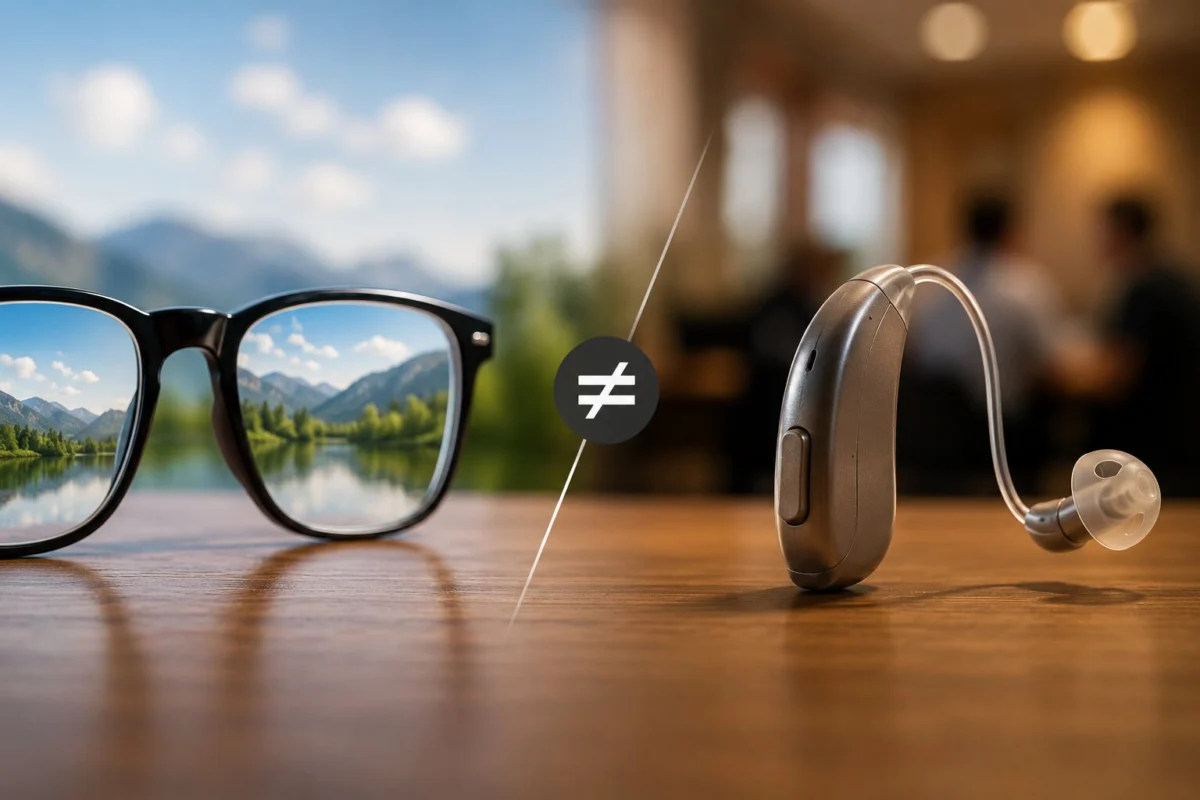
The author of the foundational insights on this topic, Shari Eberts, a person with hearing loss and a long-time hearing aid user, articulates a profound gratitude for her devices, recognizing them as invaluable tools essential to her daily life. Yet, she champions a crucial truth that demands wider acknowledgment: hearing aids are fundamentally different from eyeglasses, and the hearing care industry bears a responsibility to communicate this distinction with unwavering clarity, early in the patient journey, and consistently.
The Misconception of Restoration Versus Assistance
The deeply ingrained "glasses analogy" is perhaps the most significant hurdle in effective hearing aid adoption. Eyeglasses correct a refractive error, allowing the eye’s lens to focus light properly on the retina, thereby restoring visual acuity to a level often indistinguishable from normal sight. Hearing loss, particularly sensorineural hearing loss (the most common type), involves damage to the delicate hair cells in the inner ear or the auditory nerve itself. This damage is not merely a focus issue; it’s a complex impairment of sound processing and interpretation.
Hearing aids, even with their sophisticated digital signal processing capabilities, cannot regenerate damaged hair cells or repair neural pathways. Instead, they function as assistive listening devices, amplifying sounds and processing them to make them more accessible to the impaired auditory system. They improve hearing, often dramatically, but they do not restore it to its pre-loss state or to "normal" hearing. This crucial distinction is often lost in initial consultations and marketing materials, setting patients up for a sense of failure when their experience falls short of a "perfect" auditory world.
The Pervasive Expectation Gap: A Closer Look
Despite decades of technological advancements, including digital processing, compression algorithms, directional microphones, and increasingly sophisticated AI-driven noise reduction, hearing aids do not return hearing to a pristine state. For a significant number of users, speech, particularly in dynamic and noisy environments, can remain somewhat muffled or indistinct. This challenge gives rise to the frequently voiced concern among patients: "I can hear that people are speaking, but I can’t understand them." This phenomenon underscores the difference between audibility (the ability to detect sound) and intelligibility (the ability to comprehend speech). Hearing aids excel at the former but face inherent limitations with the latter in complex acoustic landscapes.
A major technical challenge for hearing aids lies in their struggle to selectively differentiate between desired speech and extraneous background noise. In a bustling restaurant, for instance, a hearing aid may amplify not only the conversation at the wearer’s table but also the chatter from adjacent tables, the clatter of cutlery, and ambient music. While rapidly evolving AI-powered noise management systems are making genuine strides in mitigating this issue, the problem remains a significant barrier to optimal communication in challenging listening situations.
When patients embark on their hearing aid journey anticipating a full restoration of normal hearing, they inevitably perceive the actual outcome — significant assistance rather than complete correction — as a failure. This misinterpretation is not a reflection of the device’s efficacy but a direct consequence of an unmanaged expectation. Similarly, families often expect their loved one to "hear perfectly" once fitted with expensive devices. In this context, any subsequent communication breakdown is frequently attributed to the individual’s perceived lack of effort or, more damagingly, to the failure of the expensive hearing aids themselves. This dynamic can erode trust, strain relationships, and ultimately lead to the abandonment of devices.
The Prevalence and Impact of Untreated Hearing Loss
Globally, hearing loss affects a substantial portion of the population. The World Health Organization (WHO) estimates that over 1.5 billion people worldwide experience some degree of hearing loss, with at least 430 million requiring rehabilitation services. In the United States alone, approximately 48 million people, or one in eight individuals aged 12 and older, have hearing loss in both ears. Despite this widespread prevalence, adoption rates for hearing aids remain relatively low. Data from the National Institute on Deafness and Other Communication Disorders (NIDCD) suggests that only about 30% of adults aged 70 and older who could benefit from hearing aids have ever used them, and among adults aged 20-69, this figure drops to just 16%.
The reasons for non-adoption are multifaceted, including cost, stigma, and, crucially, unrealistic expectations about efficacy. Untreated hearing loss has profound implications beyond just communication difficulties. Research consistently links it to increased risks of cognitive decline, dementia, depression, social isolation, and falls. The economic burden is also substantial, with studies estimating billions in lost productivity and healthcare costs annually due to unmanaged hearing loss. The potential for improved quality of life and reduced healthcare expenditure through effective hearing care underscores the urgency of addressing the expectation gap.
Evolution of Hearing Aid Technology: A Brief Overview
The journey of hearing aid technology has been one of remarkable innovation. From rudimentary ear trumpets and carbon-based amplifiers of the early 20th century, the field progressed to analogue electronic devices in the mid-century. The true revolution began in the 1980s and 90s with the advent of digital signal processing (DSP). Digital hearing aids allowed for unprecedented customization, noise reduction, and feedback cancellation.
The 21st century has seen an acceleration of this innovation:
- Miniaturization: Devices became smaller, more discreet, and comfortable.
- Connectivity: Bluetooth integration allowed direct streaming from smartphones, TVs, and other devices, enhancing functionality and convenience.
- Rechargeability: The shift from disposable batteries to rechargeable options improved user experience.
- Artificial Intelligence (AI) and Machine Learning (ML): This is the current frontier. AI algorithms analyze soundscapes in real-time, automatically adjusting settings to prioritize speech, suppress noise, and even learn user preferences over time. Features like "speech in noise" enhancement, environmental classification, and even health monitoring are becoming standard.
- Over-the-Counter (OTC) Hearing Aids: A significant policy shift, particularly in the U.S. in late 2022, aims to increase accessibility and affordability for adults with perceived mild to moderate hearing loss. While promising greater access, this development also heightens the importance of clear expectation setting, as many OTC users may bypass professional guidance.
Despite these advancements, the fundamental limitation remains: hearing aids augment, they do not perfectly replicate, natural hearing. Understanding this nuance is paramount for both industry and consumers.

Industry’s Role and Responsibility: Shaping Expectations
The hearing care industry, encompassing manufacturers, audiologists, and hearing instrument specialists, plays a pivotal role in shaping patient expectations. Historical marketing often focused on "restoring" or "giving back" hearing, inadvertently fostering the glasses analogy. Moving forward, a paradigm shift is required, emphasizing "improving communication," "enhancing listening experiences," and "providing assistance."
Key areas for improvement include:
- Transparent Marketing: Advertising campaigns should clearly articulate the benefits and limitations of hearing aids, using realistic scenarios rather than idealized depictions of perfect hearing. Phrases like "improves speech comprehension" or "helps you hear better in various environments" are more accurate than "restores hearing."
- Comprehensive Patient Counseling: At the point of care, audiologists and specialists must dedicate ample time to discussing realistic outcomes. This includes explaining the nature of hearing loss, how hearing aids process sound, and the challenges that may persist, particularly in noisy settings. Tools like auditory simulations or personal anecdotes from long-term users can be valuable.
- Ongoing Support and Education: The initial fitting is just the beginning. Patients require ongoing counseling, fine-tuning, and education about communication strategies, assistive technologies, and mindsets to maximize their success.
The "Three-Legged Stool" Approach to Skillful Living
Shari Eberts, co-author of Hear & Beyond: Live Skillfully with Hearing Loss with Gael Hannan, proposes a powerful framework for navigating life with hearing loss: the "three-legged stool." This metaphor highlights that technology, while essential, is only one component of successful hearing rehabilitation. The three legs are:
- Technology: This leg encompasses hearing aids, cochlear implants, and other assistive listening devices (ALDs). It is the foundation that provides auditory access. Without appropriate technology, the other two legs struggle to stand.
- MindShifts: This refers to the psychological and emotional aspects of living with hearing loss. It involves adopting a proactive, positive attitude; self-advocacy; managing stress and fatigue; and reframing challenges as opportunities for growth. It’s about accepting hearing loss as a part of one’s identity and moving past denial or shame.
- Communication Behaviors: This leg focuses on practical strategies to improve communication. This includes assertive communication (e.g., asking people to repeat themselves, speak clearly, or face you), environmental modifications (e.g., choosing quieter locations), active listening skills, and teaching communication partners how to facilitate effective dialogue.
When all three legs are strong and balanced, individuals can live skillfully and successfully with hearing loss. A patient who understands that hearing aids are powerful but partial tools is far more likely to use them consistently, explore supplemental technologies creatively, and employ effective communication strategies. Conversely, a patient who expects the auditory equivalent of perfect vision is more prone to disappointment, device abandonment, and a quiet conclusion that the technology has failed.
Beyond the Device: Supplemental Technologies and Strategies
Acknowledging the inherent limitations of hearing aids opens the door to embracing a broader ecosystem of support. Supplemental technologies and communication strategies are not optional extras but integral components of comprehensive hearing rehabilitation.
Supplemental Technologies (Assistive Listening Devices – ALDs):
- Remote Microphones: These small, portable devices can be given to a speaker or placed on a table, transmitting their voice directly to the hearing aids, dramatically improving speech comprehension in noisy environments or over distances.
- TV Streamers: These wirelessly transmit audio from a television directly to hearing aids, improving clarity and allowing users to control their own volume without disturbing others.
- Personal Amplifiers: For specific situations, these handheld devices offer additional amplification.
- Telecoils/Loop Systems: These systems, often found in public venues, transmit audio directly to telecoil-equipped hearing aids, providing clear sound free from reverberation.
- Captioning and Transcription Services: For phone calls, meetings, or videos, these tools provide visual text of spoken words.
- Alerting Devices: Flashing lights for doorbells, vibrating alarm clocks, or amplified telephones help individuals stay connected and safe.
Communication Strategies:
- Proactive Self-Advocacy: Informing others about one’s hearing loss and what helps.
- Environmental Control: Choosing well-lit, quiet environments for conversations.
- Visual Cues: Focusing on lip-reading, facial expressions, and body language.
- Confirmation and Clarification: Not being afraid to ask for repetition or rephrasing.
- Educating Communication Partners: Teaching family and friends how to speak clearly, face the person, and avoid shouting.
Stakeholder Perspectives and Collaborative Solutions
Addressing the expectation gap requires a concerted effort from all stakeholders:
- Audiology Professionals: Organizations like the American Academy of Audiology (AAA) and the American Speech-Language-Hearing Association (ASHA) consistently advocate for comprehensive patient-centered care. Audiologists are increasingly trained to manage expectations, provide counseling, and integrate communication strategies into their practices. They recognize that successful outcomes are not solely dependent on fitting the right device but on holistic patient support.
- Hearing Aid Manufacturers: Companies are investing heavily in R&D to improve device performance, particularly in challenging environments. However, there’s a growing understanding that marketing needs to be more transparent. Many manufacturers are now providing educational resources for both professionals and consumers, emphasizing realistic benefits and the importance of a comprehensive approach to hearing health.
- Patient Advocacy Groups: Organizations like the Hearing Loss Association of America (HLAA) and Living with Hearing Loss (founded by Shari Eberts) are at the forefront of empowering individuals with hearing loss. They provide peer support, education, and resources, advocating for better access, reduced stigma, and realistic information. Their lived experience perspective is invaluable in shaping public discourse and industry practices.
- Government and Regulatory Bodies: The advent of OTC hearing aids, championed by the FDA, aims to democratize access. However, this also places a greater onus on regulators and public health campaigns to ensure that consumers purchasing these devices are well-informed about their capabilities and limitations, and understand when professional intervention is still necessary.
Economic and Social Implications of Effective Expectation Management
The societal benefits of correctly managing expectations around hearing aids extend beyond individual patient satisfaction. When expectations are aligned with reality, device adherence increases, leading to:
- Improved Quality of Life: Patients who successfully integrate hearing aids and strategies report better communication, reduced social isolation, and enhanced participation in daily activities.
- Better Health Outcomes: Addressing hearing loss can mitigate risks associated with cognitive decline, depression, and other comorbidities, potentially reducing long-term healthcare costs.
- Economic Productivity: Individuals with effectively managed hearing loss are more likely to remain in the workforce and contribute economically.
- Reduced Healthcare Burden: Fewer instances of device abandonment mean less waste of healthcare resources and patient investment.
Charting a Path Forward: Embracing Honesty and Empowerment
The pathway to transforming the hearing aid experience lies in embracing honesty and fostering patient empowerment. The sooner the hearing care industry collectively and consistently communicates that hearing aids are sophisticated communication tools rather than magic bullet "restorers" of normal hearing, the more patients will truly benefit from them.
This shift in narrative must be pervasive: from initial marketing messages to the final fitting and ongoing support. It requires audiologists to be educators and coaches, manufacturers to be transparent innovators, and patients to be informed, proactive participants in their own hearing health journey. By setting realistic expectations from the outset, the industry can bridge the expectation gap, reduce disappointment, and unlock the full potential of these remarkable devices, allowing countless individuals to live more skillfully, confidently, and connectedly with hearing loss.
Shari Eberts is a passionate hearing health advocate and internationally recognized author and speaker on hearing loss issues. She is the founder of Living with Hearing Loss, a popular blog and online community for people with hearing loss, and an executive producer of We Hear You, an award-winning documentary about the hearing loss experience. Her book, Hear & Beyond: Live Skillfully with Hearing Loss, (co-authored with Gael Hannan) is the ultimate survival guide to living well with hearing loss. Shari has an adult-onset genetic hearing loss and hopes that by sharing her story, she will help others to live more peacefully with their own hearing issues. Connect with Shari: Blog, Facebook, LinkedIn, Twitter.