The Regulatory Framework for Heat Safety
The fundamental principle guiding these regulations is that environmental heat exposure is an occupational risk that, like any other physical danger, must be mitigated through administrative and engineering controls. Under current safety guidelines, the definition of an adequate "shaded area" is stringent. Employers are prohibited from merely providing a distant patch of cover; instead, shade must be situated as close to the active work zone as possible to minimize the energy expenditure required for workers to reach it.
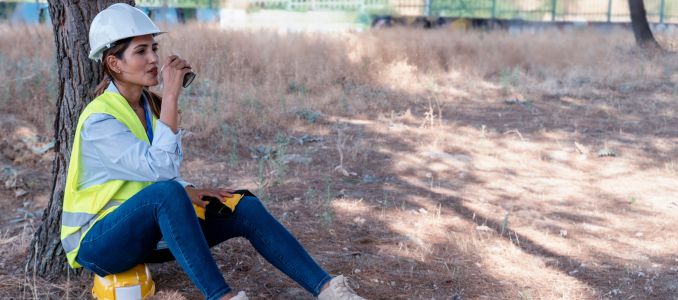
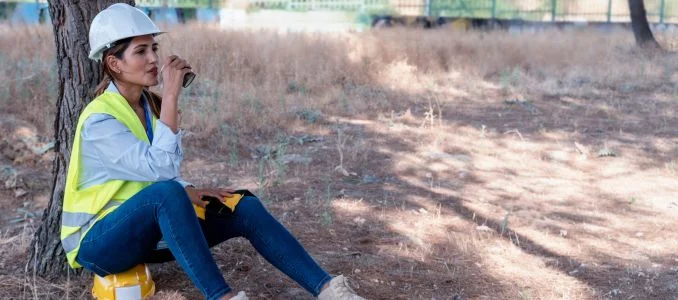
Furthermore, these areas must be large enough to comfortably accommodate the entire on-duty crew during scheduled breaks without overcrowding. The environment within the shade must be conducive to recovery, meaning it must be free from secondary radiant heat sources—such as hot machinery, asphalt, or metal structures—that could trap heat and negate the physiological benefits of the rest period. A core component of this protocol involves the removal of heavy personal protective equipment (PPE). By shedding non-breathable gear during these breaks, workers allow their internal core temperatures to stabilize more efficiently, a process that is often inhibited by the specialized materials required for industrial safety.
The Physiological Impact of Heat Stress
To understand why these mandates are so critical, one must examine the physiological toll that extreme heat takes on the human body. When a worker performs strenuous physical labor in high temperatures, the body’s primary cooling mechanism is the evaporation of sweat. However, as humidity levels rise or as the duration of physical exertion lengthens, this mechanism becomes less effective.
Heat-related illness generally follows a spectrum, beginning with heat cramps and progressing to heat exhaustion—characterized by heavy sweating, rapid pulse, and dizziness—and eventually to heat stroke. Heat stroke is a medical emergency that occurs when the body’s temperature regulation fails entirely, causing internal organs to sustain permanent damage. Because these conditions can escalate rapidly, the "pre-emptive" nature of mandatory cool-down periods is essential. By the time a worker feels the acute symptoms of heat stroke, they may already be suffering from impaired judgment, which complicates their ability to seek help independently.

A Chronology of Increasing Regulatory Scrutiny
The push for standardized heat protection has accelerated significantly over the last decade. Historically, heat stress was often treated as a secondary concern compared to immediate physical hazards like falling objects or electrical risks. However, following a series of high-profile litigation cases and studies from agencies like the National Institute for Occupational Safety and Health (NIOSH), the narrative has shifted.
- 2015–2018: Early advocacy groups began pushing for specific federal heat standards, citing disproportionate mortality rates among agricultural and construction workers.
- 2021: The Occupational Safety and Health Administration (OSHA) announced a formal rulemaking process to develop a federal heat standard, acknowledging that existing "general duty" clauses were insufficient to ensure consistent compliance across all states.
- 2023–2024: Several states, including California and Washington, moved to adopt or strengthen their own heat-illness prevention plans (HIPP), setting a benchmark for the federal government.
- 2026: The current emphasis on "adequate shade and timely breaks" has become the industry standard, reflecting the consensus that climate-driven temperature spikes are a permanent feature of the modern working environment.
Economic and Operational Implications
For employers in the construction, agriculture, and utility sectors, the implementation of these standards represents both a logistical challenge and an operational necessity. While some firms initially voiced concerns regarding the potential for decreased productivity due to frequent breaks, empirical data suggests the opposite.
Studies conducted by occupational health researchers indicate that workers who are provided with regulated rest and shade exhibit higher levels of sustained energy and focus throughout the workday. Conversely, heat-stressed employees are significantly more prone to "presenteeism"—the act of being on the job but unable to perform at full capacity—and are at a much higher risk of committing errors that lead to industrial accidents. Therefore, the implementation of a rigorous shade-and-break policy serves as a risk-management strategy that protects both human capital and the company’s bottom line by reducing workers’ compensation claims and time-loss incidents.

Data-Driven Approaches to Heat Mitigation
The effectiveness of these standards relies heavily on the collection and application of environmental data. Employers are now encouraged to utilize localized weather tracking systems rather than relying on regional forecasts, as microclimates on a job site can significantly deviate from official temperature readings.
For instance, a construction site situated in an open, concrete-heavy environment may experience "heat island" effects, causing the temperature at the surface to be 10 to 15 degrees higher than the air temperature reported by a nearby airport. Smart safety programs now utilize wet-bulb globe temperature (WBGT) indices, which provide a more comprehensive measurement of heat stress by accounting for temperature, humidity, wind speed, and solar radiation. When these metrics reach specific thresholds, the "mandatory rest schedule" is automatically triggered, removing the subjectivity from the decision-making process.
Perspectives on Compliance and Enforcement
Industry advocates argue that while the regulations are clear, the challenge remains in enforcement and culture. In many decentralized work environments, such as rural agriculture or long-range utility maintenance, ensuring that workers actually utilize the shaded zones provided is as important as the physical presence of the shade itself.

"The standard is not just about having a tent or a tree," notes one industry safety consultant. "It is about creating a culture where a worker feels empowered to stop working, remove their gear, and cool down without fear of retribution or perceived laziness."
From the perspective of organized labor, the focus remains on the enforcement of these mandates. Unions representing outdoor workers have frequently called for more robust inspection regimes, noting that in the absence of consistent monitoring, the most vulnerable employees—often those in temporary or seasonal roles—are the least likely to exercise their right to a break.
Future Outlook: Adapting to a Warmer Climate
As we look toward the remainder of the decade, the integration of heat-safety protocols into the daily workflow will likely become more sophisticated. Emerging technologies, such as wearable biometric sensors that monitor a worker’s heart rate and core temperature in real-time, are already being piloted in high-risk industries. These devices can alert both the worker and the supervisor when a threshold for heat stress is approached, allowing for intervention before a medical event occurs.

Furthermore, the architectural and engineering requirements for outdoor workspaces are evolving. Projects are increasingly being designed with "cool zones" integrated into the layout, and scheduling software is being updated to favor early-morning or late-evening hours for labor-intensive tasks during peak summer months.
Ultimately, the mandate for shade and rest is a recognition of a fundamental shift in the environment. The objective is clear: to ensure that the economic engine of outdoor industry continues to function without sacrificing the health and safety of the workforce. By prioritizing preventive measures—providing adequate, accessible shade and normalizing the practice of cooling down—employers are establishing a sustainable framework for labor in an era of climate volatility. The transition from reactive emergency response to proactive heat management is not merely a regulatory requirement; it is an essential evolution in modern workplace safety.