Published this week in the peer-reviewed journal iScience, the research provides some of the most robust behavioral evidence to date that contactless optical stimulation of the cochlea is capable of eliciting a meaningful auditory percept. While the work remains firmly within the preclinical stages of development, its implications for the future of hearing restoration technologies are considerable, potentially reshaping how we approach the treatment of hearing impairment.
The Global Burden of Hearing Loss and Current Solutions
Hearing loss affects a staggering number of people worldwide, with the World Health Organization (WHO) estimating that over 1.5 billion people live with some degree of hearing loss, and around 430 million of these require rehabilitation. By 2050, this number is projected to rise to nearly 2.5 billion, with 700 million requiring rehabilitation. Sensorineural hearing loss, often resulting from damage to the tiny hair cells in the inner ear or the auditory nerve, is particularly challenging to treat. Traditional hearing aids amplify sound, which is effective for mild to moderate loss, but they are often insufficient for severe cases.
Cochlear implants have revolutionized the field since their initial development in the 1970s and widespread adoption in the 1980s. These electronic devices bypass damaged parts of the inner ear and directly stimulate the auditory nerve, translating sound into electrical signals. While incredibly effective for many, providing access to speech and environmental sounds, they come with significant drawbacks. The surgical procedure carries risks, including infection, facial nerve damage, and loss of residual hearing. Post-implantation, users often describe the sound quality as different from natural hearing, requiring extensive rehabilitation to interpret the new auditory input. The spread of electrical current within the cochlea also limits the ability to precisely stimulate specific regions, which can compromise the fine-tuning of pitch perception and speech discrimination in noisy environments. These limitations underscore the urgent need for innovative solutions that can offer better sound quality, less invasiveness, and broader applicability.
Optical Stimulation: A New Paradigm for Auditory Activation
The concept of using light, rather than electricity, to stimulate biological tissues has garnered increasing interest across various fields of neuroscience. Optical stimulation holds particular promise for the auditory system due to its potential for highly localized activation. Unlike electrical fields that can spread widely, light can be precisely focused to target specific neural populations or even individual cells within the cochlea. This precision could theoretically lead to a more nuanced and "natural" auditory experience, mimicking the highly spatially organized frequency mapping (tonotopy) of the healthy cochlea.
Prior research has explored the use of infrared lasers to induce electrical activity within the cochlea, demonstrating that light pulses can indeed generate neural responses. However, a critical unanswered question has always been whether these electrically measurable signals translate into actual, meaningful auditory perception—that is, whether an animal or human can hear something akin to sound. The Doshisha University study sought to bridge this gap by providing robust behavioral evidence of such perception.
The Doshisha University Study: Methodology and Key Findings
The research team, led by Dr. Yuta Tamai and Professor Kohta I. Kobayasi, devised a series of elegant behavioral experiments using awake Mongolian gerbils. Gerbils are frequently chosen for auditory research due to their relatively large cochleae, good low-frequency hearing, and well-characterized auditory pathways, which share similarities with human hearing. The core of their experimental design relied on classical conditioning, a widely accepted method for assessing perception in animals.
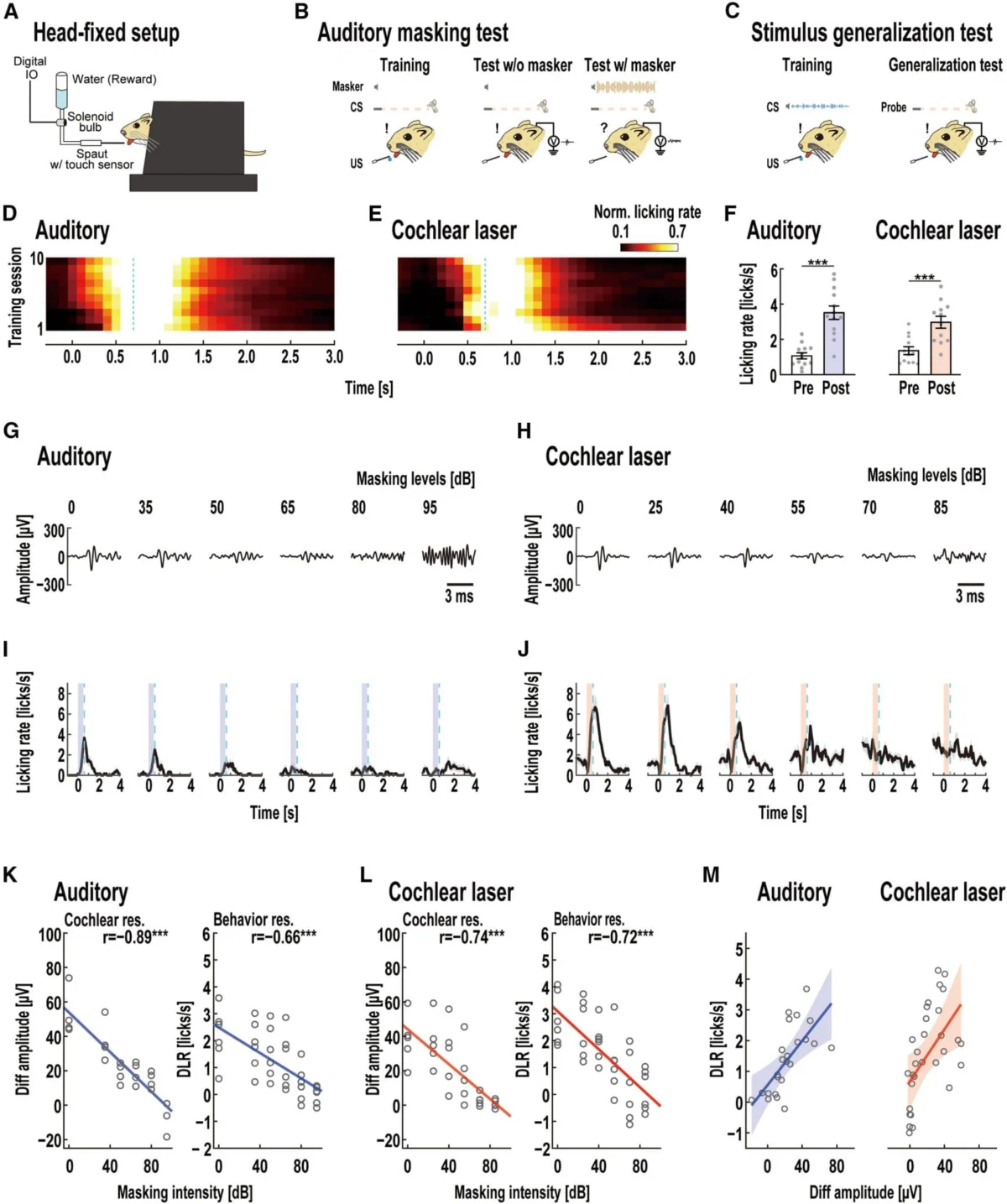
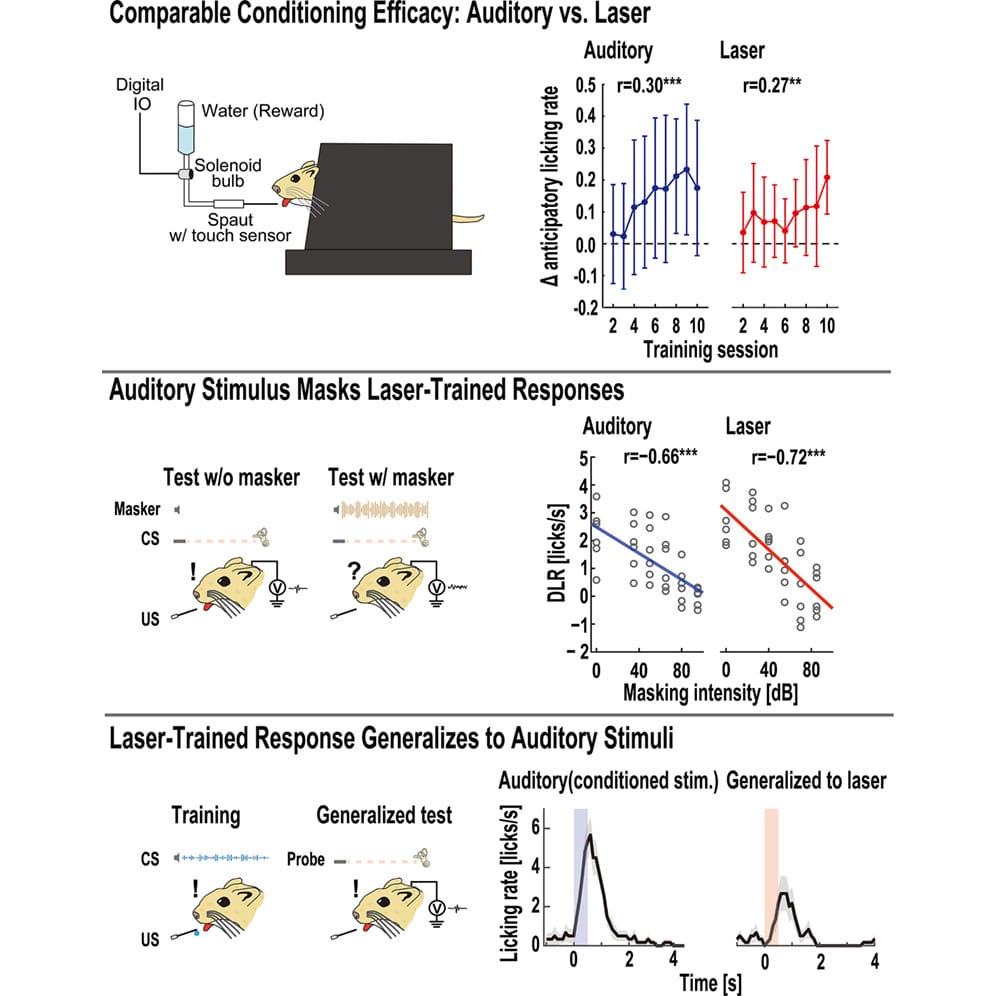
In a carefully controlled environment, animals were trained to associate either an acoustic stimulus (a conventional sound) or pulses of infrared laser light, delivered non-invasively through the tympanic membrane (eardrum), with a water reward. The setup allowed for precise control over the laser parameters, ensuring the light was delivered without direct contact to the inner ear structures.
The results were compelling. Gerbils exposed to the laser stimulation demonstrated a clear learning pattern, anticipating the water reward in a manner strikingly similar to those trained with conventional sound. While the behavioral responses elicited by laser stimulation were generally observed to be somewhat weaker in magnitude compared to those produced by acoustic stimuli, the overall learning trajectory and pattern of anticipation were remarkably consistent. This similarity was a crucial indicator that the optical stimulus had indeed become behaviorally meaningful to the animals, suggesting it was perceived as an auditory event rather than a non-specific sensation.
Confirming Auditory Processing and Specificity
To further validate that the gerbils were indeed experiencing an auditory percept and not reacting to a non-specific sensory effect (such as heat or tactile stimulation), the investigators introduced additional control experiments. When background white noise was introduced into the testing environment, the behavioral responses to both conventional sound and laser stimulation declined substantially. This phenomenon is characteristic of auditory masking, where competing sounds reduce the clarity of a target sound. Crucially, responses to visual cues, which were also part of the experimental setup, remained largely unaffected by the white noise. This differential effect strongly suggested that the laser-induced perception was being processed through the animals’ auditory pathways, rather than triggering a generalized sensory response.
The study also explored the relationship between laser energy and perceived intensity. They found that progressively increasing the laser’s radiant energy produced correspondingly stronger behavioral responses, mirroring the well-established relationship between louder acoustic stimuli and stronger auditory perception. This dose-response relationship provided further evidence that the optical stimulation was indeed modulating an auditory experience.
In another insightful experiment, animals initially trained only with conventional sound were subsequently presented with laser stimulation for the first time. Intriguingly, these sound-trained gerbils also responded to the novel laser stimulus, indicating that the percept generated by the laser shared significant characteristics with an acoustic stimulus. This suggests a potential commonality in how the brain processes these different forms of auditory input, further strengthening the argument for true auditory perception.
Expert Insights and Motivations
The driving force behind this innovative research is deeply personal for Dr. Yuta Tamai. "My research motivation arises from observing family members who have age-related hearing loss and struggle to engage in conversations due to the limitations of conventional hearing aids," stated Dr. Tamai. "Their experience highlighted the need for more effective solutions, as traditional cochlear implants require invasive procedures and have technical drawbacks. This inspired me to investigate non-invasive, optical alternatives that offer a natural auditory experience. My goal is to bridge the gap between neuroscience and technology by developing a contactless device to restore the joy of communication for those underserved by existing hearing aids."
Professor Kohta I. Kobayasi echoed this sentiment, emphasizing the transformative potential. "In the next 5–10 years, this technology could revolutionize the treatment of hearing impairment," Professor Kobayasi predicted. "By perfecting trans-tympanic optical stimulation, we aim to provide a clinical alternative that minimizes surgical risks and complications. It may also open new avenues for sensory substitution devices, improving the quality of life for millions suffering from communication challenges due to hearing loss."
These statements highlight a shared vision for a future where hearing restoration is more accessible, less intrusive, and provides a more natural auditory experience, driven by both scientific curiosity and a profound empathy for those affected by hearing impairment.
Navigating the Road Ahead: Limitations and Unanswered Questions
While the Doshisha University study represents a significant milestone, the researchers are careful to temper enthusiasm with a realistic assessment of the work’s current stage. It is crucial to emphasize that these findings do not indicate that a non-invasive laser hearing device is ready for clinical application. The primary contribution at this juncture is the robust behavioral validation: moving beyond simply demonstrating that laser light can activate auditory tissues to proving that animals can consistently use this laser-evoked percept to guide learned behavior.
Several critical scientific and practical questions remain unanswered. The precise biological mechanism by which infrared laser stimulation generates an auditory sensation is not yet fully established. The authors discuss several plausible explanations, including optoacoustic effects within the cochlea (where light energy is converted into pressure waves that stimulate hair cells) and direct activation of auditory neural structures. Further research will be essential to elucidate these mechanisms, which could inform the optimization of future devices.
Moreover, the study was conducted on normal-hearing animals. This leaves open the fundamental question of whether the same optical stimulation approach would be effective in individuals with sensorineural hearing loss, which is the target population for advanced hearing restoration technologies. Previous studies exploring optical stimulation in models of hearing impairment have yielded conflicting results, underscoring the necessity for extensive further investigation in relevant animal models of hearing loss before any clinical translation can be contemplated.
Long-term safety is another paramount consideration. While the research group’s earlier work indicated no evidence of acute tissue damage under similar stimulation conditions, the effects of repeated, long-term laser exposure on the delicate structures of the inner ear and surrounding tissues must be thoroughly evaluated. Any human application would require rigorous safety profiling over extended periods to ensure the method is not only effective but also benign. Regulatory bodies like the FDA in the United States or EMA in Europe would demand comprehensive data on safety and efficacy before even considering clinical trials.
The Vision for Future Hearing Technologies
Despite these significant limitations, the Doshisha University research illuminates an exciting and emerging area within auditory neuroscience. This novel approach could eventually complement or significantly expand the existing repertoire of hearing restoration strategies. Unlike cochlear implants, which necessitate the surgical implantation of an electrode array directly into the cochlea, transtympanic optical stimulation aims to deliver energy through the intact eardrum. This eliminates the need for direct contact with or implantation into the inner ear, dramatically reducing the invasiveness of the procedure.
If future studies successfully demonstrate safety, reliability, and effectiveness in hearing-impaired models—and, ultimately, in human subjects—this approach could represent an entirely new class of auditory prosthetic technology. The promise of a truly non-invasive, precise method for stimulating the auditory system could transform the lives of millions, offering a less traumatic and potentially more natural-sounding alternative to current interventions. Such a technology could also offer advantages in terms of cost and maintenance compared to complex surgical implants.
The journey from preclinical proof-of-concept to clinical reality is long and arduous, typically spanning many years, if not decades. It involves overcoming substantial engineering challenges, conducting extensive animal trials, navigating complex regulatory pathways, and eventually, human clinical trials. However, the current study by Dr. Tamai and Professor Kobayasi provides an invaluable behavioral proof of concept, demonstrating that contactless optical stimulation is capable of producing auditory-like perception. As research in this nascent field continues to advance, these findings will undoubtedly help to inform and accelerate future efforts to develop less invasive, more precise, and ultimately more effective approaches for restoring the profound gift of hearing. The possibility of restoring the joy of communication and connection through light, rather than a scalpel, represents a beacon of hope for countless individuals.
Reference:
Tamai Y, Uenaka M, Okamoto A, et al. Optical induction of auditory perception via cochlear stimulation in Mongolian gerbils without genetic modification. iScience. 2026;29:116588. doi:10.1016/j.isci.2026.116588.
Source: iScience, Doshisha University