The Evolution of Core Vocabulary Instruction
The project began as an effort to provide monthly, actionable plans for practitioners. Over the years, the initiative expanded significantly to include specific adaptations for different developmental stages. The original series, which focused on a foundational set of core words, served as the pilot for what would become an expansive library of teaching tools. Following the initial success, a second set of resources was introduced to diversify the vocabulary list, ensuring that students had access to a broader linguistic repertoire.
Chronology of Educational Resource Development
The development of these resources has been a collaborative, multi-year endeavor involving numerous contributors within the AAC community. The following timeline outlines the progression of the program:

- 2013-2015: Initial development of the first "Year of Core Vocabulary" series, establishing the monthly thematic approach.
- 2016-2019: Expansion of the program, marked by the integration of activity calendars designed by Rachael Langley, a prominent AAC SLP and co-founder of Talking AAC. These calendars provided daily prompts for practitioners to model language in naturalistic settings.
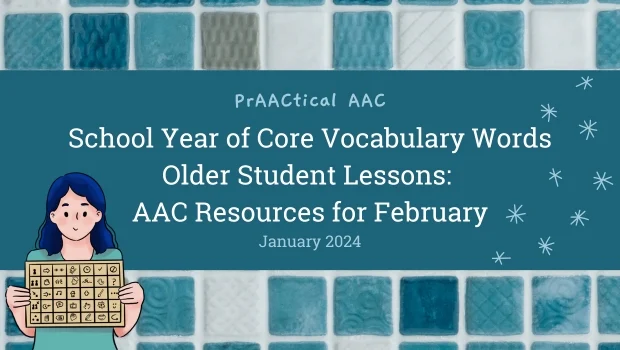
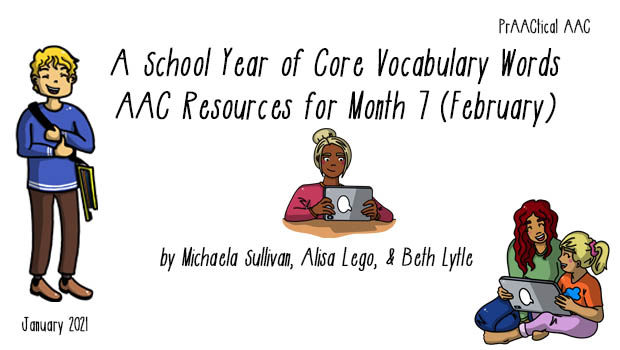
- 2020: The "School Year of Core Vocabulary Words" was launched, authored by Michaela Sullivan, Alisa Lego, and Beth Lytle. This series provided a more structured pedagogical approach tailored to the academic environment.
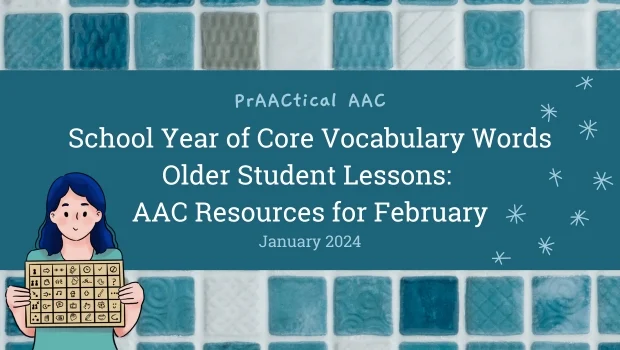
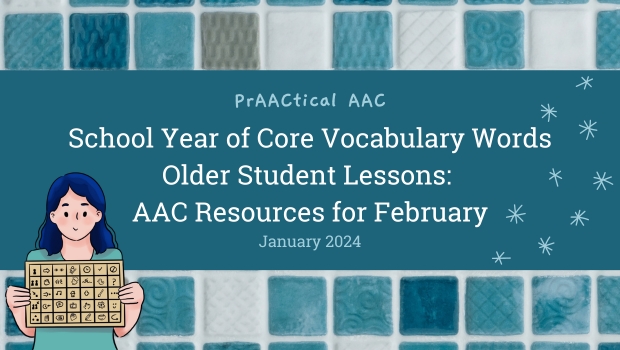
- 2023-2024: Introduction of specialized lessons for older students, spearheaded by Michaela Sullivan and Lindsay Dougherty. This expansion addressed the critical need for age-respectful content for adolescents and young adults using AAC.
- 2026: Continued curation and dissemination of these resources, ensuring that educators have access to updated materials as the new school year progresses.
The Structural Framework of the February Resources
The February resources are divided into three distinct categories, each designed to address the specific developmental and cognitive needs of students at various grade levels.
Set 1 & Set 2 Resources: These foundational materials target early communicators. They prioritize basic verbs, pronouns, and prepositions that allow students to express immediate needs and interact with their environment. The focus is on repetitive, high-frequency modeling, which research indicates is essential for language acquisition in AAC users.
School Year of Core Vocabulary (K-8): This segment is designed for the classroom setting. It emphasizes the integration of AAC into the standard curriculum. By aligning core words with academic tasks, students are encouraged to use their communication devices for both social and instructional purposes. The contributions of Sullivan, Lego, and Lytle focus on embedding these words into literacy, math, and science lessons.
Older Student Lessons: Recognizing that adolescents often require different thematic content, these resources focus on pragmatics, social interaction, and self-advocacy. The materials move beyond basic labeling and into the realm of functional communication, allowing older students to participate more fully in secondary education and community life.
Supporting Data and the Efficacy of Core Vocabulary
The efficacy of focusing on core vocabulary is supported by significant clinical research. According to data from the American Speech-Language-Hearing Association (ASHA) and various studies in the Journal of Speech, Language, and Hearing Research, AAC users who are provided with access to a robust core vocabulary system demonstrate greater independence in communication compared to those limited to "fringe" vocabulary—the specific, low-frequency nouns that are often taught in isolation.
Data suggests that when practitioners consistently model core words in the child’s natural environment, the rate of expressive language growth increases. A key finding in AAC pedagogy is the concept of "aided language stimulation," where communication partners use the student’s AAC system to communicate with them. The resources provided for February facilitate this by offering specific "word-of-the-week" activities that ensure consistency across the student’s different environments, including the home and the classroom.
Professional Reactions and Community Impact
The consensus among AAC experts is that the "Year of Core Vocabulary" model serves as a necessary scaffold for busy educators. In professional forums and clinical reviews, the initiative has been lauded for its accessibility. "The challenge for most educators is not the desire to use AAC, but the lack of time to create high-quality, sequential lessons," notes an industry-adjacent observer. By providing pre-planned, research-aligned materials, the project removes a significant barrier to implementation.
The collaboration between veteran practitioners like Carole Zangari and guest contributors like Michaela Sullivan and Lindsay Dougherty reflects a broader trend in special education: the shift toward open-access, collaborative resource sharing. This model not only benefits the individual student but also professionalizes the field by providing a shared vocabulary and set of expectations for AAC instruction.
Broader Implications for AAC Integration
The implications of this initiative extend far beyond the month of February. By normalizing the use of core vocabulary across all age groups, these resources contribute to the development of long-term communication competence. For students with complex needs, the ability to communicate is directly linked to educational outcomes, behavioral stability, and quality of life.
The decision to continue reprising these posts in 2026 underscores the enduring relevance of the core vocabulary model. As educational technology continues to evolve, the underlying principles of these resources—modeling, consistency, and functional application—remain the gold standard for AAC intervention.
The systematic nature of these resources also assists in data collection. Educators using the monthly activity calendars can track progress more effectively, noting which words a student has mastered and which require further modeling. This data-driven approach is essential for Individualized Education Program (IEP) goal setting, providing a measurable way to demonstrate student growth over time.
Conclusion and Future Outlook
As the AAC community looks toward the remainder of the 2026 academic year, the availability of these structured resources provides a clear path forward for those working with students who use AAC. By leveraging the combined expertise of decades of clinical practice, these materials offer a robust, evidence-based framework that simplifies the complexities of language instruction.
For families and educators seeking to implement these tools, the resources are designed to be intuitive and scalable. Whether in a dedicated special education classroom or an inclusive general education setting, the application of core vocabulary remains the cornerstone of effective communication intervention. The continued dedication of the PrAACtical AAC team and their contributors ensures that the tools for fostering communication remain readily available, supporting the fundamental right of every student to have a voice.