A New Era of Behavioral Recognition
Traditional computer vision systems have long relied on object detection, which focuses on identifying static elements—such as a vehicle, a person, or a specific piece of equipment—within a frame. While useful, these systems are inherently limited because they lack context; they can identify an individual in a warehouse, but they cannot discern whether that individual is working safely, engaging in an unauthorized altercation, or suffering from a medical emergency.
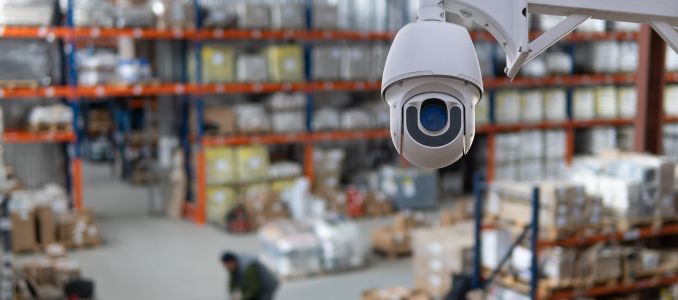
Aurora Flow addresses this "context gap" by processing temporal sequences. By analyzing the chronological flow of motion, the AI model understands actions over time. For example, the software can distinguish between an employee climbing a ladder as part of their standard duties and an individual attempting to scale a perimeter fence or reach an restricted area. This capability represents a significant shift toward behavioral analysis, allowing for the automatic flagging of high-risk activities like theft, physical altercations, or failure to utilize mandatory safety gear, without requiring an operator to stare at a bank of monitors for an eight-hour shift.

From IntelexVision to Eluviant: A Strategic Rebrand
The introduction of Aurora Flow coincides with the company’s formal rebranding from IntelexVision to Eluviant. This corporate evolution is more than a superficial name change; it signifies the company’s maturation from a niche vision-processing provider to a comprehensive enterprise AI software house.
The company’s trajectory has been marked by a consistent focus on the integration of unsupervised self-learning systems and vision-language models. Having spent more than a year refining these technologies in live, high-stakes operational environments, the company has leveraged its existing technical foundation to build the Aurora Flow model. This transition reflects a broader trend in the tech industry, where companies are increasingly moving away from legacy identifiers to names that emphasize agility, intelligence, and the seamless flow of data in cloud and edge-computing environments.

Operational Security and the Edge-Computing Advantage
A primary concern for enterprises operating in critical infrastructure—such as energy grids, chemical processing plants, and government facilities—is data privacy and network security. To address this, Eluviant has engineered Aurora Flow to be highly versatile in its deployment.
The software is capable of operating entirely on-premise, offering a robust solution for "air-gapped" networks. An air-gapped system is physically isolated from the internet and other insecure networks, ensuring that sensitive video feeds and behavioral data remain contained within the client’s internal infrastructure. This architecture is essential for clients who must comply with stringent regulatory frameworks, such as those governed by the North American Electric Reliability Corporation (NERC) or similar global mandates. By processing data locally, the system eliminates the risks associated with cloud transmission while maintaining the high-speed processing required for real-time incident response.

Global Scale and Market Reach
The efficacy of the Aurora Flow model is bolstered by a massive operational footprint. According to internal company data, Eluviant’s underlying platforms currently support more than 250 active deployments worldwide. These systems are collectively responsible for monitoring approximately 50,000 camera feeds across a diverse range of sectors, including global transportation hubs, smart city initiatives, and heavy industrial manufacturing zones.
This global scale provides the company with a significant advantage in training its models. The diversity of the environments—ranging from the high-traffic chaos of an international airport terminal to the specialized, quiet danger of an industrial manufacturing floor—allows the AI to be trained on a vast spectrum of human behaviors and environmental anomalies. This breadth of data ensures that the Aurora Flow model is not limited to a single use case but is instead adaptable to the unique safety challenges of different industrial verticals.

Implications for Workplace Safety and Incident Response
The implementation of AI-driven surveillance has far-reaching implications for workplace safety protocols. In heavy industry, the "lag time" between an incident occurring and an emergency response being initiated is often the deciding factor in the severity of an injury. By automating the detection of hazards, Aurora Flow facilitates near-instantaneous alerts.
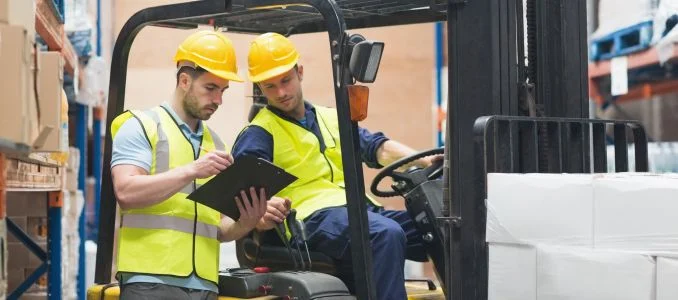
For instance, in a warehouse setting, the software can be configured to detect if a forklift operator enters a pedestrian-restricted zone or if a worker has collapsed and remained immobile for an extended period. Because the system is designed to understand "movement sequences," it can differentiate between a worker crouching to pick up a tool and a worker who has fallen. This level of granularity significantly reduces false positives, a common complaint with older generation security software that often led to "alert fatigue" among security personnel.

A Fact-Based Analysis of AI Integration
The shift toward AI-enhanced surveillance is not without its challenges. Industry experts note that the primary hurdle for the adoption of such technology is the integration of legacy hardware with modern software. Many enterprises are reluctant to replace their entire camera infrastructure, which represents a massive capital expenditure. Eluviant’s focus on software that sits atop existing networks allows firms to upgrade their intelligence capabilities without requiring a total overhaul of their hardware, making the transition to AI-enhanced monitoring financially viable for a wider array of organizations.
Furthermore, the integration of these models into security operations centers (SOCs) demands a change in the role of the human operator. Rather than being "watchers," human personnel are being transitioned into "responders." This evolution allows security teams to focus their efforts on high-level decision-making and crisis management rather than the monotonous task of scanning multiple screens.

Looking Ahead: The Future of Enterprise Surveillance
As Aurora Flow begins its rollout, the industry will be watching closely to see how the system performs in complex, high-interference environments. The success of the model will likely hinge on its ability to maintain high accuracy rates while adapting to the unique lighting, noise, and physical layouts of different commercial facilities.
Eluviant’s rebranding and the release of Aurora Flow suggest that the company is positioning itself as a central player in the industrial IoT (Internet of Things) ecosystem. By merging deep learning with the practical requirements of enterprise security, the company is attempting to solve a fundamental problem: how to make sense of the overwhelming amount of visual data being generated in our modern, automated world.

While the deployment of such technology inevitably prompts discussions regarding privacy and the ethics of surveillance, the primary focus for firms like Eluviant remains the enhancement of physical safety and the protection of critical assets. As AI continues to advance, the distinction between a "security camera" and an "intelligent sensor" will likely disappear, and the ability to interpret human behavior in real-time will become a standard component of industrial operations.
For now, the launch of Aurora Flow represents a significant step forward in that evolution, providing a template for how enterprises can harness the power of artificial intelligence to create safer, more efficient, and more secure work environments. As the technology continues to scale across its global network of deployments, it will undoubtedly provide valuable insights into the future of automated surveillance and its role in protecting both people and property in an increasingly complex global landscape.