The quest for advanced hearing restoration has long sought to overcome the inherent limitations of existing technologies. While cochlear implants have revolutionized the lives of hundreds of thousands globally suffering from severe hearing loss, they necessitate invasive surgery and contend with issues such as the spread of electrical stimulation within the delicate cochlea, which can limit the fidelity of sound perception. Researchers have, for decades, explored alternative pathways to stimulate the auditory system with greater precision and reduced surgical intervention. The Doshisha University team’s findings provide some of the strongest behavioral validation to date for contactless optical stimulation of the cochlea, demonstrating its capacity to evoke a meaningful auditory percept without genetic modification or the need for implanted devices.
The Global Burden of Hearing Loss and Current Solutions
Hearing loss represents a substantial global health challenge. According to the World Health Organization (WHO), over 1.5 billion people worldwide live with some degree of hearing loss, and approximately 430 million individuals require rehabilitation for disabling hearing loss. This pervasive condition profoundly impacts communication, education, employment, and overall quality of life, leading to social isolation and significant economic burdens.
For those with mild to moderate hearing impairment, conventional hearing aids offer amplification, improving their ability to perceive sound. However, for individuals with severe-to-profound sensorineural hearing loss—damage to the inner ear or the auditory nerve—traditional hearing aids are often insufficient. This is where cochlear implants have made an indelible mark. These sophisticated electronic devices bypass damaged parts of the inner ear and directly stimulate the auditory nerve, translating sound into electrical signals that the brain interprets. Since their inception, cochlear implants have transformed lives, enabling recipients to understand speech, engage in conversations, and experience sounds they otherwise would not.
Despite their profound impact, cochlear implants are not without their drawbacks. The implantation procedure requires intricate surgery, which carries inherent risks such as infection, damage to existing residual hearing, and complications from anesthesia. Furthermore, the very mechanism of electrical stimulation presents a technical challenge. The electrical current tends to spread widely within the fluid-filled cochlea, activating multiple auditory nerve fibers simultaneously rather than precisely targeting specific ones. This "current spread" limits the ability to precisely encode the complex nuances of sound, such as fine pitch discrimination and sound localization, leading to a sound quality that, while functional, often differs significantly from natural hearing. These limitations underscore the ongoing scientific imperative to develop more refined and less invasive auditory prosthetics.
The Allure of Optical Stimulation: A Quest for Precision
The concept of using light, particularly infrared laser light, to stimulate neural tissue has gained considerable traction in neuroscience over the past two decades. Its appeal in the context of auditory prosthetics is rooted in its theoretical advantages over electrical stimulation. Light, unlike electrical current, can be precisely focused and delivered with high spatial resolution. This characteristic suggests that optical stimulation could potentially activate highly localized regions of the auditory system, allowing for a much more accurate and detailed encoding of sound frequencies—a process known as tonotopic mapping—within the cochlea. Such precision could lead to a more natural and nuanced auditory experience, addressing one of the key limitations of current cochlear implants.
Previous research has explored optical stimulation, demonstrating that infrared laser pulses can indeed generate electrical activity within the cochlea. These studies laid important groundwork by establishing the biophysical feasibility of light-induced neural responses. However, a critical unanswered question persisted: do these optically generated electrical signals actually translate into meaningful auditory perception? Proving that an animal or human can consciously perceive and respond to such a stimulus is a far more complex challenge than merely detecting neural activity. This is precisely where the Doshisha University study offers its significant contribution.
Doshisha University’s Landmark Study: Unpacking the Methodology and Findings
To address the question of auditory perception, the research team, led by Dr. Yuta Tamai and Professor Kohta I. Kobayasi, devised a rigorous behavioral experiment utilizing awake Mongolian gerbils. Mongolian gerbils are a preferred animal model in auditory neuroscience due to their well-developed auditory system, a broad hearing range that partially overlaps with humans, and a relatively large cochlear size, which facilitates experimental manipulation and observation.
The core of their methodology involved classical conditioning, a widely accepted paradigm for assessing sensory perception and learning in animals. The gerbils were trained to associate a specific stimulus with a water reward. One group of animals was conditioned using a conventional acoustic stimulus (sound), while another group received pulses of infrared laser light delivered through the intact tympanic membrane (eardrum). The non-invasive delivery of the laser light through the eardrum, without any surgical implantation or genetic modification, is a crucial aspect that highlights the potential for a truly contactless future device.
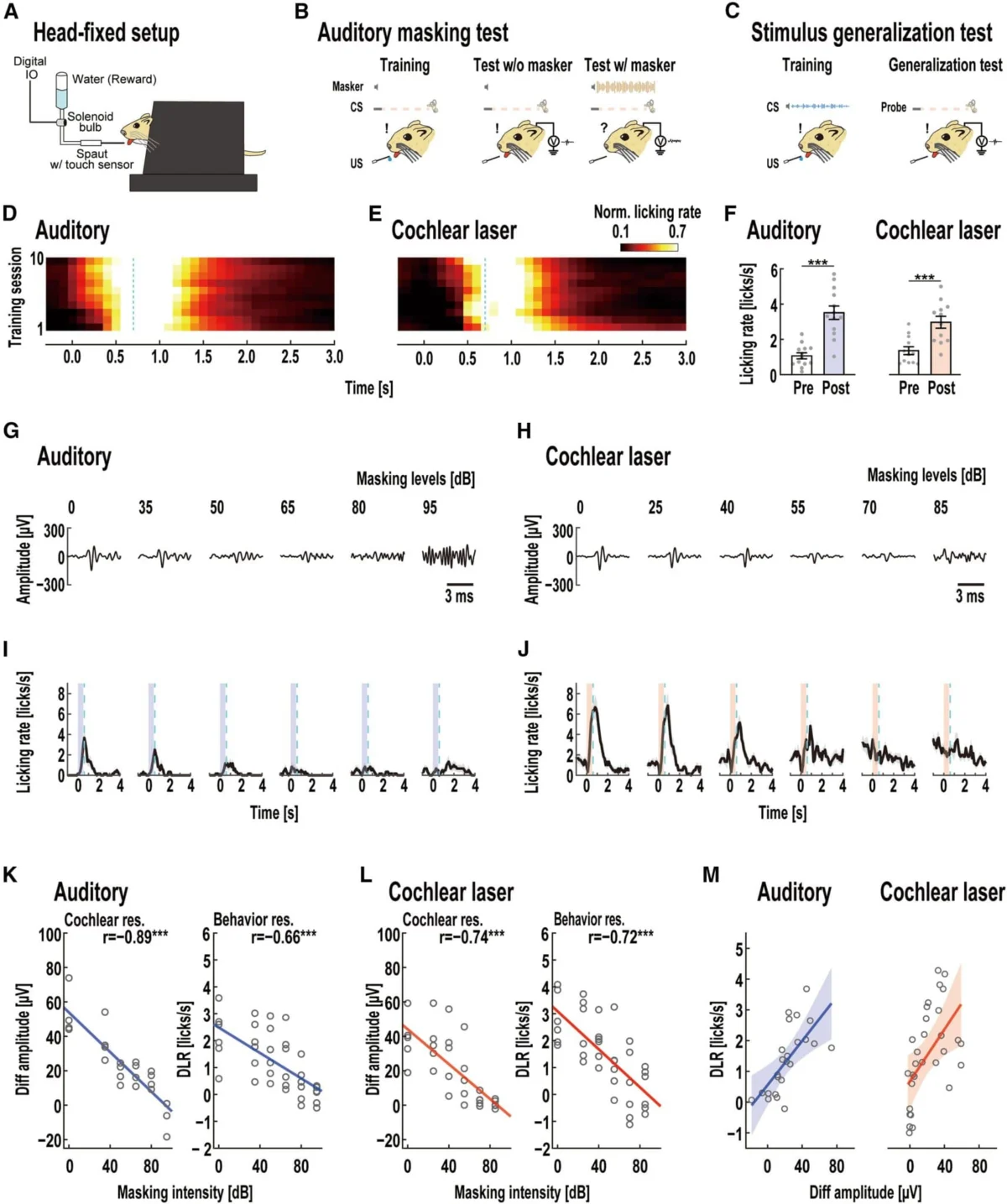
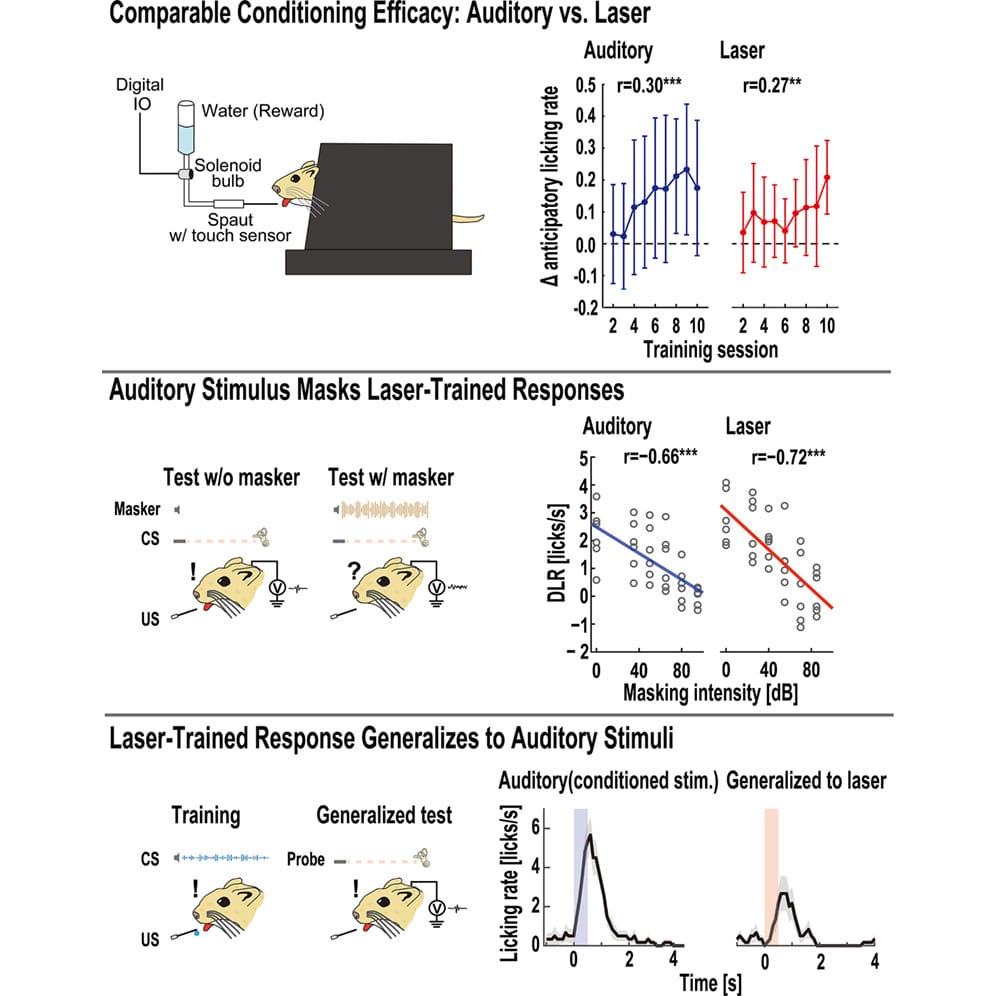
The results of these conditioning experiments were remarkably compelling. Gerbils exposed to the laser stimulation learned to anticipate and respond to the reward in much the same way as the animals trained with conventional sound. This demonstrated unequivocally that the optical stimulus had become behaviorally meaningful, signifying that the gerbils were indeed perceiving it as an auditory event. While the behavioral responses elicited by laser stimulation were generally weaker than those produced by direct acoustic sound, the overall learning pattern and responsiveness were strikingly similar, underscoring the validity of the induced percept.
To further substantiate that the responses genuinely reflected auditory processing rather than a non-specific sensory effect (like a tactile sensation or a thermal response), the investigators introduced background white noise. This intervention substantially reduced the behavioral responses to both conventional sound and laser stimulation, while responses to visual cues remained largely unaffected. This ingenious control experiment strongly suggested that the laser-induced perception was processed through the brain’s auditory pathways, validating its auditory nature.
The study also delved into the characteristics of this optically induced perception. It was observed that increasing the laser’s radiant energy produced progressively stronger behavioral responses, a relationship that directly mirrors how louder acoustic stimuli lead to stronger auditory perceptions. This dose-response relationship further bolstered the argument that the gerbils were experiencing an auditory-like sensation. In another key experiment, animals initially trained solely with conventional sound also responded when laser stimulation was presented for the first time. This fascinating finding suggests that the laser-generated percept shared important, fundamental characteristics with an acoustic stimulus, implying a common or convergent encoding mechanism within the auditory system.
Voices Behind the Vision: Personal Motivation and Future Aspirations
The driving force behind such innovative research often stems from deeply personal motivations. Dr. Yuta Tamai, a lead researcher in the study, articulated his inspiration: “My research motivation arises from observing family members who have age-related hearing loss and struggle to engage in conversations due to the limitations of conventional hearing aids. Their experience highlighted the need for more effective solutions, as traditional cochlear implants require invasive procedures and have technical drawbacks. This inspired me to investigate non-invasive, optical alternatives that offer a natural auditory experience. My goal is to bridge the gap between neuroscience and technology by developing a contactless device to restore the joy of communication for those underserved by existing hearing aids.” This personal connection underscores the human-centered approach to this scientific endeavor.
Professor Kohta I. Kobayasi, a senior member of the research team, expressed an ambitious vision for the future impact of this technology. “In the next 5–10 years, this technology could revolutionize the treatment of hearing impairment,” he stated. “By perfecting trans-tympanic optical stimulation, we aim to provide a clinical alternative that minimizes surgical risks and complications. It may also open new avenues for sensory substitution devices, improving the quality of life for millions suffering from communication challenges due to hearing loss.” These statements highlight not just the potential for a new clinical tool but also for broader advancements in sensory prosthetics.
Navigating the Path Forward: Significant Limitations and Future Research
While the findings from Doshisha University represent a monumental behavioral proof of concept, the researchers are careful to temper enthusiasm with a realistic assessment of the work’s current stage. It is imperative to emphasize that this research remains firmly in the preclinical stage and should not be interpreted as evidence that a non-invasive laser hearing device is ready for clinical use in humans. The journey from initial scientific discovery to a clinically viable product is long, arduous, and fraught with challenges.
One of the primary unanswered questions revolves around the precise biological mechanism responsible for the auditory sensation. The authors discuss several plausible explanations, including optoacoustic effects, where the laser energy is converted into pressure waves within the cochlear fluids that then stimulate hair cells or auditory neurons. Another possibility is direct activation of auditory structures, although the exact cellular targets remain to be definitively established. Further detailed investigation will be crucial to unravel exactly how infrared stimulation produces these complex auditory responses. Understanding this mechanism is vital for optimizing the technology and ensuring its safety and efficacy.
A significant limitation of the current study is that it was conducted in normal-hearing animals. This leaves open the critical question of whether the same approach could benefit individuals with sensorineural hearing loss—the very population most likely to require advanced hearing restoration technologies. The cochleae of individuals with severe hearing loss often have damaged or absent hair cells and potentially degenerated auditory nerve fibers, which might respond differently to optical stimulation compared to a healthy auditory system. The authors acknowledge that previous studies on optical stimulation in models of hearing impairment have yielded conflicting results, making extensive further investigation in relevant animal models of hearing loss an essential next step before any clinical translation can be considered.
Long-term safety is another paramount consideration. While earlier work by the Doshisha research group found no evidence of acute tissue damage under similar stimulation conditions, the effects of repeated, long-term laser exposure on the delicate structures of the inner ear and the eardrum itself are currently unknown. The cochlea is an exquisitely sensitive organ, and any therapeutic intervention must be rigorously tested for chronic safety before human applications become feasible. This will necessitate extensive preclinical trials focused on histological analysis, functional assessment, and comprehensive safety profiling over extended periods.
Furthermore, replicating the full complexity and richness of human hearing—including the ability to discriminate subtle differences in pitch, timbre, and to localize sounds in space—presents a formidable technical challenge. While this study demonstrated the perception of a "sound-like" stimulus, achieving the nuanced auditory experience necessary for complex communication and music appreciation will require sophisticated modulation of laser parameters and a deep understanding of how light interacts with the auditory system to encode diverse sound characteristics.
A Potential New Direction for Future Hearing Technologies
Despite these significant limitations and the extensive research still required, the Doshisha University study highlights an emerging and profoundly promising area of auditory neuroscience. This research could eventually complement or even expand upon today’s existing hearing restoration strategies, potentially offering a paradigm shift in how severe hearing loss is managed.
The vision of transtympanic optical stimulation offers a distinct advantage over current cochlear implants: it seeks to deliver energy through the intact eardrum without direct contact or surgical implantation of devices inside the cochlea. If future studies successfully demonstrate the safety, reliability, and effectiveness of this approach in hearing-impaired animal models, and ultimately in human trials, it could represent an entirely new class of auditory prosthetic technology.
The potential implications are vast. A truly non-invasive, contactless hearing device could significantly reduce the risks and psychological burden associated with surgical procedures, making advanced hearing restoration more accessible to a wider global population. It could also open doors for individuals who are not candidates for cochlear implants due to medical contraindications or personal preferences. Moreover, the theoretical precision offered by optical stimulation holds the promise of a more "natural" auditory experience, potentially improving speech understanding in challenging environments and enhancing the enjoyment of music and other complex sounds—areas where current technologies still strive for improvement.
This current study provides an invaluable behavioral proof of concept that contactless optical stimulation can indeed produce auditory-like perception. As research continues to unravel the intricate mechanisms, address safety concerns, and demonstrate efficacy in impaired auditory systems, these findings may help inform future efforts to develop less invasive, more precise, and ultimately more transformative approaches for restoring the profound sense of hearing, thereby improving the quality of life for millions around the world.
Reference:
Tamai Y, Uenaka M, Okamoto A, et al. Optical induction of auditory perception via cochlear stimulation in Mongolian gerbils without genetic modification. iScience. 2026;29:116588. doi:10.1016/j.isci.2026.116588.