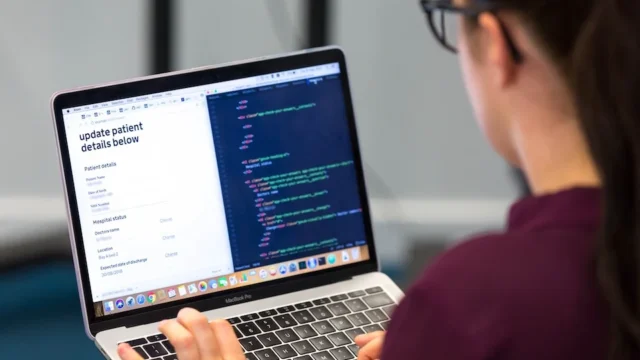
The revision process was driven by a rigorous evaluation of how internal teams and external stakeholders interacted with the original content. While the initial reception of the 2024 launch was positive, the DfE’s digital teams recognized that high engagement data did not necessarily equate to optimal utility. To bridge this gap, the department conducted extensive user research focusing on three primary cohorts: designers, product managers, and delivery leads. This research aimed to identify friction points in the user journey and ensure that the manual provided actionable insights rather than just theoretical knowledge.
The Evolution of Digital Accessibility Standards in the UK
To understand the importance of the DfE’s latest manual update, it is necessary to examine the broader regulatory landscape of the United Kingdom. Since 2018, the Public Sector Bodies (Websites and Mobile Applications) (No. 2) Accessibility Regulations have mandated that all public sector digital services meet the Web Content Accessibility Guidelines (WCAG) 2.1 Level AA standards. In recent years, this requirement has evolved to encompass the newer WCAG 2.2 standards, which include additional criteria for mobile accessibility, keyboard navigation, and cognitive inclusion.
The DfE’s manual is not merely a internal guidebook; it is a vital component of the government’s "Digital-First" strategy. With over 16 million people in the UK reported to have a disability—representing approximately 24% of the population—the stakes for accessible education services are exceptionally high. For the DfE, this includes ensuring that platforms used by teachers, students, parents, and school administrators are compatible with assistive technologies such as screen readers, voice activation software, and high-contrast displays.
Chronology of the Update: From Feedback to Implementation
The journey toward the 2025 update began almost immediately after the manual’s first iteration was released in late 2024. By early 2025, the DfE’s accessibility team had gathered enough telemetry and qualitative feedback to identify systemic issues within the site’s architecture.
In March 2025, the department initiated a series of deep-dive research sessions. These sessions revealed that while the content was viewed as high-quality, the "Knowledge Hub" section was frequently described as a "dumping ground" for miscellaneous information. Users reported difficulty finding specific guidance when they were in the middle of a design sprint or a coding session.
Throughout April and May 2025, the DfE team worked on a content audit, reorganizing hundreds of pages to align with the "user journey" model. This model prioritizes the chronological stages of a project—discovery, alpha, beta, and live—ensuring that a developer looking for "automated testing tools" or a designer looking for "color contrast ratios" can find that information within the context of their current task.
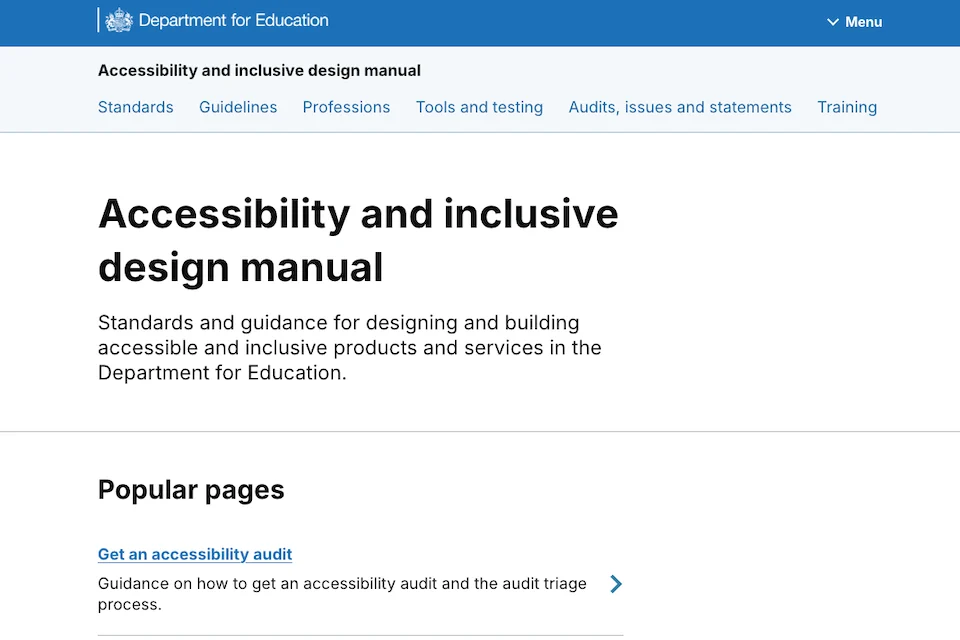
The final phase of the update occurred in June 2025, focusing on the user interface (UI) of the manual itself. The department simplified the homepage and improved navigation menus to reduce cognitive load. The updated manual was officially deployed on July 21, 2025, following a final round of usability testing with neurodivergent users to ensure the site’s own accessibility was beyond reproach.
Structural Reorganization and the Removal of the Knowledge Hub
One of the most significant changes in the 2025 version is the total removal of the "Knowledge Hub" section. In information architecture, a "hub" often becomes a catch-all for content that does not have a clear home, leading to a fragmented user experience. The DfE addressed this by redistributing this content into logical, thematic categories.
For instance, guidance on "how to write alt-text" was moved from the general hub into a specific section for content designers. Instructions on "aria-labels" and "semantic HTML" were moved into the technical development section. By placing information where users naturally look for it, the DfE has reduced the "time-to-knowledge" metric, allowing teams to implement accessible features more efficiently.
This reorganization reflects a broader trend in UX design known as "just-in-time" information delivery. Rather than requiring a staff member to read the entire manual to find a solution, the new structure allows for quick reference, which is essential in the fast-paced environment of government digital services.
Reframing Accessibility Tools: From Installation to Implementation
The 2025 update also overhauled the "Tools" guidance. Previously, this section functioned primarily as a directory, listing various software packages and installation instructions for tools like Axe, Wave, and Lighthouse. However, user research indicated that staff were less concerned with how to install a tool and more concerned with when and why to use it.
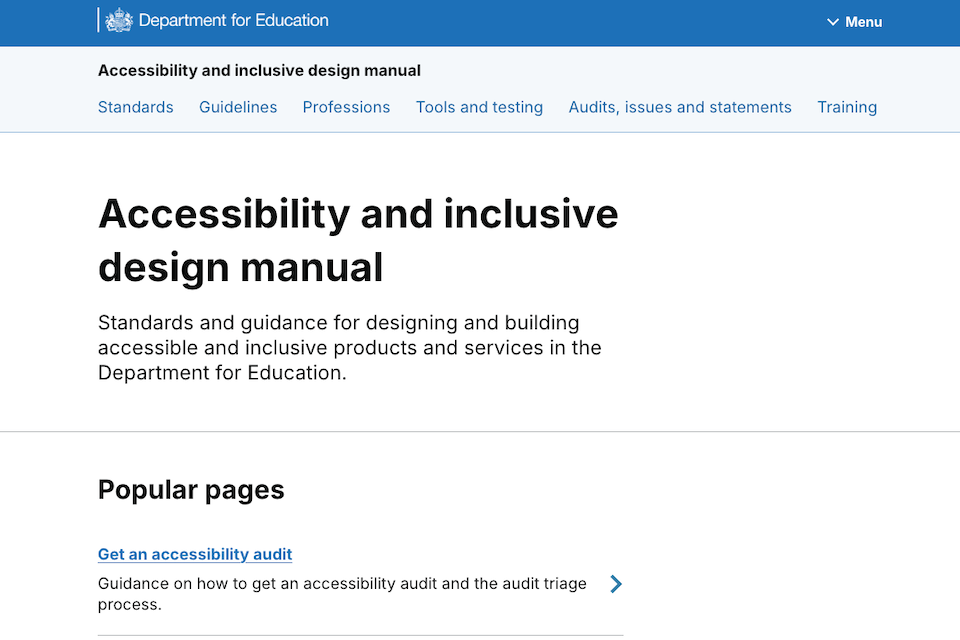
The new guidance is framed around specific needs and outcomes. It now answers critical questions such as:
- Which tool is best for catching automated errors versus manual testing?
- At what stage of the development cycle should a specific screen reader be used for testing?
- How do I interpret the results of an accessibility audit to prioritize fixes?
By shifting the focus from the technical specifications of the tools to the human needs of the testers and the end-users, the DfE has made it easier for non-technical roles, such as product managers and delivery leads, to advocate for accessibility testing throughout the project lifecycle.
Simplification of the User Experience and Interface
The aesthetic and functional design of the manual underwent a major transformation to improve readability and reduce visual noise. The previous version featured a busy homepage with numerous icons, images, and a long-scroll format that overwhelmed users.
In the July 2025 update, the DfE adopted a "less is more" philosophy. The new homepage features a clean, minimalist design with a clear hierarchy. The top navigation was streamlined to include only the most essential categories, and the search functionality was enhanced to provide more relevant results.
This change is grounded in cognitive load theory, which suggests that providing too much information at once can hinder a person’s ability to process and retain that information. For a manual dedicated to inclusive design, it was imperative that the resource itself served as a "gold standard" example of accessible web design. The new interface adheres to the highest standards of clarity, with high-contrast ratios, clear typography, and a layout that facilitates easy scanning.
Supporting Data and the Impact of Digital Exclusion
The DfE’s commitment to this manual is backed by sobering statistics regarding digital exclusion in the education sector. According to data from the Office for National Statistics (ONS), people with disabilities are statistically less likely to have high-level digital skills compared to those without disabilities. In an educational context, this means that if a DfE service—such as an application for student finance or a teacher training portal—is not fully accessible, it creates a barrier to entry for the very people who need those services most.
Furthermore, a 2024 report on public sector accessibility found that while 99% of government homepages met basic accessibility requirements, deeper-level pages often failed on complex tasks like form filling or navigating interactive elements. The DfE Manual aims to solve this by providing granular, "how-to" guidance for these complex interactions, ensuring that accessibility is maintained across every layer of a digital service.
Reactions and Broader Implications for the Public Sector
While the manual was developed specifically for the Department for Education, its impact is expected to resonate across the entire UK public sector. Because the manual is open-source and publicly accessible, it is already being adopted by local authorities, NHS trusts, and third-party contractors who build services for the government.
Industry experts have noted that the DfE’s approach of "research-led refinement" sets a new benchmark for government documentation. By treating the manual as a product that requires continuous improvement rather than a finished document, the DfE ensures that its guidance remains relevant as technology evolves.
The implications of this update extend beyond compliance. By making it easier for teams to build inclusive services, the DfE is fostering a culture where accessibility is seen as a creative opportunity rather than a legal hurdle. This cultural shift is essential for the long-term goal of making the UK a global leader in digital inclusion.
Conclusion: A Living Document for an Inclusive Future
The July 2025 update to the DfE Accessibility and Inclusive Design Manual is more than just a website refresh; it is a strategic realignment of how the department approaches its digital responsibilities. By focusing on user needs, reorganizing content for better flow, and simplifying the interface, the DfE has created a tool that empowers its workforce to build a more equitable digital world.
As the manual continues to be used and tested in real-world scenarios, the DfE has committed to ongoing iterative updates. This ensures that as new challenges arise—such as the integration of Artificial Intelligence in education or the rise of new assistive hardware—the manual will provide the necessary guidance to ensure that no one is left behind in the digital age. The DfE’s proactive stance serves as a blueprint for other departments, proving that in the realm of accessibility, the work of improvement is never truly finished.