
Understanding the Landscape of Childhood Hearing Loss
Hearing loss in children is a complex issue with a spectrum of causes, ranging from temporary conditions to permanent impairments. Early identification and intervention are paramount, as they directly impact a child’s linguistic, cognitive, and social development. Statistics from the Centers for Disease Control and Prevention (CDC) indicate that approximately 2 to 3 out of every 1,000 newborns in the United States are born with hearing loss in one or both ears. While universal newborn hearing screening has significantly improved early detection rates, it’s crucial to remember that hearing loss can manifest at any age, making ongoing vigilance essential.
Several factors can contribute to hearing loss in children. Fluid buildup in the middle ear, frequently associated with common colds, ear infections, or improper bottle-feeding positions, is a prevalent cause of temporary hearing impairment in young children. This condition can muffle sounds, leading to difficulties in speech perception and language acquisition.
Genetic predisposition also plays a significant role, with some children inheriting hearing loss even in the absence of a family history of childhood hearing impairment. Furthermore, prenatal and postnatal infections, such as cytomegalovirus (CMV), rubella, toxoplasmosis, syphilis, Zika virus, meningitis, measles, and mumps, can profoundly affect a child’s auditory development. Certain medications, particularly some aminoglycoside antibiotics, have also been linked to ototoxicity, potentially leading to hearing damage.
Specific risk factors identified by healthcare professionals include prematurity, low birth weight, extended stays in the neonatal intensive care unit (NICU) exceeding five days, neonatal jaundice, and low Apgar scores at birth. These indicators necessitate closer monitoring of a child’s hearing development.
Environmental factors, such as prolonged exposure to loud noises from sources like music, fireworks, or recreational activities, can cause cumulative damage to the delicate structures of the inner ear, leading to noise-induced hearing loss over time. This underscores the importance of protecting children’s ears from excessively loud sounds.
Additionally, conditions like head trauma and auditory neuropathy spectrum disorder (ANSD) can result in hearing impairment. It is also important to acknowledge that in a significant number of children, the precise cause of hearing loss remains unidentified even after thorough investigation. This diagnostic uncertainty does not diminish the importance of early intervention and management.
Universal Indicators: Early Signs of Hearing Loss Across All Ages
Certain signs of hearing loss are common across all age groups and warrant prompt attention. Parents and caregivers should be attuned to patterns that suggest a child may be struggling to hear effectively. These universal indicators include:
- Delayed speech or language development: Children with hearing loss may take longer to reach speech and language milestones compared to their peers.
- Unclear speech: The articulation of sounds and words may be less precise.
- Difficulty following instructions: Comprehending and responding to spoken directions can be a challenge.
- Frequent requests for repetition: Children may often ask "What?" or "Huh?"
- Appearing inattentive or easily distracted: This can be a coping mechanism for not fully understanding auditory input.
- Speaking at a higher volume than necessary: This may be an attempt to compensate for perceived difficulty in hearing oneself.
- Limited or inappropriate responses to sounds: This can range from not reacting to loud noises to not responding when their name is called.
- Difficulty understanding speech in noisy environments: Background noise can exacerbate hearing challenges.
If several of these signs are observed, it is highly recommended to schedule a professional hearing test. Even mild hearing loss can significantly impede a child’s ability to learn new vocabulary, follow directions, and communicate with confidence, impacting their overall development and academic success.
Age-Specific Indicators: Recognizing Hearing Loss in Infants (0-12 Months)
Infants explore the world primarily through their senses, with sound playing a crucial role in their early development. Reduced hearing can manifest in their reactions, or lack thereof, to everyday noises.
For Infants 0-6 Months:

Key signs of hearing loss in this age group include:
- Lack of startling response to loud noises: A typical infant will startle or blink in response to a sudden, loud sound.
- Not turning towards sounds: They may not orient their head towards the source of familiar sounds, such as a parent’s voice or a rattle.
- Absence of vocalizations or babbling: While some variation exists, a significant lack of cooing and babbling can be an indicator.
- Not responding to their name being called: Even familiar sounds like their name may not elicit a reaction.
For Infants 6-12 Months:
As infants grow, their responses to sound become more sophisticated. Signs to watch for include:
- Not babbling with varied sounds: Babbling should become more complex, incorporating a wider range of phonemes.
- Not imitating speech sounds: They may not attempt to mimic sounds made by others.
- Not responding to simple requests: Even basic commands like "come here" may go unnoticed.
- Not turning to locate sounds: While they may react to loud noises, they may not be able to pinpoint the direction of softer sounds.
These symptoms can sometimes be indicative of deafness in babies, but they can also be attributed to temporary conditions like middle ear fluid. Regardless of the cause, any suspicion of hearing impairment warrants a thorough audiological evaluation.
Navigating the Toddler Years: Signs of Hearing Loss in Toddlers (1-3 Years)
Toddlers are in a rapid phase of language acquisition, learning new words and phrases daily. When hearing is compromised, this developmental trajectory is often altered, leading to slower language development.
Signs of Hearing Loss in 1-Year-Olds:

In addition to the signs observed in infants, a 1-year-old with hearing loss might:
- Not respond to their name: This becomes more pronounced as they should recognize their name.
- Not show interest in music or toys that make noise: They may not engage with auditory stimuli.
- Have limited or no babbling: Babbling should evolve into more complex sound patterns.
- Not understand simple commands: Basic instructions may not be followed.
Signs of Hearing Loss in 2-Year-Olds:
By the age of two, children typically have a vocabulary of several hundred words and begin to form two-word phrases. Common signs of hearing loss in 2-year-olds include:
- Delayed speech development: Using fewer words than expected for their age.
- Speech that is difficult for others to understand: Articulation and pronunciation challenges.
- Difficulty following directions: Struggling to comprehend multi-step instructions.
- Not responding when spoken to: Appearing to ignore verbal communication.
- Frequent misinterpretation of words: Confusing similar-sounding words.
Signs of Hearing Loss in 3-Year-Olds:
At three years old, children usually speak in short sentences and their speech is generally understood by familiar adults. If hearing loss is present, parents may observe:
- Limited vocabulary or difficulty forming sentences: Using shorter or less complex sentence structures.
- Speech that is still unclear or difficult to understand: Significant articulation issues persist.
- Inability to follow conversations: Struggling to keep up with group discussions or narratives.
- Difficulty understanding instructions from a distance: Needing to be close to the speaker to comprehend.
- Excessive use of gestures or pointing: Relying heavily on non-verbal communication due to auditory comprehension difficulties.
It’s important to note that the signs of hearing loss can overlap between different age groups, and early intervention is crucial regardless of the specific age of identification.

Expanding Horizons: Signs of Hearing Loss in Preschoolers & School-Aged Children (4-7 Years)
As children enter preschool and school, their auditory needs evolve to include more complex listening skills required for early literacy, classroom learning, and social interaction. Hearing difficulties can manifest in new ways at this stage.
Signs of Hearing Loss in 4 to 5-Year-Olds:
In this age group, children are developing clearer speech, beginning to read, and engaging in more complex auditory tasks. Look for these signs:
- Persistent difficulty understanding speech: Even with clear enunciation, comprehension may be poor.
- Trouble distinguishing between similar-sounding words: This can impact phonological awareness, crucial for reading.
- Reliance on visual cues: Frequently watching the speaker’s lips or facial expressions.
- Appearing to daydream or be disengaged in class: This can be a sign of struggling to hear the teacher.
- Complaints of ear discomfort or ringing in the ears (tinnitus): These can be indicators of underlying auditory issues.
- Frequent errors in following directions: Particularly those involving multiple steps or auditory cues.
Signs of Hearing Loss in 6 to 7-Year-Olds:
Hearing loss in school-aged children can significantly affect their academic performance and social integration. Key indicators include:
- Academic struggles: Falling behind in reading, spelling, or other subjects that rely heavily on auditory input.
- Difficulty participating in classroom activities: Hesitation to answer questions or engage in group work due to hearing challenges.
- Social isolation or behavioral problems: Frustration and withdrawal can result from communication difficulties.
- Misunderstanding instructions from teachers or peers: Leading to errors in assignments or social interactions.
- Preference for television or music at high volumes: A compensatory behavior for reduced hearing sensitivity.
- Inconsistent performance in school: Sometimes performing well, other times struggling, depending on the listening demands of the situation.
Diagnosing Hearing Loss in Children: A Multifaceted Approach
The diagnosis of hearing loss in children employs a range of safe, non-invasive tests designed to assess the auditory system’s responsiveness to sound. The specific tests administered depend on the child’s age and developmental stage.

Newborn hearing screenings, typically conducted shortly after birth, often utilize Auditory Brainstem Response (ABR) or Otoacoustic Emissions (OAE) tests. ABR measures the brain’s electrical activity in response to sound, while OAEs assess the function of the inner ear’s hair cells.
For older children, audiologists utilize age-appropriate listening tests. These may include behavioral audiometry, where children are trained to respond to sounds by performing a task, such as placing a toy in a bucket when they hear a beep. Visual Reinforcement Audiometry (VRA) involves associating a sound with a visual reward. Play audiometry encourages children to engage in a game-like activity in response to sounds.
If signs of delayed speech, unclear speech, or difficulty following instructions are observed at any age, it is imperative to schedule a hearing evaluation promptly. Early and accurate diagnosis is the cornerstone of effective intervention, providing children with the best opportunity to develop robust communication and learning skills.
Comprehensive Hearing Solutions for Children: From Amplification to Implants
The journey of addressing childhood hearing loss is unique to each child, and after diagnosis, the primary focus is on identifying and treating any underlying medical conditions that may be contributing to the impairment. This could involve addressing middle ear fluid, infections, or other reversible causes. If hearing loss cannot be medically resolved, the audiology team will guide parents through the selection of appropriate hearing technology.
Hearing Aids for Children:
Hearing aids are typically recommended for children with mild to moderate sensorineural hearing loss, and in some cases, for conductive or mixed hearing loss. Their primary function is to amplify sounds, making speech and environmental cues more accessible to the child. For optimal benefit, hearing aids should be worn consistently during all waking hours. Regular adjustments are essential as children grow and their hearing needs evolve. The consistent use of hearing aids allows children to develop crucial auditory skills, including speech perception, language comprehension, and phonological awareness.
Hearing Implants for Children:
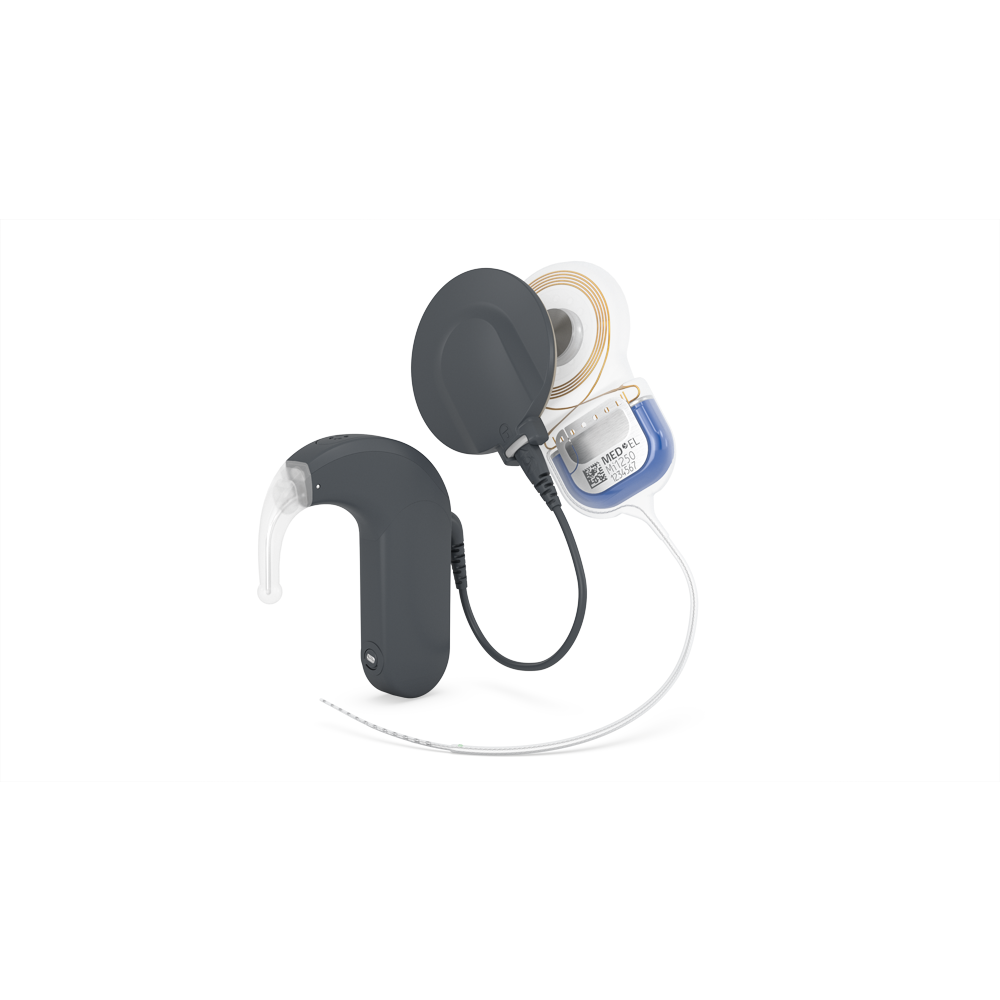
When hearing aids do not provide sufficient auditory access to meet a child’s developmental needs, particularly in cases of severe to profound hearing loss, atresia, or significant ear malformations, various hearing implant solutions may be considered. These advanced devices work by bypassing the damaged portions of the auditory system and directly stimulating the functional components of the hearing pathway.
- Cochlear Implants: These devices are surgically implanted and designed for individuals with severe to profound sensorineural hearing loss. They convert sound into electrical signals that directly stimulate the auditory nerve, bypassing the damaged inner ear.
- Bone Conduction Implants: For individuals with conductive or mixed hearing loss, bone conduction implants transmit sound vibrations through the bones of the skull to the inner ear.
- Middle Ear Implants: These implants can offer a solution for certain types of hearing loss by directly stimulating the middle ear structures.
Early and consistent auditory access, whether through hearing aids or implants, is fundamental for fostering speech, language, and cognitive development. This underscores the critical importance of timely evaluation and intervention.
The Lifelong Journey with a Hearing Implant
The decision to pursue a hearing implant marks a significant step for both the child and their family. MED-EL, a leading provider of hearing implant solutions, emphasizes a commitment to supporting each individual’s entire, lifelong hearing journey. Their approach focuses on empowering children to become confident communicators through a combination of advanced technology, specialized therapy, and ongoing, personalized support. This holistic strategy aims to ensure that children with hearing loss can thrive academically, socially, and emotionally.
Conclusion: Empowering Futures Through Early Intervention
Recognizing the early signs of hearing loss in children is not merely about identifying a problem; it is about unlocking a world of potential. The presence of even subtle indicators can signal a need for a professional hearing assessment, which is the most critical next step. In the present era, advancements in hearing technology offer remarkable opportunities for children with hearing loss to learn, grow, and communicate with confidence. The fundamental principle remains: the earlier children receive appropriate support and intervention, the more profound and positive their long-term hearing outcomes can be, paving the way for a future where hearing limitations do not define their capabilities.
For parents and caregivers seeking further information and support, connecting with specialists like those at MED-EL can provide invaluable guidance on hearing assessments and the diverse range of hearing solutions available for children, including state-of-the-art cochlear implant systems. Open communication with healthcare professionals is key to making informed decisions and ensuring that every child has the opportunity to experience the richness of sound and the power of clear communication.

This article was developed with contributions from Dr. Yi Ge, Senior Manager of Medical Affairs at MED-EL Innsbruck, a certified otolaryngologist with extensive experience in hearing implant systems and global regulatory requirements.