
Project Scope and Architectural Significance
The expansion of the Heinz History Center is a landmark development for the Pittsburgh cultural district. The 92,000-square-foot project, which represents a significant investment in the city’s educational and historical infrastructure, is designed to enhance the museum’s capacity to serve the public. Key features of the new wing include a 150-seat state-of-the-art theater, advanced smart classrooms designed for digital learning, a public cafe, and extensive gallery space dedicated to the nuanced history of Pittsburgh and Western Pennsylvania.

Beyond the aesthetic and functional upgrades, the project presents complex logistical challenges, including working within a dense urban environment. Managing the flow of materials, heavy machinery, and a multi-tiered workforce of subcontractors requires a level of safety coordination that goes beyond standard regulatory compliance. The project is currently slated for completion by May 2028, a multi-year timeline that necessitates long-term vigilance regarding workplace hazards.
The OSHA Strategic Partnership Program
The OSHA Strategic Partnership Program (OSPP) is designed to encourage groups of employers, employees, and stakeholders to move beyond standard OSHA requirements. By forming a partnership, these entities establish a formal, written agreement to pursue common goals, such as reducing injury and illness rates, and to improve safety and health management systems.
In this instance, the Pittsburgh Area Office of OSHA has worked closely with Mascaro Construction to outline specific performance measures. These measures are intended to foster a culture of accountability. The partnership focuses on three primary pillars: leadership accountability, worker participation, and rigorous hazard identification. By creating a collaborative environment, OSHA and Mascaro intend to identify risks before they manifest into accidents, specifically targeting the “Focus Four” hazards: falls, caught-in or between incidents, struck-by incidents, and electrocutions.

Enhancing Subcontractor Safety Protocols
A critical component of this partnership is the specialized training provided to subcontractors. In large-scale construction, the presence of multiple specialized contractors increases the complexity of site communication. Often, communication gaps between the primary contractor and third-party subcontractors are where safety protocols fail.
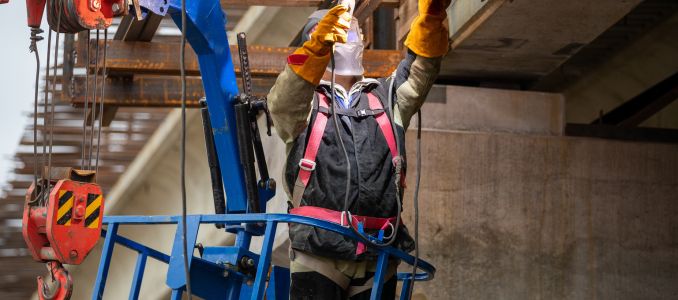
To mitigate this, the partnership agreement mandates that all subcontractors participate in site-specific safety orientations. This training is not merely a cursory review of general rules; it is tailored to the specific architectural and structural demands of the Heinz History Center expansion. Workers will be trained on the unique hazards of the site, such as working at heights in the new atrium, managing hazardous materials in older sections of the facility, and operating heavy equipment in tight urban spaces.
Furthermore, the partnership encourages “near-miss” reporting. By incentivizing workers to report instances where an accident almost occurred, management can identify systemic weaknesses in the construction workflow. This data-driven approach allows for real-time adjustments to site logistics, ensuring that the safety plan remains dynamic throughout the four-year construction cycle.
Historical Context and Industry Safety Trends
The construction industry remains one of the most hazardous sectors in the United States. According to the Bureau of Labor Statistics (BLS), the construction industry consistently accounts for one of the highest numbers of workplace fatalities annually. Falls from elevation continue to be the leading cause of death, accounting for more than one-third of all construction fatalities.
By entering into this strategic partnership, Mascaro Construction is aligning itself with an industry-wide push to modernize safety culture. Historically, construction safety was viewed as a compliance-based activity—something to be done to avoid fines. Modern industry standards, however, are shifting toward "Safety 2.0," which views safety as a core business value that enhances productivity, improves morale, and reduces the long-term costs associated with workers’ compensation claims and project delays.
The choice of the Heinz History Center—a public-facing institution—adds a layer of responsibility to the project. The museum must remain operational for many of its visitors during the construction phase, meaning that public safety and construction site security are inextricably linked. The partnership ensures that the public, the museum staff, and the construction workers are protected through a unified, rigorous safety framework.

Leadership and Stakeholder Accountability
The effectiveness of this partnership hinges on leadership accountability. Under the terms of the agreement, management at Mascaro Construction is tasked with enforcing safety protocols at every level of the chain of command. This includes regular site audits, safety inspections, and the implementation of mandatory safety meetings.
Worker participation is equally vital. The partnership emphasizes the role of the individual worker as an active participant in site safety. This is achieved through toolbox talks, safety committees, and an "open door" policy where workers are encouraged to voice concerns regarding unsafe conditions without fear of reprisal. This bottom-up approach is widely considered to be the most effective method for maintaining a safe, high-performance job site.
Implications for Future Pittsburgh Developments
The collaboration between OSHA and Mascaro Construction serves as a potential blueprint for future large-scale construction projects in the Pittsburgh region. As the city continues to invest in infrastructure and cultural expansion, the ability of private firms to work in tandem with federal regulators will likely become a benchmark for successful bidding and project management.
From an economic perspective, projects that maintain high safety standards are less likely to face costly work stoppages or litigation. By investing in front-end safety training and management systems, Mascaro is positioning the Heinz History Center project to avoid the common pitfalls that often lead to budget overruns and schedule slippages. If successful, the project could serve as a case study for the effectiveness of the OSPP in an urban renewal context.
Looking Toward 2028: A Long-Term Commitment
As the project progresses toward its May 2028 completion date, the partnership will continue to evolve. Periodic reviews between OSHA and Mascaro will assess the progress of the safety goals. These reviews will examine key performance indicators (KPIs), such as the Total Recordable Incident Rate (TRIR) and the Days Away, Restricted, or Transferred (DART) rate.
The commitment to this partnership reflects a broader trend toward professionalizing the construction environment. As technology plays an increasing role in modern architecture—through BIM (Building Information Modeling) and smart building sensors—safety management is also becoming more data-reliant. The integration of these technologies into the safety protocols of the Heinz History Center will be a point of interest for industry observers.

In conclusion, the partnership between Mascaro Construction and OSHA for the Heinz History Center expansion is a significant development in workplace safety. It underscores the necessity of proactive collaboration, the value of specialized subcontractor training, and the importance of leadership commitment in preventing workplace injuries. As the project transforms the museum’s campus, it will simultaneously serve as a testament to the idea that construction excellence and safety are not mutually exclusive, but rather, are foundational to one another. The successful completion of this project will likely set a high bar for future construction initiatives throughout the Commonwealth of Pennsylvania and beyond.