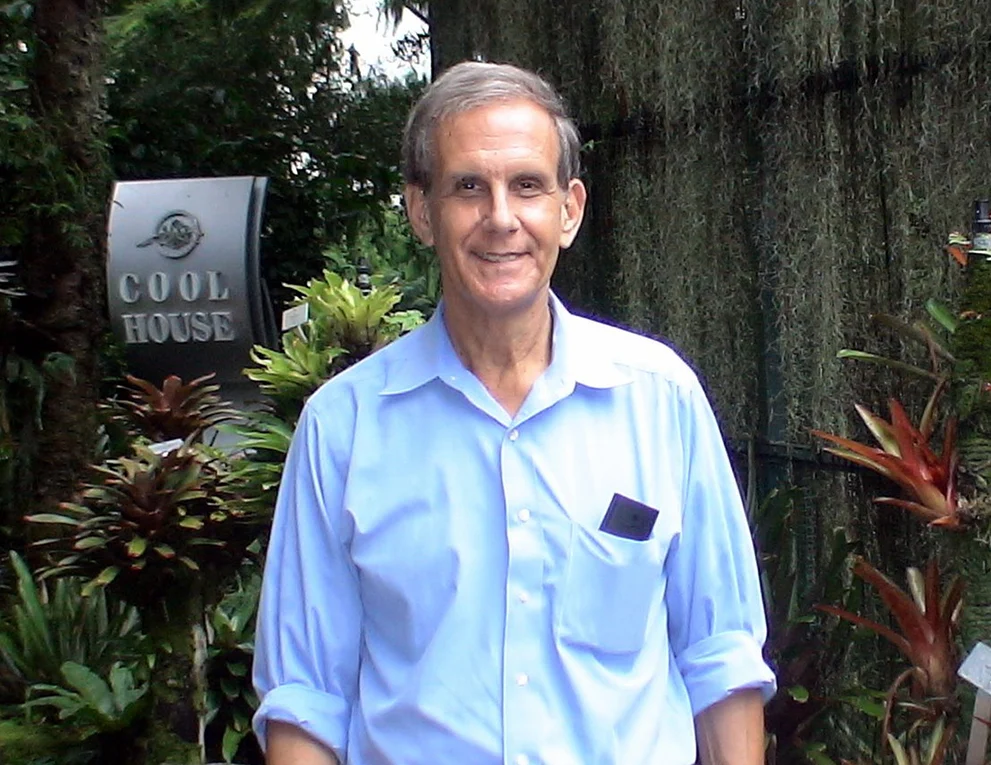
The donation comes at a critical juncture for the vestibular community. Vestibular disorders, which affect the inner ear and brain systems responsible for balance and spatial orientation, are frequently misdiagnosed or overlooked in primary care settings. By funding medical advocacy, Dr. Zee is directly supporting initiatives that enhance educational resources for healthcare providers, expand specialized training for clinicians, and amplify outreach efforts to a patient population that often suffers in silence due to the invisible nature of their symptoms.
A Legacy of Clinical Excellence: Six Decades at Johns Hopkins
Dr. Zee’s trajectory in the field of neurology is inextricably linked with the evolution of neuro-ophthalmology at Johns Hopkins. His journey began in 1965 as a medical student, a period during which the field of vestibular medicine was still in its relative infancy. Over the ensuing 55 years, he transitioned from a dedicated student to a prolific researcher and educator, eventually becoming one of the world’s foremost authorities on eye movements and the vestibulo-ocular reflex (VOR).
His tenure at Johns Hopkins has been defined by a multidisciplinary approach that blends traditional bedside observation with rigorous animal models and sophisticated mathematical modeling. This trifecta allowed Dr. Zee and his collaborators to decode the intricate cerebellar and brainstem mechanisms that govern how the human eye tracks objects and maintains stability during movement. His work provided the foundational understanding required to differentiate between peripheral vestibular issues—those originating in the inner ear—and central vestibular issues, which involve the brain’s processing centers.
Milestones in Neuro-Ophthalmology and Pharmacologic Breakthroughs
In 1980, Dr. Zee achieved a landmark breakthrough that would change the trajectory of treatment for pathological nystagmus. Working alongside colleagues from Johns Hopkins and the United Kingdom, he identified the first effective pharmacologic therapy for a persistent, debilitating form of nystagmus associated with cerebellar disorders. Before this discovery, patients suffering from these rhythmic, involuntary eye movements had few options for relief, often facing significant visual impairment and chronic dizziness.
Beyond clinical treatments, Dr. Zee’s influence is immortalized in "The Neurology of Eye Movements." Co-authored with John Leigh, this seminal textbook is currently in its fifth edition and is widely regarded as the definitive resource for neurologists, ophthalmologists, and otolaryngologists worldwide. The text serves as a comprehensive guide to the anatomy, physiology, and pathology of the systems controlling eye movements, translating complex neural circuitry into actionable clinical knowledge.
Unraveling the Mystery of Magnetic Field-Induced Vertigo
One of Dr. Zee’s most intriguing and impactful research contributions involves the intersection of physics and medicine. For years, patients and technicians reported experiencing vertigo and nystagmus while entering or exiting Magnetic Resonance Imaging (MRI) scanners. Dr. Zee and his research team set out to investigate this phenomenon, eventually proving that the strong static magnetic fields of an MRI scanner actually stimulate the inner ear’s salt-water-like fluid (endolymph).
This stimulation creates a Lorentz force that pushes on the semicircular canals, tricking the brain into sensing movement when the body is stationary. This discovery was more than a medical curiosity; it had profound implications for functional MRI (fMRI) studies. By accounting for these vestibular effects, researchers could ensure that brain activity recorded during scans was not being skewed by the patient’s inner ear reaction to the magnet. In recognition of this groundbreaking work, the Bárány Society—the premier international organization for vestibular research—awarded Dr. Zee and his team the prestigious gold medal in 2018, citing it as the most outstanding vestibular research of the previous six years.
Data-Driven Impact: A Scholarly Force and Mentor
The sheer volume of Dr. Zee’s academic output provides a quantitative look at his influence on the medical field. With over 560 peer-reviewed publications, his research covers the spectrum of balance science. His investigations into the cerebellum—the part of the brain responsible for motor control and coordination—have elucidated how the brain adapts to trauma and disease. This concept of "neural plasticity" is central to modern vestibular rehabilitation, as it provides the scientific basis for how patients can "relearn" balance after losing inner ear function.
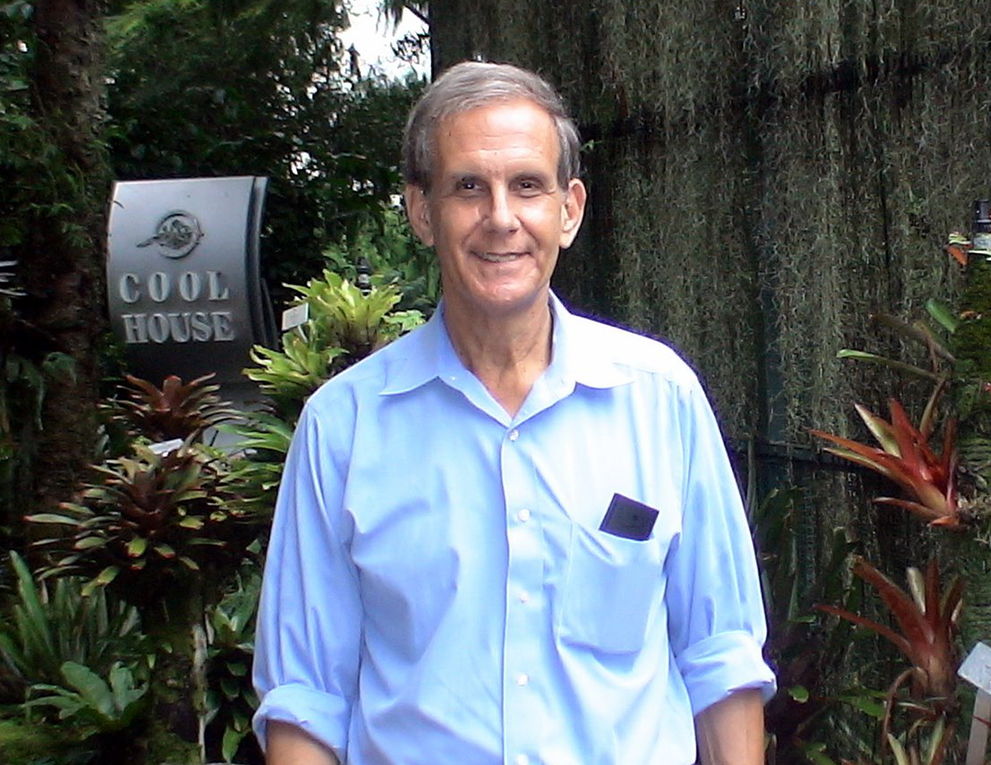
Dr. Zee’s scholarly work is characterized by its practical application. Recently, he co-authored the "Dizzy Exam Guide" with Amir Kheradmand and Joel Goebel. This guide was specifically designed to improve the accuracy of bedside diagnoses, providing a structured framework for clinicians to evaluate dizzy patients without always relying on expensive or invasive imaging. By simplifying the diagnostic process for conditions like Benign Paroxysmal Positional Vertigo (BPPV), Dr. Zee has empowered general practitioners to provide immediate relief to patients.
Technological Innovation and the Future of Diagnosis
In the latter stages of his career, Dr. Zee has embraced the digital revolution to further advance vestibular science. He has been a key figure in the development of smartphone-based eye-tracking tools. These innovations allow for the testing and diagnosis of positional nystagmus in BPPV—the most common cause of vertigo—using the high-resolution cameras already present in most patients’ pockets.
Furthermore, his leadership continues through collaborative proposals aimed at standardizing BPPV testing protocols using 3D simulations. These simulations allow clinicians to visualize the movement of "otoconia" (calcium carbonate crystals) within the semicircular canals, providing a clearer understanding of how various head maneuvers can reposition these crystals to cure vertigo. He is also currently investigating skull-vibration-induced nystagmus, a technique that uses mechanical vibration to reveal hidden vestibular deficits, offering a non-invasive window into the brain’s self-stability mechanisms.
Strengthening the Advocacy Pipeline: The VeDA Partnership
The recent donation to VeDA is viewed by industry experts as a strategic investment in the infrastructure of vestibular healthcare. VeDA, which celebrated Dr. Zee as a "Champion of Vestibular Medicine" in 2017, operates at the intersection of patient support and professional education. Dr. Zee’s funding is expected to be directed toward three primary pillars:
- Clinician Training: Expanding the reach of vestibular specialized courses to ensure that physical therapists and physicians in rural or underserved areas have access to the latest diagnostic techniques.
- Educational Tools: Developing high-quality, evidence-based content for both patients and providers to reduce the average time it takes for a vestibular patient to receive a correct diagnosis—a process that currently takes years for many.
- Research Advocacy: Providing the administrative and outreach support necessary to connect researchers with patient cohorts for clinical trials, accelerating the development of new treatments.
Broader Implications and Official Reactions
While the exact figure of the donation remains private, the Vestibular Disorders Association has expressed that the impact will be felt for generations. Representatives from the organization noted that Dr. Zee’s involvement goes beyond financial support; his "visionary leadership" provides a roadmap for how the organization can elevate the standard of care globally.
Colleagues in the neurology community have reacted with praise, noting that Dr. Zee’s career represents the ideal of the "physician-scientist." By dedicating his life to both the laboratory and the clinic, he has ensured that scientific discoveries are always viewed through the lens of patient well-being. His focus on "bedside diagnosis" is particularly lauded in an era where over-reliance on technology can sometimes lead to a loss of the clinical touch.
The broader implications for neuro-ophthalmology are significant. As the global population ages, the prevalence of balance disorders is expected to rise, increasing the risk of falls and related injuries—a leading cause of morbidity among the elderly. Dr. Zee’s work in understanding self-stability and cerebellar function provides the essential groundwork for addressing this public health challenge.
A Legacy of Integrity and Vision
Dr. David Zee remains a luminary whose work continues to steady the mission of organizations like VeDA. His passion for scientific rigor, combined with an unwavering devotion to helping those suffering from dizziness and loss of balance, has created a legacy that transcends his 560 publications and numerous awards.
Through this latest philanthropic effort, Dr. Zee ensures that his lifetime of work is not merely a record of the past, but a foundation for the future. His contributions continue to inspire a new generation of medical professionals to pursue the complexities of the inner ear and brain with the same integrity and vision that have defined his storied sixty-year career. The vestibular community, including patients, providers, and researchers, remains deeply indebted to his brilliance and his enduring commitment to the pursuit of clarity in the face of vertigo.