The research, commissioned by TympaHealth, a leader in integrated ear and hearing healthcare, found that a resounding two-thirds of adults would enthusiastically welcome the integration of AI into ear and hearing health services if it translated into reduced waiting periods (67%) or expedited assessment and referral processes (66%). These figures are not merely statistics; they represent a powerful mandate from the public for innovative solutions that prioritize efficiency and patient outcomes in a healthcare landscape often strained by demand.
The Quest for Expedited, Technology-Enabled Care
Beyond the general acceptance of AI, the study casts a spotlight on persistent hurdles hindering early intervention for hearing loss. A concerning two in five adults (40%) who have experienced hearing impairment expressed regret over not seeking help sooner, a sentiment that highlights the critical importance of timely action. Furthermore, more than a quarter (28%) admitted to initially dismissing early symptoms as an inevitable consequence of "just ageing," a common misconception that delays diagnosis and treatment. This cultural perception contributes significantly to the progression of hearing loss before professional help is sought.
These findings illuminate a substantial opportunity for community-based healthcare providers, such as pharmacies, to revolutionize early intervention strategies. By integrating in-person care with advanced AI-supported screening tools, these accessible settings could dismantle traditional barriers to early diagnosis, making hearing health checks as routine as a blood pressure measurement. The study emphatically demonstrated that convenience and accessibility are paramount for patients. Over one in three respondents (37%) indicated a higher likelihood of addressing hearing concerns if checks were offered at a low cost, while more than a quarter (28%) emphasized that easier access to services would motivate them to act. This suggests a clear pathway for decentralized, technology-augmented care to bridge the gap between initial symptoms and clinical intervention.
The Widespread Impact and Burden of Untreated Hearing Loss
Hearing loss is a global public health concern, affecting millions worldwide and carrying significant personal, social, and economic costs. According to the World Health Organization (WHO), over 5% of the world’s population – or 430 million people – require rehabilitation for disabling hearing loss. In the UK, where the study was conducted, it is estimated that one in six adults experiences some degree of hearing loss. While often developing gradually, its impact can be profound, leading to communication difficulties, social isolation, anxiety, depression, and even an increased risk of cognitive decline and dementia.
Despite these severe implications, many individuals defer seeking help. The study found that the most common catalyst for action was when hearing problems began to noticeably interfere with daily life (39%). By this stage, individuals may have already endured considerable challenges related to communication effectiveness, self-confidence, and participation in social and professional activities. The delay in seeking care exacerbates the problem, making rehabilitation more challenging and diminishing the potential for optimal outcomes. This critical window, from the first subtle signs to significant daily impairment, is precisely where AI-supported screening in accessible, familiar settings could prove transformative, significantly shortening the interval to formal clinical assessment.
The Evolution of AI in Healthcare and its Application to Audiology
The integration of artificial intelligence into healthcare is not a nascent concept but an accelerating trend, driven by advancements in machine learning, data processing, and sensor technologies. AI algorithms are increasingly being deployed across various medical disciplines, from predictive diagnostics in oncology to personalized treatment plans and robotic surgery assistance. In audiology and ear health, AI offers a particularly compelling suite of applications.
Historically, ear and hearing health assessments have relied on a combination of patient history, physical examination (otoscopy), and audiological tests, often requiring specialized equipment and trained professionals. The current landscape often results in long waiting lists for specialist appointments, particularly within publicly funded systems like the UK’s National Health Service (NHS). AI promises to alleviate these pressures by:
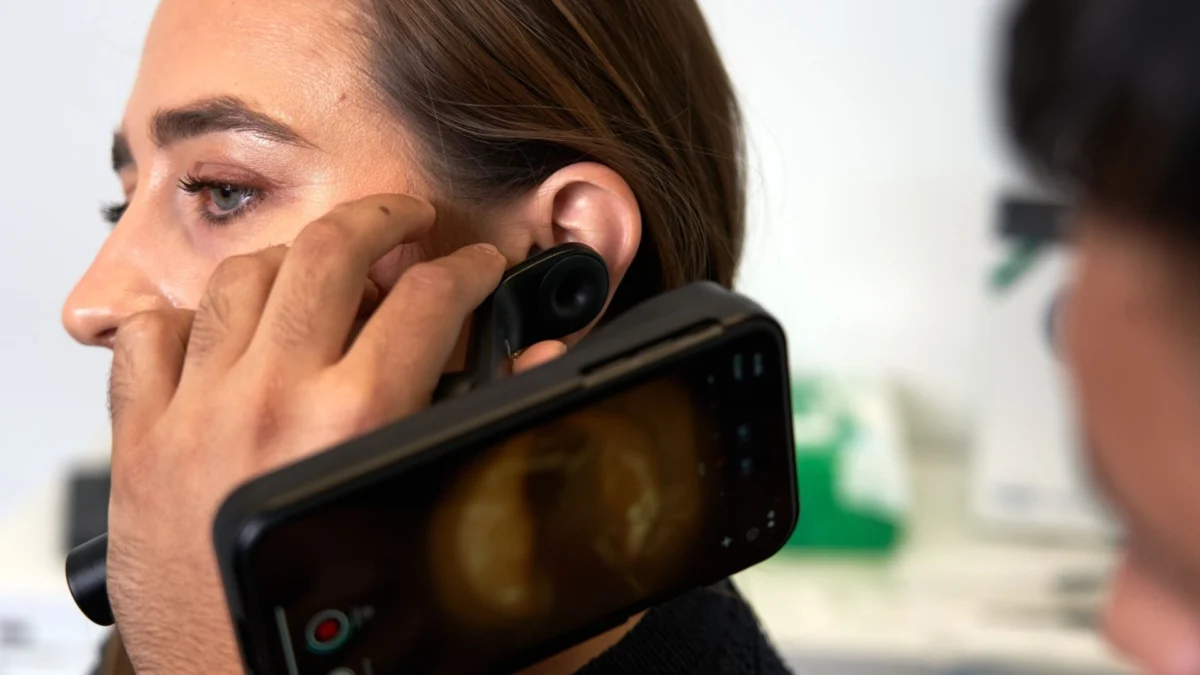
- Automated Screening and Image Analysis: AI-powered otoscopes can capture high-resolution images or videos of the ear canal and eardrum, which AI algorithms can then analyze for subtle signs of infection, inflammation, or other abnormalities. This capability allows for rapid, objective assessment, potentially identifying issues that might be missed by the human eye or by less experienced practitioners.
- Diagnostic Support: By comparing patient data (symptoms, otoscopic images, audiometric results) against vast datasets of known conditions, AI can provide diagnostic probabilities or flag cases requiring specialist attention, thereby supporting healthcare providers in making more informed decisions.
- Predictive Analytics: AI can analyze trends in patient data to predict the likelihood of developing certain ear conditions or the progression of hearing loss, enabling proactive interventions.
- Enhanced Accessibility: Portable, AI-enabled screening devices can be deployed in non-traditional settings, empowering a wider range of healthcare professionals, including community pharmacists and general practitioners, to offer initial assessments. This decentralization of care is crucial for reaching underserved populations and reducing the burden on specialized clinics.
Decentralizing Care: Empowering Community Providers
The study’s emphasis on convenience and accessibility points directly to the potential of pharmacies and other community-based providers to act as front-line hubs for ear and hearing health. In many countries, these establishments are highly accessible, trusted, and often the first point of contact for minor health concerns. Equipping them with AI-supported screening tools could fundamentally reshape the pathway to care.

Imagine a scenario where a quick, low-cost ear and hearing check is available during a routine pharmacy visit. An AI-enabled device could perform an initial screening, analyze the results, and, if concerns are identified, generate a prompt referral to a specialist, complete with relevant data. This model significantly shortens the diagnostic journey, moving away from the traditional, often lengthy, referral chains. For patients, this means less waiting, less travel, and reduced anxiety. For the healthcare system, it translates into optimized resource allocation, with specialists focusing on complex cases while community providers manage initial screenings and less severe conditions. This shift not only improves patient experience but also helps alleviate the immense pressure on secondary care services.
Expert Validation and the Future of Clinical Judgment
Dr. Krishan Ramdoo, an ENT surgeon and founder of TympaHealth, articulated the profound significance of the study’s findings. "Public confidence in healthcare providers using AI to support ear and hearing health is a really important signal. People want faster access, clearer answers, and fewer barriers. AI can now play an important role in supporting healthcare providers to have greater confidence in their assessment of a patient and determining next steps." His statement underscores the transformative potential of AI as an assistive technology, enhancing the capabilities of healthcare professionals.
Dr. Ramdoo also provided crucial clarification regarding the role of AI: "It is important to note that this should not replace clinical judgment, but we are already seeing that providers who utilise technology within ear and hearing health examinations have seen a positive impact in increased patients seen, ultimately driving revenue at a time of sustained cost pressures." This highlights a critical balance: AI serves as a powerful diagnostic aid and efficiency booster, but human expertise, empathy, and ethical reasoning remain indispensable. The economic benefit for providers – seeing more patients and generating revenue – is a significant incentive for adoption, particularly in an era of escalating operational costs and shrinking budgets.
Broader Implications for Healthcare Systems and Policy
The implications of this public acceptance and technological capability extend far beyond individual patient care. For national healthcare systems, particularly those grappling with extensive waiting lists and an aging population, the strategic deployment of AI in ear and hearing health could offer substantial systemic benefits:
- Reduced Waiting Lists: By decentralizing initial assessments and speeding up referrals, AI can significantly reduce the backlog for specialist appointments, allowing specialists to focus on more complex or urgent cases.
- Cost Efficiency: Early intervention, facilitated by accessible AI screening, can prevent the progression of hearing loss and associated comorbidities, potentially reducing the long-term costs of treatment and support services.
- Improved Public Health Outcomes: Widespread, accessible screening can lead to earlier diagnosis and treatment for a larger segment of the population, improving overall public health and quality of life.
- Data-Driven Insights: The data collected through AI-supported screenings can provide valuable epidemiological insights, informing public health campaigns, resource allocation, and policy development related to hearing health.
- Innovation and Economic Growth: The growth of companies like TympaHealth demonstrates a burgeoning sector dedicated to digital health innovation, contributing to economic development and job creation.
From a policy perspective, this shift necessitates careful consideration. Regulatory frameworks must evolve to ensure the safety, efficacy, and ethical deployment of AI in clinical settings. Guidelines for data privacy and security will be paramount, given the sensitive nature of health information. Furthermore, equitable access to these technologies must be a priority, preventing the creation of new digital divides that could disadvantage vulnerable populations.
Ethical Considerations and the Road Ahead
While the benefits of AI in ear and hearing health are clear, ethical considerations remain central to its responsible implementation. Issues such as algorithmic bias, data privacy, informed consent, and the potential for over-reliance on technology must be carefully navigated. Transparency in how AI systems arrive at their conclusions and robust validation of their accuracy are non-negotiable requirements. The principle that AI should augment, rather than replace, clinical judgment must be upheld through training, clear protocols, and ongoing professional development for healthcare providers.
The study by TympaHealth, conducted by Obsurvant between 17th and 18th [year not specified, but 2026 is mentioned in image URL, suggesting future or placeholder date] surveying over 1,000 UK adults aged 18 and over, serves as a powerful indicator of public readiness for a new era in healthcare. It paints a picture of a future where technology and human expertise converge to deliver faster, more accessible, and ultimately more effective ear and hearing care.
About TympaHealth
TympaHealth is comprised of a dedicated team of doctors and technology experts united by a singular mission: to advance global ear and hearing health. The company collaborates with a diverse range of healthcare providers, including pharmacies, care homes, audiology clinics, and general practitioners. TympaHealth furnishes these partners with cutting-edge technology, comprehensive training, continuous clinical support, and established referral pathways, enabling them to offer holistic ear and hearing services to their clientele. This integrated approach positions TympaHealth at the forefront of decentralizing and democratizing access to essential hearing healthcare.
The widespread acceptance of AI in ear and hearing health, as highlighted by this study, marks a pivotal moment. It signals a collective desire for healthcare systems that are more responsive, more efficient, and more accessible, leveraging the power of innovation to address critical health challenges and improve quality of life for millions. The journey towards fully integrated, AI-supported care is underway, promising a transformative impact on how we perceive, prevent, and treat hearing loss.