The Genesis and Evolution of OTC Hearing Aids
The journey toward widely available OTC hearing aids is marked by decades of advocacy and policy shifts aimed at addressing the significant barriers to hearing care. Historically, hearing aids were exclusively medical devices, requiring a prescription from an audiologist or licensed dispenser. This model, while ensuring professional care, often led to high costs (averaging $2,000-$7,000 per pair, frequently not covered by insurance) and limited accessibility, particularly in rural areas or for individuals facing financial constraints. Consequently, only about 20% of Americans who could benefit from hearing aids actually used them, leaving millions with unaddressed hearing loss.
The pivotal moment arrived with the passage of the Over-the-Counter Hearing Aid Act in 2017, championed by bipartisan efforts to make hearing aids more affordable and accessible. Following this legislation, the U.S. Food and Drug Administration (FDA) issued its final rule in August 2022, establishing a new category of OTC hearing aids available directly to consumers without a medical exam, prescription, or professional fitting. This landmark decision officially opened the market, with the first OTC devices becoming available for purchase in retail stores and online later that year.
However, the initial rollout of OTC products faced a "mixed bag" of challenges, as noted by Hogan. The market quickly saw an influx of devices, ranging from sophisticated, well-engineered products to simpler, low-cost amplifiers that often lacked the rigorous development necessary for effective hearing assistance. This disparity led to some early consumer skepticism and a perception that OTC options might not be reliable. "In any new product category, when you’re given an opportunity to enter a market, I kind of categorize companies in different ways," Hogan explained. "There are opportunists, and there are people who try to create products and deliver services for the long haul. I think OTC has had its mixed bag in that regard."
Despite these initial hurdles, the market is rapidly maturing. "The market is maturing, and it’s forcing the good players to get better and the bad players to leave the game, so to speak," Hogan observed. This natural selection process is driving innovation and quality, as reputable manufacturers strive to meet consumer expectations and differentiate themselves through superior technology and customer support. Furthermore, traditional prescription hearing aid companies, including major players, have recognized the necessity of entering the OTC space, developing more affordable and accessible solutions to cater to a broader demographic. This collective industry shift underscores the long-term viability and transformative potential of the OTC category.
ELEHEAR’s Technological Foundation and Leadership
At the heart of ELEHEAR’s success in this competitive landscape is a foundational philosophy rooted deeply in technology and sound processing. David Hogan brings over 30 years of extensive experience in audio wearables and hearing technology, having held significant roles with industry giants like GN and pioneering wearable audio startups such as Bragi. His profound expertise has been instrumental in shaping ELEHEAR’s strategic direction.
Hogan’s journey to ELEHEAR involved collaborating with the company’s founder for five years on various audio projects before formally joining as Managing Director just over a year ago. His decision to join was largely influenced by ELEHEAR’s distinctive core competency. "What they have done, and what the core essence of the company is, is that they’re a tech company. They are an algorithm and sound processing company at their core DNA," Hogan emphasized. This focus on robust sound processing algorithms, rather than merely creating hearing aids, provides ELEHEAR with a unique advantage. The company’s engineers built their foundation around sophisticated audio technology, which then naturally evolved into the hearing space, especially with the opportune timing of the FDA’s OTC mandate.
This tech-first approach ensures that ELEHEAR’s products are not simply basic amplifiers but sophisticated devices engineered to provide high-quality, customized hearing experiences. "We thought, what an opportune time to take the technology we’ve used in other devices and build what we believe, and what consumers say, is the number one OTC hearing product out there today," Hogan stated, highlighting the company’s confidence in its technological prowess and market validation. This background in rigorous sound engineering positions ELEHEAR to consistently deliver effective and reliable solutions, setting a high standard within the burgeoning OTC market.
Integrating Lifestyle and Addressing Stigma Through Design
The evolution of OTC hearing aids extends beyond mere functionality; it encompasses a broader integration into users’ daily lives and a concerted effort to dismantle the long-standing stigma associated with hearing loss devices. ELEHEAR’s product development strategy exemplifies this shift by incorporating features commonly found in consumer electronics, thereby transforming hearing aids into multi-functional lifestyle devices.
Key among these advancements is the integration of Bluetooth connectivity and lifestyle audio functionality. Recognizing that modern consumers expect their devices to do more than just address a single problem, ELEHEAR designed its products to facilitate seamless streaming of audio from phones, televisions, and other sources. This multi-purpose utility ensures that the device not only helps with hearing but also enhances entertainment and communication experiences. "The idea was not only to satisfy hearing needs and requirements, but also to make the device something that allows you to listen to your phone or any type of music source," Hogan explained. This approach broadens the appeal of hearing devices, making them desirable gadgets rather than purely medical necessities.
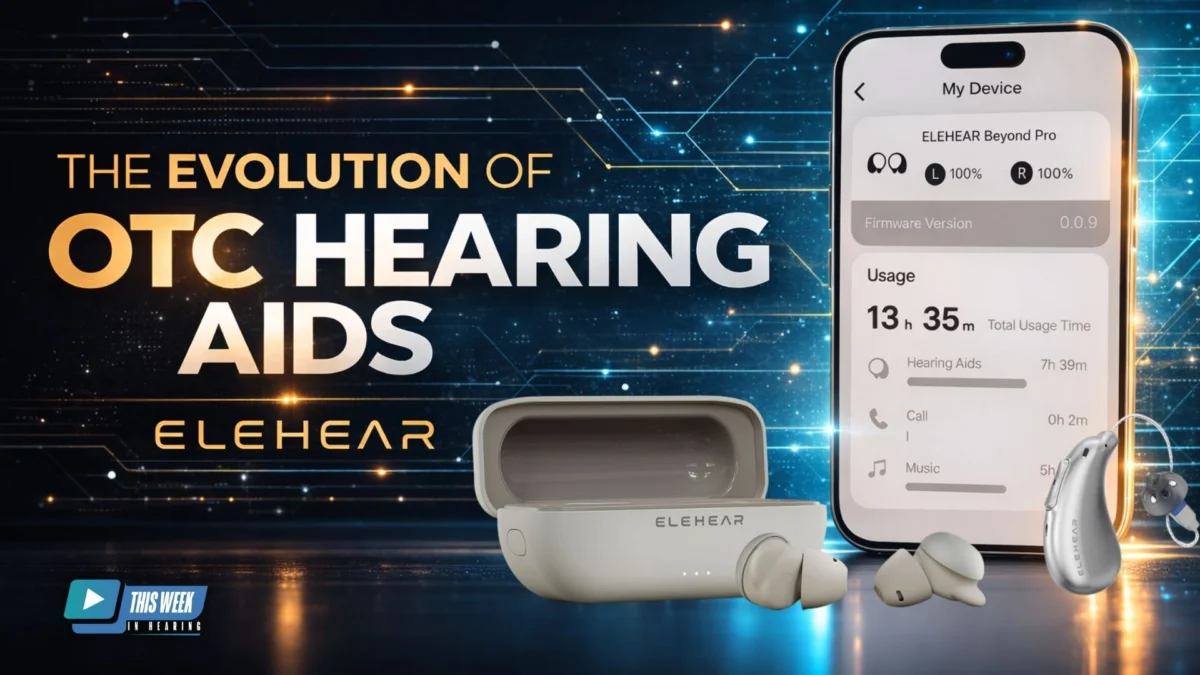
A significant breakthrough in this area was the introduction of ELEHEAR’s latest product at the 2026 Consumer Electronics Show (CES), which garnered numerous "best in show" awards. This new device adopts an "earbud-style" design, a departure from the more conventional receiver-in-canal (RIC) models that resemble traditional hearing aids. This sleek, discreet design addresses a critical barrier to adoption: vanity and stigma. "From a cosmetic point of view, it’s very small, very comfortable, and much less obtrusive than conventional hearing aids," Hogan noted. The earbud aesthetic aligns with contemporary consumer trends, making the device more acceptable, particularly to younger demographics who are accustomed to wearing in-ear devices for music and communication.
Beyond aesthetics, the earbud-style design also caters to active lifestyles. With improved technology allowing for greater water and sweat resistance, these devices are built to withstand physical activities like working out, golfing, or playing pickleball, ensuring stability and durability. This versatility means users might even opt for this newer product as an alternative to their RIC models for specific activities, further cementing its role as a lifestyle accessory. The pre-sale success of this new earbud-style product underscores the market’s strong demand for discreet, comfortable, and multi-functional hearing solutions.
The reduction of stigma is a powerful outcome of these design and functionality innovations. As Hogan highlighted, when individuals can communicate better and participate more fully in social activities, the self-consciousness associated with hearing loss diminishes. "The point is that stigma goes away when they become more socially involved with the people they care about, whether family, friends, or business associates," he articulated. This aligns with the long-held adage, "Your hearing loss is more conspicuous than a hearing aid," suggesting that the benefits of improved hearing far outweigh any perceived social cost of wearing a device. By making hearing aids look and function more like popular consumer electronics, ELEHEAR and similar companies are effectively normalizing their use and encouraging earlier intervention for hearing challenges.
Market Dynamics, Accessibility, and Customer Care
The entry of OTC hearing aids has fundamentally altered market dynamics, presenting both opportunities and challenges for consumers, traditional clinics, and manufacturers. Hogan articulated ELEHEAR’s mission to build a product that is "more affordable and more accessible for the masses," reaching individuals across various economic situations and geographic locations where access to hearing professionals may be limited. This mission is critical given that millions globally live with unaddressed hearing loss, with the World Health Organization estimating that over 1.5 billion people experience some degree of hearing loss, and approximately 430 million requiring rehabilitation.
One of the primary roles envisioned for OTC products is to serve as an "entry point" into hearing care. For individuals experiencing mild to moderate hearing loss, these devices can offer an initial solution, familiarizing them with amplification and potentially delaying the need for more complex, prescription-based interventions. This complements traditional clinical pathways by encouraging earlier adoption of hearing aids, which is crucial given that people often wait many years before seeking help for hearing loss. Hogan affirmed this perspective, stating, "OTC was intended for mild to moderate hearing loss. So the question becomes: how do you help more people at an earlier stage of their hearing journey and give them a roadmap for continued improvement for years to come?"
Interestingly, ELEHEAR has observed a phenomenon where some users transition from prescription models to their OTC products. This counter-intuitive trend speaks to the quality and cost-effectiveness of ELEHEAR’s offerings, especially for those whose hearing loss levels are well-suited to OTC capabilities. "We have many users who have gone from prescription models to our products because they wanted a more cost-effective solution and because our products are very appropriate for their level of hearing loss," Hogan revealed. This indicates that OTC devices are not merely "starter" products but can be a viable, long-term solution for a significant segment of the population.
Beyond product design, ELEHEAR places a strong emphasis on comprehensive customer care, a factor Hogan identifies as crucial for success in the OTC market. The company offers a 45-day trial period and return policy, acknowledging that adaptation to hearing devices takes time. Crucially, ELEHEAR integrates professional support through its purchase process, which includes an app-guided testing procedure and the option to schedule appointments with staff audiologists for personalized customization. This blend of self-service and expert guidance is designed to maximize user success. "What we’ve tried to do as a company is focus on customer care, because keeping the product in the person’s ears, as we like to say, is the real proof of success," Hogan explained. This commitment to support is reflected in ELEHEAR’s remarkably low return rate of "a little under 10%," significantly lower than the industry average for both traditional and some early OTC hearing aids, which can sometimes reach 15-20% or higher. This robust customer support model underscores the understanding that the rehabilitative component is as vital as the technology itself for successful hearing aid adoption.
The Future of Hearing Care: Innovation and Sustainability
The trajectory of the hearing care industry, particularly within the OTC segment, points towards continued innovation, deeper integration of technology, and an unwavering focus on accessibility. As David Hogan aptly put it, "The good thing about our industry is that it changes every day, and the bad thing about our industry is that it changes every day." This dynamic environment necessitates continuous adaptation and forward-thinking strategies from manufacturers.
ELEHEAR’s commitment to innovation is evident in its early adoption of artificial intelligence (AI) in its second product over three and a half years ago, pioneering a trend that many competitors have since followed. This demonstrates the company’s proactive approach to leveraging cutting-edge technologies to enhance sound processing and user experience. The core DNA of ELEHEAR as a sound-processing algorithm company positions it well to lead in areas like AI-driven noise reduction, personalized sound profiles, and adaptive listening environments.
The expanding market for hearing solutions is also driven by undeniable demographic trends. With an aging global population, the prevalence of hearing loss is projected to increase significantly. Additionally, modern lifestyles, characterized by prolonged exposure to loud environments through headphones and occupational hazards, contribute to earlier onset and increased incidence of hearing problems. This confluence of factors creates a persistent and growing demand for effective, accessible, and affordable solutions.
In this rapidly evolving landscape, the sustainability of business models is paramount. Hogan touched upon the transient nature of many startups that, despite initial venture capital influx, fail to establish long-term viability. ELEHEAR, by contrast, emphasizes a steady, step-by-step growth approach. "When a company takes it a little more slowly and builds step by step, I think that increases the possibility they’ll be around for a while rather than just being a flash in the pan," he commented. This measured growth, coupled with a focus on product quality and customer satisfaction, aims to ensure ELEHEAR’s enduring presence in the market.
The transformative potential of OTC hearing aids, championed by companies like ELEHEAR, extends beyond individual users to reshape the entire hearing care ecosystem. By providing high-quality, technologically advanced, and consumer-friendly devices, they are breaking down traditional barriers of cost and stigma, making hearing solutions available to millions who previously went unserved. As the market continues to mature and innovate, the collaboration between advanced technology, accessible design, and comprehensive customer care will define the next generation of hearing health.