The recognition of Dr. Wagner’s research comes at a pivotal time for the vestibular community. For decades, the complexities of inner ear disorders have been overshadowed by more visible neurological or orthopedic conditions. However, the rising prevalence of balance-related issues in an aging population has spurred a renewed focus on the vestibular system—the intricate network of organs and neural pathways responsible for spatial orientation and gaze stability. Through the support of the VeDA Travel Award, researchers like Dr. Wagner are able to bridge the gap between academic investigation and clinical application, ensuring that original research reaches the practitioners who are on the front lines of patient care.
The Clinical Challenge of Bilateral Vestibular Hypofunction
Bilateral Vestibular Hypofunction occurs when the peripheral vestibular organs in both inner ears are damaged or non-functional. Unlike unilateral disorders, where one ear can often compensate for the other, BVH leaves patients with a profound lack of sensory input regarding their head movement and position in space. Common symptoms include oscillopsia—a distressing sensation that the visual world is "jumping" or blurring during head movement—and severe postural instability. For many patients, the condition results in a "disconnected" feeling, leading to social isolation, increased fall risks, and a significant decline in overall quality of life.
Historically, the medical community has struggled to provide consistent outcomes for BVH patients. One of the primary reasons for this is the heterogeneity of the condition. While two patients may share the same diagnosis of BVH, their functional limitations can differ wildly. One might be able to walk relatively well on flat surfaces but suffer from extreme dizziness when turning their head, while another might have stable vision but be unable to stand in the dark. Dr. Wagner’s research seeks to explain this variance by examining the different neural pathways that the vestibular system utilizes.
Methodology: Beyond the Single-Test Paradigm
The core of Dr. Wagner’s study, conducted with a team at Creighton University, involved a comprehensive multimodal testing approach. Traditionally, clinical assessment for BVH has focused heavily on the vestibulo-ocular reflex (VOR). This reflex is responsible for gaze stability, allowing the eyes to stay fixed on a target while the head moves. While the VOR is a critical component of vestibular health, it is only one piece of a much larger puzzle.
In his study, Dr. Wagner’s team recruited both healthy control participants and individuals diagnosed with BVH. Each participant underwent a rigorous battery of 16 different tests. These tests were strategically categorized into three distinct domains of vestibular function:
- Physiological Measures: These tests assessed the direct output of the vestibular organs and reflexes, such as the VOR, often using technology like video head impulse testing (vHIT) or caloric stimulation.
- Perceptual Measures: This category evaluated how the brain interprets motion. Participants were tested on their subjective perception of self-motion and their ability to determine their orientation relative to gravity.
- Functional Measures: These assessments looked at real-world impacts, including balance, gait speed, and postural sway under various conditions (such as standing on foam or with eyes closed).
By analyzing these three domains simultaneously, the research team aimed to determine if a deficit in one area (such as a weak VOR) automatically predicted a deficit in another (such as poor balance or skewed motion perception).
Chronology of Research and Professional Recognition
The journey of this research began in the clinical setting, where Dr. Wagner and his colleagues observed that BVH patients often reported symptoms that did not align with their test results. Following the design and ethical approval of the study at Creighton University, the data collection phase involved intensive sessions with participants to complete the 16-test battery.
By early 2024, the preliminary data analysis revealed a striking lack of correlation between the test categories. Recognizing the importance of these findings, Dr. Wagner applied for the VeDA Travel Award. VeDA, an organization dedicated to supporting the vestibular community for over 30 years, provides these grants specifically to ensure that high-quality research on patient outcomes is shared at major medical conferences.
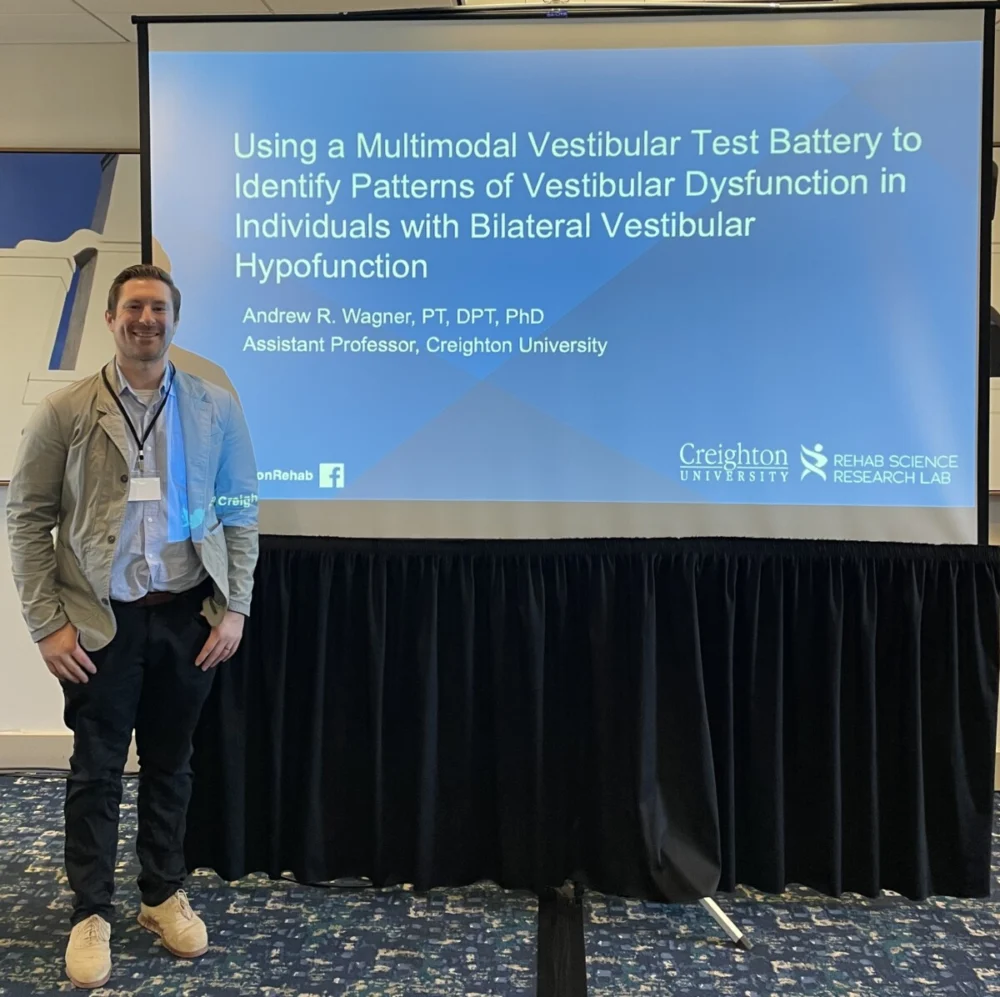
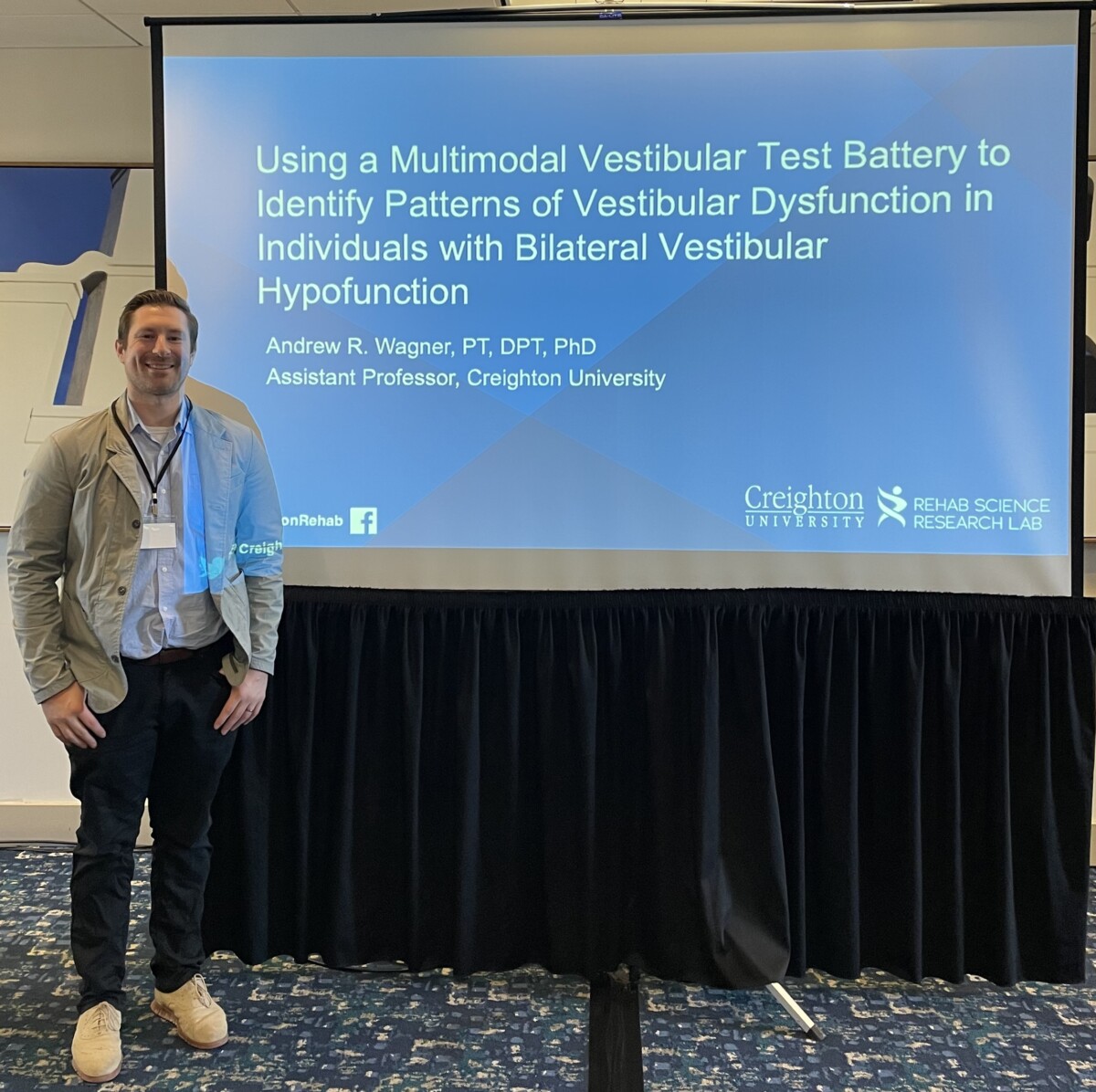
The presentation of this research at the American Balance Society Annual Meeting represented a significant milestone. The ABS meeting is a primary venue for the dissemination of vestibular science, and Dr. Wagner’s presentation provided a platform to advocate for a more nuanced diagnostic framework. The timeline of this project underscores the necessity of institutional and non-profit support in moving vestibular science forward from the laboratory to the national stage.
Data Analysis: The Hidden Heterogeneity of BVH
The results of the study were revelatory. The research team found that among the BVH participants, no two individuals exhibited the same pattern of dysfunction across the 16 tests. Most importantly, the data showed that physiological impairments did not reliably predict perceptual or functional outcomes.
For example, a participant might show a near-total loss of VOR function (a physiological deficit) but maintain a relatively accurate perception of their own motion (a perceptual success). Conversely, another participant might have partially preserved VOR function but suffer from extreme postural instability (a functional deficit).
This lack of correlation suggests that the brain’s ability to compensate for vestibular loss is highly individualized. It also implies that the vestibular system is not a monolithic entity but a series of interconnected yet distinct pathways. When clinicians rely solely on physiological tests like the vHIT or caloric testing, they may be missing the specific perceptual or functional gaps that are most impactful to a patient’s daily life.
Official Responses and Professional Implications
While official statements from the American Balance Society emphasize the need for continued peer-reviewed validation, the reception of Dr. Wagner’s work among attendees was overwhelmingly positive. Leading clinicians in the field have long suspected that the "standard battery" of tests was insufficient for complex cases of BVH.
Representatives from VeDA noted that Dr. Wagner’s research aligns perfectly with their mission to improve the lives of vestibular patients through education and research support. "By funding travel grants, we ensure that the most current and impactful research reaches the ears of the professionals who can implement change," a VeDA spokesperson remarked. "Dr. Wagner’s work on BVH is a prime example of research that has the potential to immediately influence how physical therapists and audiologists approach their patients."
From a clinical perspective, these findings suggest a shift in the "Standard of Care." If physiological tests do not tell the whole story, then a comprehensive vestibular evaluation must include perceptual and functional assessments to be considered complete.
Broader Impact: Towards Personalized Vestibular Rehabilitation
The implications of Dr. Wagner’s research extend far beyond the laboratory. For the 64,000 Americans living with BVH, this research offers hope for more effective, personalized treatment plans. Currently, Vestibular Rehabilitation Therapy (VRT) often follows a generalized protocol focused on gaze stabilization and habituation exercises. However, Dr. Wagner’s findings suggest that a "one-size-fits-all" approach is inherently flawed.
If a patient’s primary deficit is perceptual rather than physiological, their rehabilitation should focus on sensory reweighting and orientation exercises rather than just gaze stability drills. By identifying the specific "profile" of a patient’s dysfunction through multimodal testing, therapists can tailor interventions to the individual’s unique needs. This targeted approach could significantly reduce the time required for rehabilitation and improve the overall success rate of therapy.
Furthermore, this research highlights the economic and social necessity of better vestibular care. Vestibular disorders are a leading cause of falls in the elderly, which cost the U.S. healthcare system billions of dollars annually. Improving the accuracy of BVH diagnosis and the efficacy of treatment can lead to better safety outcomes and a reduction in the long-term healthcare costs associated with balance-related injuries.
Future Directions and Conclusion
As Dr. Wagner continues his study at Creighton University, the team plans to expand the participant pool to further validate these initial findings. Future phases of the research may also explore how these multimodal profiles change over time during the course of vestibular rehabilitation, providing a roadmap for how the brain adapts to chronic vestibular loss.
The support provided by the VeDA Travel Award has been instrumental in bringing this research to light. It underscores the vital role that advocacy organizations play in the scientific ecosystem. By facilitating the exchange of ideas at conferences like the American Balance Society, VeDA helps ensure that the vestibular community remains at the cutting edge of medical science.
In conclusion, the work of Dr. Andrew Wagner serves as a clarion call for a more comprehensive, patient-centered approach to vestibular health. By recognizing that the vestibular system is a complex, multi-functional network, the medical community can move toward a future where Bilateral Vestibular Hypofunction is no longer a "one-size-fits-all" diagnosis, but a condition treated with the precision and individuality that patients deserve. The journey from a singular test to a multimodal understanding represents the next great leap in improving the quality of life for those living with balance and dizziness disorders.