

The week-long initiative was defined by two major pillars: the formal publication of the "Amplifying Awareness" report and the execution of "Quiet Night Out," a pioneering concert event designed to demonstrate that high-quality live music does not necessitate hazardous sound pressure levels.

The Amplifying Awareness Report: Data and Demands
The cornerstone of the week’s activities was the release of the "Amplifying Awareness" report, a document born from extensive survey data collected throughout the summer of 2025. By engaging a broad cross-section of the music ecosystem—including festival organizers, sound engineers, touring artists, and the concert-going public—the report provides a comprehensive look at the risks inherent in modern live music environments.
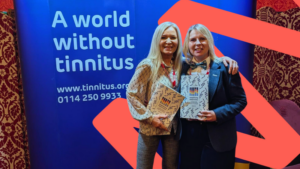
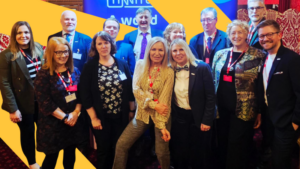
Authors Anne Savage and Sonja Jones presented these findings at a high-level briefing held at the House of Lords. The event drew key stakeholders from the fields of audiology, public policy, and the music industry, including representatives from Neuromod, ACS, and Specsavers. The central thesis of the report is that the current approach to hearing health in live music is insufficient and that the industry must transition toward a culture where sonic clarity is prioritized over raw volume.
The data within the report highlights a growing public anxiety regarding hearing loss. A significant percentage of regular concert-goers reported experiencing temporary or persistent tinnitus following events, yet many noted that the lack of clear, standardized safety guidance prevents them from taking preventative measures. The report argues that the industry’s reliance on "buyer beware" models is no longer ethical or sustainable.
The Live Music Hearing Health Alliance Pledge
In response to these findings, Tinnitus UK has launched the Live Music Hearing Health Alliance Pledge. This initiative aims to establish a shared framework for venues, promoters, and festivals. The pledge is built upon five fundamental commitments:
- Standardized Monitoring: Ensuring venues utilize calibrated sound monitoring to maintain safe decibel thresholds.
- Access to Protection: Providing affordable, high-fidelity ear protection to attendees at all major events.
- Transparent Communication: Offering clear information regarding sound levels and quiet zones for those with hyperacusis or sensory sensitivity.
- Professional Training: Requiring sound engineers and front-of-house staff to undergo training on hearing health and the long-term impact of noise exposure.
- Policy Advocacy: Working with local authorities to integrate hearing safety into event licensing requirements.
The alliance represents a significant shift in strategy, moving away from fragmented, venue-specific policies toward a unified national standard that would theoretically hold all participants in the live music supply chain accountable.
Quiet Night Out: A Blueprint for the Future
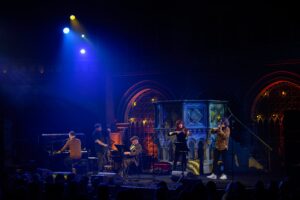
The practical application of these theories was on full display during "Quiet Night Out," a concert hosted at London’s Union Chapel. The event served as a controlled experiment in safe listening, featuring performances by a diverse roster of artists including Justin Sullivan of New Model Army, Penguin Cafe, and comedian Rob Newman.
The production of the event required a fundamental shift in technical approach. Working alongside expert sound engineers, the production team prioritized "clarity over loudness." By utilizing sophisticated, calibrated monitoring systems, the team ensured that sound pressure levels strictly adhered to a limit of 90 dB, with many segments of the program significantly lower. This approach challenged the long-held industry belief that a "great" concert experience is inextricably linked to extreme volume.
Furthermore, every attendee was provided with high-fidelity earplugs from ACS Custom. Unlike standard foam earplugs, these devices are engineered to reduce volume uniformly across the frequency spectrum, ensuring that the audience could appreciate the nuances of the music without the muffling effect typically associated with hearing protection.
The event’s impact was perhaps best illustrated by the attendance of musician Tim Bricheno. After seven years of complete withdrawal from the live music circuit due to debilitating tinnitus and sound sensitivity, Bricheno was able to perform and participate in a live environment, signaling that with proper environmental management, the music industry can become inclusive for those who have been forced to leave it.
Broader Implications for Public Health
The success of Tinnitus Week 2026 arrives at a critical juncture for public health. According to global health estimates, the prevalence of tinnitus and noise-induced hearing loss is on the rise, particularly among younger demographics who are exposed to high-volume environments for extended periods.
From a regulatory perspective, the findings presented by Tinnitus UK underscore a potential future where hearing safety becomes a standard component of public safety, akin to fire regulations or crowd control measures. While the music industry has traditionally resisted strict decibel caps, citing artistic freedom and the "immersive" nature of loud music, the data suggests that such resistance may be increasingly untenable.
Industry analysts note that if the Live Music Hearing Health Alliance Pledge gains traction, it could lead to a competitive advantage for venues that adopt these standards. As consumer awareness grows, attendees may increasingly favor venues that demonstrate a commitment to their long-term health, effectively turning "safe listening" into a market demand rather than a burdensome regulation.

Official Responses and Future Outlook
The presence of major sponsors and policymakers at the House of Lords launch suggests that the issue of hearing health is moving into the mainstream of the national policy agenda. Representatives from the sector emphasized that the goal is not to silence music, but to preserve the ability to hear it for decades to come.
As the week closes, the focus now shifts to the implementation phase. Tinnitus UK has indicated that the "Amplifying Awareness" report is just the beginning of a multi-year effort to change the technological and cultural landscape of the industry. The organization is currently calling for sustained financial and logistical support to scale these pilot programs into permanent features of the UK music scene.
The success of the "Quiet Night Out" concert provides a tangible model for others to follow. By proving that sound quality and safety are not mutually exclusive, the organizers have dismantled the primary excuse used by industry laggards to avoid upgrading their sound systems or implementing stricter monitoring.

Conclusion: Sustaining the Momentum
The challenge moving forward lies in the scalability of these interventions. While a one-off concert at a historic venue like the Union Chapel is a powerful proof of concept, the true test will be the integration of these practices into high-volume, multi-stage festivals and arena tours where logistical complexity is significantly higher.
Nevertheless, Tinnitus Week 2026 has successfully reframed the debate. It has transitioned the conversation from a private, medicalized issue—one that individuals must manage alone—to a collective, societal responsibility. By engaging artists, fans, and technical professionals, Tinnitus UK has laid the groundwork for an industry that values the longevity of the listener’s hearing as much as it values the artist’s performance.
For those currently living with tinnitus or noise sensitivity, the events of the past week offer more than just awareness; they offer a roadmap for reintegration into the cultural life of the nation. As the organization moves toward its next phase of advocacy, the legacy of Tinnitus Week 2026 will likely be measured by the adoption of these safety protocols across the wider music industry, ensuring that the future of live music is not only resonant but also sustainable for the ears of all.