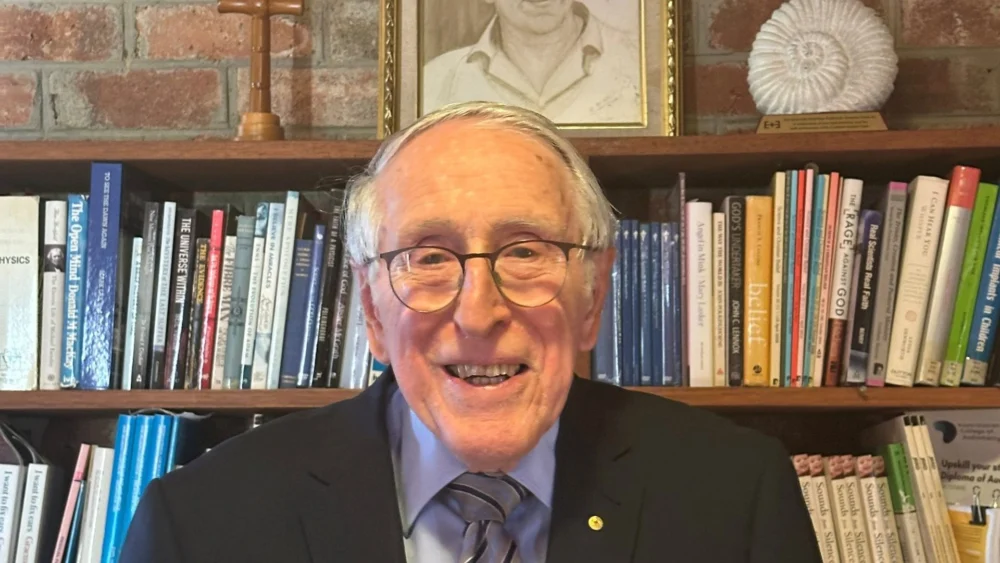
The breakthroughs acknowledged by this year’s QEPrize span a remarkable spectrum of neuro-engineering, including not only cochlear implants but also deep brain stimulation, sophisticated brain-computer interfaces, and electronic spinal stimulation. These advancements are profoundly impacting lives worldwide by restoring essential functions such as hearing, movement, and communication for individuals grappling with severe neurological conditions. The recognition highlights a new frontier in medical science, where engineering prowess meets biological understanding to overcome previously insurmountable challenges.
Professor Clark’s Enduring Legacy in Cochlear Implants
At the heart of this year’s QEPrize commendation is Professor Clark’s pioneering leadership in the development of the world’s first multichannel cochlear implant. His relentless dedication and groundbreaking scientific work led to the creation of a device that transformed the landscape for people with severe-to-profound hearing loss. The technology, which bypasses damaged parts of the inner ear to directly stimulate the auditory nerve, was subsequently developed by the Australian company Cochlear Limited and became the first such device to gain regulatory approval for widespread clinical use outside of research settings. This marked a pivotal moment, transitioning a complex experimental concept into a viable, life-changing medical solution.
Professor Clark’s research laid the critical scientific and engineering foundations for what has since become the global standard of care for individuals with significant hearing impairment. Prior to his work, severe deafness was largely untreatable, leaving millions isolated from the world of sound and spoken language. His innovative multichannel approach was crucial, allowing for a much richer representation of sound than previous single-channel devices, thereby enabling users to better understand speech and perceive a wider range of auditory information.
The impact of this innovation is staggering: more than one million people across the globe now rely on cochlear implants to hear. This extraordinary legacy is a direct result of Professor Clark’s profound determination, a resolve deeply rooted in his personal experiences. He was notably inspired by his own father’s struggle with progressive hearing loss, a powerful motivator that fueled his decades-long pursuit of a solution that many deemed impossible. This personal connection underscores the human element behind a monumental scientific achievement.
The Genesis of a Revolution: A Timeline of Discovery
Professor Clark’s journey into auditory science began in the mid-20th century, a time when medical options for severe deafness were severely limited. Born in Camden, New South Wales, in 1935, he pursued medicine, specializing in otolaryngology (ear, nose, and throat surgery). His father’s deteriorating hearing profoundly affected him, prompting him to dedicate his career to finding a cure for deafness.
- Early 1960s: Professor Clark began his pioneering research at the University of Melbourne, grappling with the complex challenge of how to electrically stimulate the auditory nerve in a way that could convey meaningful sound information. Initial attempts by others in the field had yielded limited success, often producing only rudimentary sound perception.
- 1969: Clark completed his PhD in auditory science, deepening his understanding of how the ear and brain process sound. He focused on the then-radical idea of a multichannel implant, theorizing that stimulating different parts of the auditory nerve simultaneously could mimic the natural frequency mapping of the cochlea, allowing for more complex sound perception, particularly speech.
- 1970s: This period was marked by intensive laboratory work, overcoming significant engineering hurdles. Challenges included designing biocompatible electrodes that could be safely inserted into the delicate cochlea, developing sophisticated external speech processors, and understanding how to translate sound frequencies into electrical pulses. He faced considerable skepticism from the scientific community, many believing that stimulating the complex auditory nerve in such a manner was unachievable.
- 1978: A landmark year. Professor Clark and his team performed the world’s first multichannel cochlear implant surgery on Rod Saunders, a deaf man. The initial results were profoundly encouraging, demonstrating that Saunders could discern speech patterns and environmental sounds, a monumental leap forward from previous technologies.
- Early 1980s: Following rigorous clinical trials, the technology was refined and subsequently commercialized by Cochlear Limited, an Australian company founded to bring this life-changing invention to a global scale. This collaboration was crucial for transforming a laboratory breakthrough into a widely available medical device.
- 1982: The U.S. Food and Drug Administration (FDA) approved the first multichannel cochlear implant for adults, marking its official entry into mainstream clinical practice and solidifying its status as a revolutionary treatment for severe-to-profound hearing loss.
The Science of Sound: How Cochlear Implants Work
Unlike traditional hearing aids, which merely amplify sound, a cochlear implant performs the function of the damaged inner ear. It consists of an external sound processor, worn behind the ear, and an internal implant surgically placed under the skin behind the ear, with an electrode array threaded into the cochlea.
- Sound Capture: The external sound processor captures sound, much like a microphone.
- Digital Conversion: It then converts these sounds into digital code.
- Transmission: This coded information is transmitted wirelessly to the internal implant.
- Electrical Pulses: The internal implant converts the digital code into electrical impulses.
- Auditory Nerve Stimulation: These impulses are sent along the electrode array within the cochlea, directly stimulating the auditory nerve.
- Brain Interpretation: The auditory nerve sends these signals to the brain, which interprets them as sound.
Professor Clark’s multichannel design was critical because it allowed for different frequencies of sound to be delivered to different parts of the cochlea, mimicking the natural tonotopic organization of the inner ear. This enabled users to distinguish between various pitches and tones, which is fundamental for understanding speech and appreciating music. The continuous evolution of these devices, from initial single-channel prototypes offering basic sound awareness to today’s highly sophisticated multichannel systems, is a testament to the ongoing dedication of engineers and scientists in this field.
Broader Horizons: The QEPrize and Neural Interface Technologies
The 2026 Queen Elizabeth Prize for Engineering highlights not just one breakthrough, but an entire field of engineering innovation that is redefining what is possible in healthcare. The QEPrize itself is a globally recognized benchmark for engineering excellence, awarded annually to celebrate individuals or teams whose groundbreaking work has made a global benefit to humanity. It serves not only to honor pioneers but also to inspire future generations to pursue engineering careers and tackle the grand challenges of our time.
The eight co-laureates recognized alongside Professor Clark underscore the breadth and depth of advances in neural interface technologies:
- Erwin Hochmair, Ingeborg Hochmair, and Blake Wilson: These individuals are celebrated for their foundational advances that were instrumental in developing cochlear implants into reliable and widely adopted clinical technologies. Their work on miniaturization, power efficiency, and advanced speech processing algorithms significantly enhanced the performance and accessibility of implants.
- John Donoghue: Recognized for pioneering brain-computer interfaces (BCIs). Donoghue’s work has enabled individuals with severe paralysis to control robotic limbs or computer cursors directly with their thoughts, offering new avenues for communication and movement for those who have lost these abilities due to injury or disease.
- Alim Louis Benabid and Pierre Pollak: Honored for their development of modern deep brain stimulation (DBS) to treat movement disorders. DBS involves surgically implanting electrodes in specific areas of the brain that deliver electrical impulses, effectively modulating abnormal brain activity. This has become a standard treatment for conditions like Parkinson’s disease, essential tremor, and dystonia, significantly improving quality of life for hundreds of thousands of patients.
- Jocelyne Bloch and Grégoire Courtine: Acknowledged for their groundbreaking work in electronic spinal stimulation. Their research has demonstrated that targeted electrical stimulation of the spinal cord, combined with intensive rehabilitation, can enable individuals with severe spinal cord injuries to regain voluntary movement and even stand or walk, offering unprecedented hope for recovery.
Together, these achievements signify the emergence of "neuroprosthetics" – devices that interface directly with the nervous system to restore lost sensory, motor, or cognitive functions. This field represents a powerful convergence of neuroscience, electrical engineering, materials science, and computer science, pushing the boundaries of human potential and offering profound hope for millions.
Official Responses and Forward-Looking Statements
The announcement of the QEPrize laureates elicited widespread praise and excitement within the scientific, medical, and engineering communities.
Dig Howitt, CEO & President of Cochlear Limited, extended heartfelt congratulations to Professor Clark, emphasizing the profound impact of his work: "Professor Clark’s vision transformed what was once considered impossible into a life-changing reality for people around the world. His pioneering work not only laid the foundations for Cochlear as a company, but opened the door for millions to experience sound, connection, and opportunity. We congratulate Professor Clark and celebrate his extraordinary contribution to engineering, healthcare, and humanity. We also congratulate the other laureates whose breakthroughs continue to push the boundaries of what neural interface technologies can achieve." Howitt’s statement underscores the deep gratitude within Cochlear for its founder’s foundational genius and the company’s ongoing commitment to advancing the field.
Speaking from London, Professor Clark himself reflected on the journey and the broader implications of his research: "My work in auditory brain science began with the aim of restoring hearing for people with severe deafness, inspired in part by my own family’s experience. Over time, this research showed that multi-channel stimulation of the auditory nerve could restore elements of hearing, opening the door to an entirely new field of medical engineering. I am honoured to be recognised alongside my colleagues by the Queen Elizabeth Prize for Engineering, and proud to see how this field has grown to help people with a wide range of neurological conditions." His words highlight the personal drive behind scientific discovery and the unexpected expansion of his initial goal into a vast and impactful domain.
The QEPrize judging panel and representatives from the Royal Academy of Engineering also issued statements, typically emphasizing the rigorous selection process and the immense societal benefit of the laureates’ work. They would likely commend the collective ingenuity and perseverance required to bring such complex technologies from concept to clinical reality, highlighting the prize’s role in inspiring innovation for global good.
Implications for Healthcare and Society
The recognition of these neural interface technologies by the QEPrize carries significant implications for healthcare, quality of life, and the future of engineering.
For individuals with severe hearing loss, cochlear implants have been nothing short of miraculous. They have enabled deaf children to develop spoken language, attend mainstream schools, and participate fully in society. Adults who lost their hearing later in life have regained the ability to communicate with loved ones, pursue careers, and reconnect with the world of sound. This profound impact extends beyond the individual, strengthening families and communities. The global market for cochlear implants continues to grow, driven by increasing awareness, improving technology, and expanding access to healthcare.
The broader field of neural interfaces, as exemplified by the work of the other laureates, promises even more transformative changes. Deep brain stimulation has offered a lifeline to those suffering from debilitating movement disorders, providing relief from tremors and rigidity that were previously untreatable. Brain-computer interfaces are giving a voice and agency back to individuals locked in their own bodies, while spinal stimulation is rewriting the prognosis for spinal cord injury patients, moving from a paradigm of permanent disability to one of potential recovery and voluntary movement.
These advancements collectively foster a new understanding of the human nervous system’s plasticity and its capacity for interaction with engineered solutions. They challenge existing medical paradigms and pave the way for treatments for a host of other neurological conditions, including epilepsy, depression, and even cognitive disorders. Ethical considerations around privacy, data security, and the very definition of human enhancement will undoubtedly accompany these technological leaps, prompting important societal dialogues.
Cochlear Limited, the company built on Professor Clark’s initial breakthrough, continues to be at the forefront of innovation. Last year’s launch of the Cochlear™ Nucleus® Nexa™ System, touted as the world’s "first and only smart cochlear implant system," exemplifies this ongoing commitment. Its intelligence, enabled by an implant’s programmable microprocessor, internal memory, and upgradeable firmware, signifies a future where implants are not static devices but evolving platforms capable of adapting to individual needs and integrating with emerging digital ecosystems. This continuous research and development, with over AUD$3 billion invested to date, ensures that the initial vision of restoring hearing continues to expand, reaching more people with increasingly sophisticated solutions.
Professor Clark’s Distinguished Career and Prior Accolades
Professor Graeme Clark AC is a Laureate Professor at the University of Melbourne, where much of his groundbreaking research was conducted. His work transcends a single scientific discipline, embodying the spirit of a surgeon-scientist who brought together medical insight, engineering ingenuity, and a deep understanding of auditory neuroscience.
His extraordinary achievements have garnered some of the world’s most prestigious honours, underscoring the universal recognition of his impact:
- Companion of the Order of Australia (AC): Australia’s highest civilian distinction, acknowledging his monumental contribution to the nation and humanity.
- Lasker-DeBakey Clinical Medical Research Award: One of the most renowned international prizes in biomedicine, often a precursor to the Nobel Prize, affirming the clinical significance and profound patient benefit of his work.
- Germany’s Zülch Prize for Neuroscience: A highly respected award for outstanding research in neurological science, highlighting his contributions to understanding and treating neurological conditions.
- Lister Medal: Regarded as the leading global award in surgical science, underscoring the surgical precision and innovative techniques involved in the development and implantation of the cochlear device.
These accolades, now augmented by the Queen Elizabeth Prize for Engineering, paint a picture of a scientific visionary whose perseverance against skepticism led to a medical device that has profoundly transformed the lives of over a million people. Professor Clark’s journey from a young doctor inspired by his father’s hearing loss to a global icon of medical engineering serves as an enduring testament to the power of human ingenuity and compassion in solving some of humanity’s most challenging health problems. His legacy continues to inspire countless researchers and engineers to push the boundaries of what is possible, promising a future where neurological conditions are no longer barriers to human connection and opportunity.