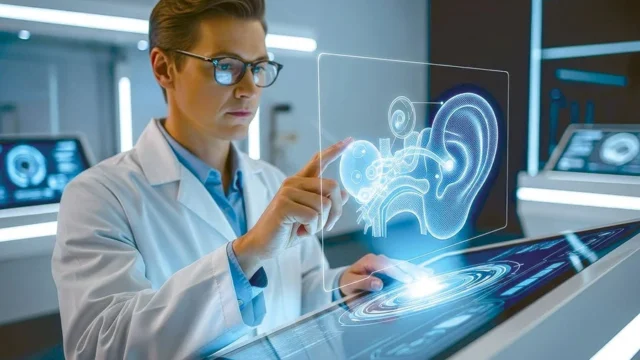

Revolutionizing Auditory Restoration: From Compensation to Cure
For generations, the management of hearing loss has primarily focused on compensatory strategies. Patients have relied on hearing aids to amplify residual sound and cochlear implants to bypass damaged auditory structures and stimulate the auditory nerve. While these interventions have dramatically improved the lives of millions, they have historically aimed to mitigate the effects of hearing loss rather than reverse its underlying biological causes.
Today, this paradigm is shifting. The advent of gene therapy represents a fundamental departure, offering the tantalizing possibility of restoring biological hearing in children afflicted with specific forms of genetic deafness. This groundbreaking approach targets the root cause of the hearing impairment, aiming to correct the genetic defect that prevents normal auditory function.
Background and Timeline: The development of gene therapy for hearing loss has been a gradual but accelerating process. Early research in the late 20th and early 21st centuries laid the groundwork by identifying specific genes responsible for various types of hereditary deafness. Preclinical studies in animal models demonstrated the feasibility of delivering corrective genes to the inner ear. More recently, clinical trials have commenced, targeting conditions such as otoferlin deficiency and connexin 26 mutations. While still in its nascent stages, early results from these trials have shown promising signs of functional hearing improvement in treated individuals, offering hope where previously there was little. For example, trials focusing on usher syndrome, a leading cause of inherited blindness and deafness, are actively exploring gene therapy interventions.
Supporting Data: While specific long-term efficacy data is still accumulating, the potential impact is immense. Genetic causes account for a significant percentage of childhood hearing loss, estimated to be around 50% of cases. By addressing these genetic underpinnings, gene therapy could potentially prevent lifelong reliance on assistive devices and offer a more complete restoration of auditory experience.
Implications: The successful implementation of gene therapy for hearing loss will necessitate a redefinition of audiological care. It will require close collaboration between otolaryngologists, geneticists, audiologists, and bioengineers. The long-term implications extend beyond individual patient outcomes, potentially reducing the societal burden associated with hearing impairment and improving educational and social integration for affected children.
Rhinology’s Immunological Frontier: Precision Therapies for Chronic Inflammation
In the realm of rhinology, our understanding of chronic inflammatory diseases, such as chronic rhinosinusitis (CRS), has undergone a similar transformation. Historically, treatment for these persistent conditions revolved around managing the consequences of inflammation through repeated courses of antibiotics, corticosteroids, and surgical interventions aimed at improving drainage and removing obstructive tissue.
However, the field has now moved beyond merely addressing the symptoms. The focus has shifted towards understanding and targeting the underlying immunologic pathways that drive these chronic inflammatory processes. Biologic therapies, which are designed to precisely modulate specific components of the immune system, are increasingly becoming a cornerstone of treatment.
Background and Timeline: The journey to biologic therapies in rhinology began with a deeper understanding of the complex immune dysregulation involved in CRS. Research over the past two decades has illuminated the roles of various cytokines, inflammatory cells, and signaling pathways in driving persistent inflammation, even in the absence of infection. This understanding paved the way for the development of targeted monoclonal antibodies. The first biologic therapy specifically approved for a subset of CRS patients (those with comorbid asthma and nasal polyps) gained regulatory approval in recent years, marking a significant milestone.
Supporting Data: Studies have demonstrated that biologic therapies can lead to significant reductions in sinonasal inflammation, polyp recurrence, and the need for revision surgery. For instance, clinical trials have reported substantial improvements in patient-reported symptom scores, endoscopic sinus appearance, and reductions in oral steroid use among patients treated with these agents. The economic impact is also being studied, with the potential for reduced healthcare utilization and improved quality of life leading to greater productivity.
Implications: The integration of biologic therapies into rhinology practice necessitates a more nuanced approach to patient selection and treatment planning. The question is no longer simply whether to operate, but rather how surgical interventions and biologic therapies should be selected, sequenced, or combined for an individual patient’s unique disease profile. This calls for sophisticated diagnostic tools to accurately phenotype the inflammatory pathways involved and personalized treatment algorithms.

Oncology’s Molecular Revolution: Tailoring Cancer Therapies with mRNA Technology
The field of cancer care is also witnessing the crossing of another significant boundary, particularly in the management of head and neck malignancies. The rapid advancement of individualized therapies, especially those leveraging mRNA technology, holds immense promise for improving patient outcomes.
This summer, a pivotal Phase 3 trial of an individualized mRNA neoantigen therapy for melanoma demonstrated a significant improvement in recurrence-free survival. This represents a paradigm shift in cancer treatment: the ability to identify the specific mutations within an individual patient’s tumor and to engineer a therapeutic agent designed to train that patient’s immune system to recognize and attack their cancer cells.
Background and Timeline: The concept of harnessing the immune system to fight cancer, known as immunotherapy, has been a growing area of research for decades. However, the development of personalized mRNA-based cancer vaccines is a more recent innovation, accelerated by advances in genomics and molecular biology. The success of mRNA vaccines in combating infectious diseases during the COVID-19 pandemic provided a significant boost and validation for this technology, paving the way for its application in oncology. The melanoma trial, along with ongoing research in other cancer types, marks a crucial step in translating this potential into tangible clinical benefit.
Supporting Data: While the melanoma trial results are a significant indicator, the broader implications for head and neck oncology are still being explored. For other cancers where neoantigen identification is feasible, this approach could offer a potent new weapon against recurrent or metastatic disease. The ability to tailor treatment to the unique molecular fingerprint of each tumor holds the potential to overcome resistance mechanisms that often plague conventional therapies.
Implications: The integration of individualized mRNA neoantigen therapies into otolaryngologic oncology will demand sophisticated infrastructure for tumor sequencing, bioinformatics analysis, and rapid vaccine production. It will foster even closer collaboration between surgical oncologists, medical oncologists, pathologists, geneticists, and immunologists. The ethical considerations surrounding personalized medicine and equitable access to these advanced therapies will also be paramount.
A Call to Action: Embracing Opportunity and Responsibility
These groundbreaking advances in hearing restoration, rhinology, and oncology should undoubtedly fill otolaryngologists with profound optimism. However, they should also serve as a powerful impetus for introspection and a call to action. Scientific discovery, while vital, does not automatically translate into improved patient care. There exists an extraordinary opportunity, coupled with a profound responsibility, to actively shape the trajectory of these transformative developments.
Cultivating Continuous Learning and Scientific Curiosity
As leaders within the specialty, the imperative is to cultivate environments that foster continuous learning. Physicians must be provided with the resources and opportunities to understand these rapidly evolving therapeutic options. This necessitates protecting scientific curiosity and creating dedicated spaces for discovery, mentorship, and investigation, even in the face of increasing pressures for clinical productivity. The transformative treatments emerging today are a direct consequence of individuals being empowered to ask questions whose answers were not yet known.
Evolving Organizational Structures for Precision Medicine
Our organizational structures must evolve in parallel with our scientific capabilities. We can no longer espouse the ideals of multidisciplinary precision medicine while continuing to operate within rigid, fragmented silos. The multidisciplinary team of the future cannot be a mere perfunctory conference; it must increasingly become the very architecture through which patient care is delivered. This requires seamless integration of surgeons, physicians, scientists, audiologists, geneticists, pathologists, and other allied health professionals, all collaborating around the unique needs of an individual patient.
The Amplified Need for Human Connection in Advanced Care
Perhaps most crucially, the proliferation of greater therapeutic choice amplifies, rather than diminishes, the fundamental need for meaningful human connection. Decisions involving surgery versus biologic therapy, cochlear implantation versus gene therapy, or conventional oncologic treatment versus molecularly targeted or immune therapies are not solely clinical choices. They require in-depth discussions that go beyond efficacy to encompass uncertainty, durability, risk profiles, quality of life considerations, cost implications, and, most importantly, what truly matters most to each patient. As our therapeutic capabilities become more sophisticated, our reliance on and the importance of genuine human connection becomes even more pronounced.
Preparing the Next Generation for an Unforeseen Future
The residents currently undergoing training will enter a practice of otolaryngology that we can, at present, only partially imagine. Our responsibility extends beyond merely preparing them for the medicine we practice today. We must actively cultivate the culture, establish the systems, and nurture the innate curiosity that will empower them to shape the medicine of tomorrow.
The future of otolaryngology is not a predetermined path that is simply unfolding before us. We possess the extraordinary opportunity and the critical responsibility to actively forge that future. It is, indeed, an amazing time to be an otolaryngologist.
— Robin