
The Dual Role of Oligodendrocytes in Neural Health
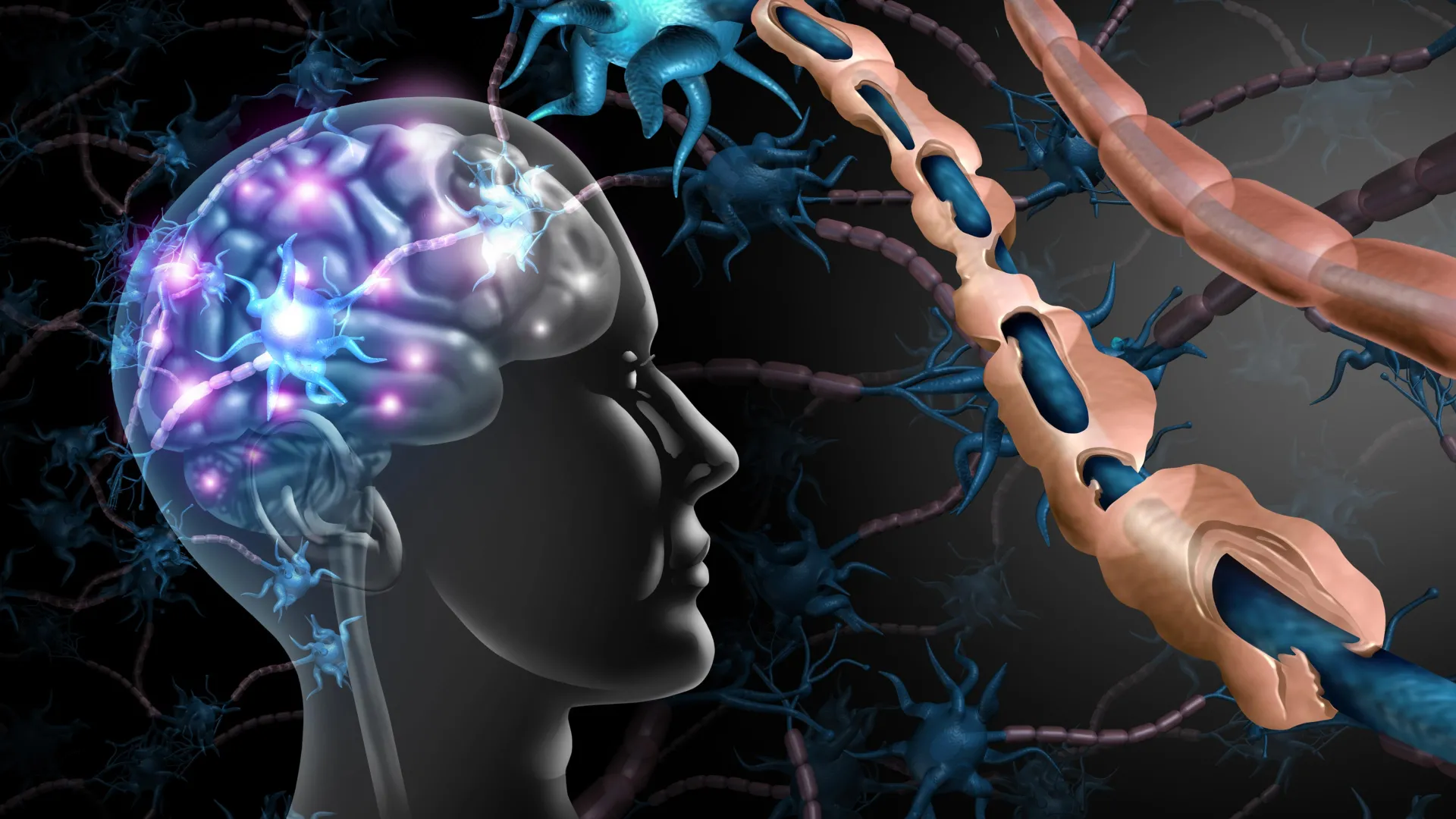
In a healthy brain, oligodendrocytes serve as the architects and maintenance crews of the white matter. Their primary function is the production of myelin, a lipid-rich substance that wraps around axons (the long "wires" of nerve cells) to form an insulating sheath. This insulation is critical for saltatory conduction, the process by which electrical impulses leap between gaps in the myelin, allowing for rapid communication between different regions of the brain. Without healthy myelin, the transmission of information slows down, and the underlying nerve fibers become vulnerable to damage.
For decades, the scientific consensus held that oligodendrocytes were purely beneficial, acting as silent supporters of neuronal health. The new research, led by Dr. Veronique Miron and her team, challenges this binary view. By analyzing human brain tissue and utilizing sophisticated mouse models, the study demonstrates that during the aging process, these cells can lose their ability to regulate myelin production correctly. Instead of maintaining a thin, efficient layer of insulation, dysfunctional oligodendrocytes begin to produce an abnormal buildup of "unhealthy" myelin that compromises the integrity of the very nerve fibers they are meant to protect.
Longitudinal Insights: The Lothian Birth Cohort 1936
The foundation of this discovery lies in an extraordinary dataset known as the Lothian Birth Cohort 1936. This group consists of individuals born in 1936 who sat for the Scottish Mental Survey of 1947 at the age of 11. Decades later, researchers at the University of Edinburgh re-engaged hundreds of these individuals, tracking their cognitive health from age 70 into their late 80s. This longitudinal approach provided a rare "cradle-to-grave" perspective on cognitive trajectory, allowing scientists to distinguish between those who maintained sharp mental faculties and those who experienced rapid decline.
Out of the 1,091 original participants in this specific cohort, 866 underwent comprehensive cognitive assessments after the age of 70. These evaluations measured three core domains: memory retention, information processing speed, and visuospatial ability. While the majority of participants exhibited some level of decline, the rate of deterioration varied significantly. This variance allowed researchers to conduct post-mortem examinations on brain tissue from a subset of the cohort, correlating physical brain changes with decades of recorded cognitive data.
The Discovery of the NRF2 Protein Pathway
When examining the brain tissue of participants who had exhibited the fastest rates of cognitive decline, the researchers observed a consistent pattern: a significant loss of large-diameter nerve fibers and an accumulation of disorganized, excessive myelin. To find the molecular trigger for this degradation, the team turned to transcriptomic analysis, which reveals which genes are active in specific cells.
The analysis pinpointed a stark deficiency in a protein called NRF2 (Nuclear Factor Erythroid 2-Related Factor 2) within the oligodendrocytes of the aging brain. NRF2 is often described as a "master regulator" of the cellular antioxidant response. It controls the expression of hundreds of genes that protect cells from oxidative stress, inflammation, and metabolic waste. The study found that as NRF2 levels dropped, oligodendrocytes became unable to maintain the delicate balance of myelin production, leading to the structural abnormalities observed in the fast-declining group.
Experimental Validation via Mouse Models
To confirm that the loss of NRF2 was a cause of cognitive decline rather than a mere byproduct of aging, the research team conducted controlled experiments in mice. By using genetic engineering to selectively reduce NRF2 levels only in the oligodendrocytes of the mice, the researchers were able to replicate the human pathology with striking accuracy.
The NRF2-deficient mice developed the same "unhealthy" myelin patterns and experienced a significant loss of large nerve fibers. More importantly, these physical changes manifested as functional deficits. In cognitive testing, these mice failed to show the typical age-related improvements in learning tasks and exhibited slower processing of environmental stimuli. This experimental phase provided the "smoking gun," proving that oligodendrocyte dysfunction, driven by NRF2 loss, is a direct contributor to the failure of neural networks.
Potential for Therapeutic Intervention and Drug Repurposing
One of the most significant implications of this research is the potential for rapid translation into clinical treatments. Because the NRF2 pathway is already well-known in the context of other diseases, several drugs that activate this pathway are already approved for human use.
Most notably, medications currently used to treat Multiple Sclerosis (MS), such as dimethyl fumarate, work by boosting NRF2 activity to protect the central nervous system from inflammatory damage. The study suggests that these existing treatments, or new compounds targeting the same biological mechanism, could be repurposed to preserve cognitive function in the elderly. By bolstering the NRF2 levels in aging oligodendrocytes, it may be possible to stabilize myelin production and prevent the loss of critical nerve fibers.
"As the prevalence of cognitive decline is rising with an aging population and no current treatments exist, we are excited about this work as it points to a potential strategy for new therapeutic strategies to preserve cognitive ability in aging," stated Veronique Miron, MRC Senior Non-Clinical Fellow and UK Dementia Research Institute Group Leader.
Statistical Context: The Growing Challenge of Cognitive Aging
The urgency of this research is underscored by global demographic shifts. According to the World Health Organization (WHO), the number of people aged 60 years and older is expected to total 2 billion by 2050. Cognitive decline, even when it does not reach the clinical threshold of dementia or Alzheimer’s disease, has profound economic and social impacts, reducing the independence of older adults and increasing the burden on healthcare systems.
Recent data from the Alzheimer’s Association indicates that nearly one in three seniors dies with some form of cognitive impairment. While much of the research funding over the last two decades has focused on amyloid plaques and tau tangles, the Edinburgh study highlights the importance of the brain’s white matter and glial cells. If even a small percentage of age-related cognitive decline can be mitigated by stabilizing oligodendrocytes, the cumulative benefit to public health would be substantial.
Shifting the Paradigm in Neuroscience
The study’s first author, Georgina Craig, a Postdoctoral Fellow at St. Michael’s Hospital and the UK Dementia Research Institute, emphasized that this work fundamentally shifts the narrative regarding brain cell roles. "We have always considered oligodendrocytes as purely beneficial, yet here we surprisingly find that they can become dysfunctional and contribute to cognitive impairment in aging," Craig noted.
This shift moves the focus away from a "neuron-centric" view of the brain toward a more holistic "systems" view, where the health of the supporting cells is just as vital as the health of the neurons themselves. It opens a new frontier in "geroprotection"—the science of protecting the brain from the biological wear and tear of time.
Future Research and Clinical Outlook
While the results are promising, the researchers caution that further clinical trials are necessary before NRF2 activators can be recommended for age-related cognitive decline. Future studies will need to determine the optimal timing for intervention—whether treatment should begin at the first sign of slowing processing speed or if it can be effective even after significant decline has occurred.
Additionally, the research team plans to investigate why NRF2 levels drop in some individuals more than others. Factors such as genetics, lifestyle, and cardiovascular health are likely to play a role in how well these "protective" cells hold up over a lifetime.
The study was a collaborative effort involving the University of Edinburgh’s Lothian Birth Cohort studies, the UKRI Medical Research Council, the Canadian Institutes of Health Research, and Northwestern University. As the global scientific community continues to untangle the complexities of the human brain, the discovery of the NRF2-oligodendrocyte link provides a concrete target in the ongoing effort to ensure that longer lives are accompanied by healthier minds.