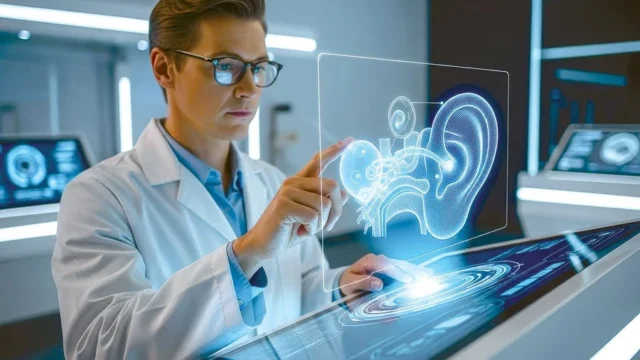

Revolutionary Strides in Hearing Restoration
For generations, the management of hearing loss has largely focused on compensatory strategies. Hearing aids have become increasingly sophisticated, offering significant improvements in sound amplification and clarity for many individuals. Cochlear implants, a more invasive yet highly effective solution, have provided a pathway to auditory perception for those with severe to profound sensorineural hearing loss by bypassing damaged parts of the inner ear and directly stimulating the auditory nerve. These technologies, while transformative in their own right, have historically aimed to restore function through external or implanted devices.
However, the current frontier of hearing loss treatment is venturing into the realm of biological restoration. Gene therapy is emerging as a groundbreaking approach, particularly for children afflicted with specific forms of genetic deafness. This innovative treatment modality holds the potential not just to compensate for lost hearing, but to fundamentally restore biologic auditory function. By targeting the underlying genetic defects responsible for certain types of congenital deafness, gene therapy offers the tantalizing prospect of correcting the biological cause of the condition, thereby enabling the ear to function naturally.
Background and Chronology: The development of gene therapy for hearing loss has been a decades-long endeavor, building upon foundational discoveries in molecular biology and genetics. Early research focused on identifying the genes associated with various forms of inherited deafness. Significant breakthroughs in gene editing technologies, such as CRISPR-Cas9, have accelerated progress in recent years, enabling more precise and efficient delivery of therapeutic genes. While still in its nascent stages for widespread clinical application in otolaryngology, preliminary studies and clinical trials have demonstrated promising results. For instance, research published in journals like Nature Medicine has detailed successful preclinical studies in animal models and early-phase human trials showing the potential for gene therapy to restore hair cell function in the inner ear, a critical component for hearing. The timeline for widespread adoption is still unfolding, with ongoing trials expected to yield further data on safety, efficacy, and long-term outcomes.
Implications: The successful implementation of gene therapy for hearing loss would represent a paradigm shift. It could significantly reduce the reliance on lifelong assistive devices for many individuals, improve speech development in children, and enhance overall quality of life. The ability to restore endogenous hearing mechanisms could also open doors for treating other forms of sensorineural hearing loss that are currently considered irreversible.
Redefining the Management of Chronic Inflammatory Diseases in Rhinology
The field of rhinology, which deals with conditions affecting the nose and sinuses, has also witnessed a profound evolution in its understanding and treatment of chronic inflammatory diseases. Historically, management often involved a cycle of repeated medication courses and surgical interventions aimed at alleviating symptoms and improving drainage. While these approaches provided relief, they frequently addressed the consequences of inflammation rather than its root causes.
Today, rhinology is moving towards a more sophisticated understanding of the immunologic pathways that drive chronic inflammatory conditions such as chronic rhinosinusitis. The advent of biologic therapies marks a significant turning point. These targeted treatments are designed to modulate the specific immune responses responsible for the persistent inflammation. Rather than solely managing the outward manifestations, biologics aim to interrupt the inflammatory cascade at a molecular level.
Supporting Data: The efficacy of biologic therapies in managing severe chronic rhinosinusitis with nasal polyps (CRSwNP) has been demonstrated in numerous clinical trials. For example, studies on drugs like dupilumab have shown significant reductions in polyp size, improvements in nasal congestion and loss of smell, and a decreased need for systemic corticosteroids and surgical intervention. Data from pivotal trials, often published in leading otolaryngology journals, indicate that a substantial percentage of patients treated with biologics experience clinically meaningful improvements in their symptoms and quality of life, often after failing to respond adequately to conventional therapies.
Broader Impact: This shift from symptom management to targeted immunomodulation raises complex clinical questions. The decision-making process is no longer a simple binary choice between surgery and medication. Instead, clinicians must consider how surgery and biologic therapy can be best selected, sequenced, or combined for each individual patient. This necessitates a deeper understanding of disease phenotypes, patient-specific immune profiles, and the synergistic potential of different treatment modalities. The integration of these advanced therapies requires a more personalized and evidence-based approach to patient care.
The Dawn of Personalized Cancer Therapies in Oncology
In the realm of otolaryngologic oncology, another significant boundary is being crossed: the development of highly individualized cancer therapies. The groundbreaking success of a Phase 3 trial for an individualized mRNA neoantigen therapy for melanoma, which demonstrated a significant improvement in recurrence-free survival, offers a glimpse into the future of cancer treatment.

This innovative approach represents a radical departure from traditional chemotherapy or even broad-spectrum targeted therapies. It involves identifying the unique mutations within an individual patient’s tumor – the neoantigens that distinguish cancer cells from healthy cells. Once these specific targets are identified, a personalized therapy, often in the form of an mRNA vaccine, is designed. This vaccine then works to educate the patient’s own immune system to recognize these neoantigens and mount a targeted attack against the cancerous cells, effectively turning the body’s defense mechanisms against the disease.
Timeline and Context: The concept of cancer vaccines has been a long-standing aspiration in oncology. However, the advent of mRNA technology, particularly accelerated by its rapid development for COVID-19 vaccines, has provided a powerful and adaptable platform for creating personalized neoantigen vaccines. The ability to rapidly sequence tumor genomes and synthesize custom mRNA sequences has made this personalized approach feasible. The Phase 3 trial mentioned, likely referring to studies involving therapies like Moderna’s mRNA-4157/V940 in combination with pembrolizumab for melanoma, represents a critical milestone, moving from promising early-stage data to robust evidence of clinical benefit in a large patient cohort.
Analysis of Implications: The implications of this approach are vast. It signifies a move towards truly precision medicine, where treatments are tailored to the unique molecular fingerprint of each patient’s cancer. For otolaryngologic cancers, which can be complex and heterogeneous, this could translate into more effective treatments with potentially fewer side effects compared to conventional systemic therapies. The ability to harness the patient’s immune system offers a powerful and potentially durable mechanism for controlling cancer recurrence. However, challenges remain in terms of cost, accessibility, manufacturing complexity, and the identification of optimal patient populations who will benefit most from these personalized therapies.
Cultivating an Environment of Continuous Learning and Discovery
These transformative advances, while filling otolaryngologists with optimism, also present a profound challenge. Scientific discovery does not automatically translate into improved patient outcomes. There is an extraordinary opportunity, coupled with a significant responsibility, to actively shape how these innovations are integrated into clinical practice and how they will define the future of the specialty.
The Role of Leadership and Organizational Structures: Leaders within otolaryngology must actively foster environments that promote continuous learning. This means creating robust educational frameworks where physicians can stay abreast of rapidly evolving therapeutic options, understand the underlying science, and develop the skills necessary to interpret and apply new data. Protecting scientific curiosity and dedicating resources for discovery, mentorship, and investigation are crucial, even in the face of increasing pressures for clinical productivity. The transformative treatments of today are the direct result of individuals who were given the latitude to ask questions whose answers were not yet known.
Furthermore, organizational structures must evolve in parallel with scientific progress. The celebration of multidisciplinary precision medicine cannot coexist with delivery of care within rigid, siloed departments. The multidisciplinary team of the future needs to move beyond periodic conferences to become the fundamental architecture through which patient care is delivered. This requires seamless integration of surgeons, physicians, basic scientists, audiologists, geneticists, pathologists, radiologists, and other allied health professionals, all collaborating around the comprehensive needs of an individual patient.
The Imperative of Enhanced Communication and Human Connection: Perhaps the most significant implication of greater therapeutic choice is an amplified need for communication. The decision-making process for complex conditions now involves navigating a landscape of advanced options: surgery versus biologic therapy, cochlear implantation versus gene therapy, conventional oncologic treatment versus molecularly targeted or immune therapies. These decisions necessitate in-depth discussions that extend beyond mere efficacy. They must encompass the nuances of uncertainty, the durability of treatment effects, potential risks and side effects, the impact on quality of life, considerations of cost and access, and, most importantly, what truly matters to each individual patient.
As the capabilities of otolaryngology become increasingly sophisticated, the need for human connection, empathy, and clear, compassionate communication becomes not less, but greater. Building trust and ensuring shared decision-making are paramount when guiding patients through these complex therapeutic pathways.
Preparing the Next Generation of Otolaryngologists
The residents currently undergoing training will undoubtedly practice a form of otolaryngology that is difficult for us to fully envision today. Our responsibility extends beyond simply preparing them for the medicine we practice now. It is imperative to cultivate the culture, establish the necessary systems, and nurture the inherent curiosity that will empower them to shape the medicine of tomorrow.
The future of otolaryngology is not a passive event; it is an active construction. The extraordinary opportunities before us demand proactive engagement, strategic foresight, and a steadfast commitment to both scientific advancement and the enduring principles of patient-centered care. It is, indeed, an amazing time to be an otolaryngologist, a time filled with the potential to redefine what is possible for our patients.
—Robin