Historical Context and Chronological Development
The foundation of these resources dates back to the early 2010s, when the initial "Year of Core Vocabulary" series was launched to provide a foundational list of high-frequency words. Recognizing that language acquisition is a non-linear process requiring diverse teaching modalities, the project expanded over the subsequent decade. In 2015, a second, complementary series was introduced, providing a new set of words and corresponding activities to ensure continued engagement and vocabulary expansion for long-term users.
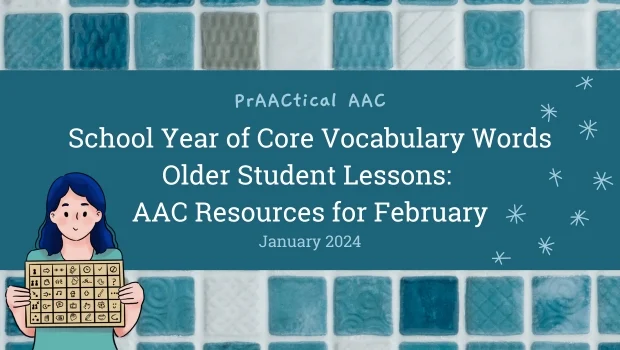
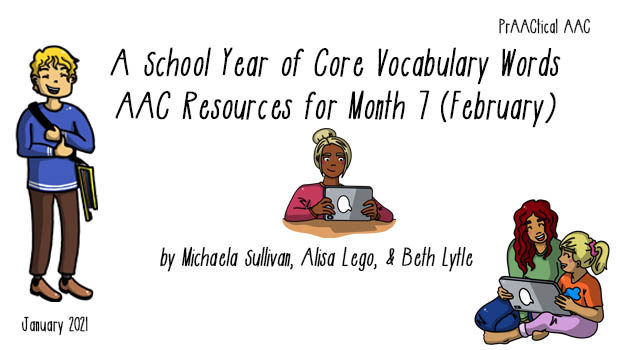
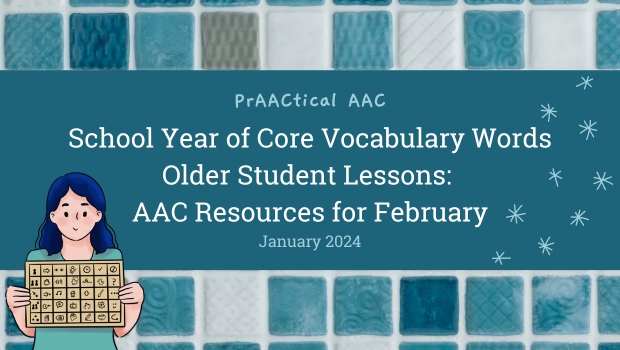
The evolution of the program reached a significant milestone in 2020 with the launch of "The School Year of Core Vocabulary Words." This expansion was specifically designed to align with academic settings, addressing the unique requirements of classroom-based language intervention. Developed by a team of experts, including Michaela Sullivan, Alisa Lego, and Beth Lytle, this phase integrated academic standards with communication goals. By 2023, the scope of the project was further broadened to include the "Older Student Lessons" series, authored by Michaela Sullivan and Lindsay Dougherty. This development acknowledged the specific linguistic needs of adolescents and young adults who use AAC, emphasizing age-appropriate content and complex social communication.

The Role of Core Vocabulary in AAC
Core vocabulary consists of a small set of words that account for approximately 80% of the words used by typical speakers in daily communication. Unlike fringe vocabulary, which is topic-specific and context-dependent, core words are highly versatile and can be used across various environments, including classrooms, home settings, and community venues.
Research in speech-language pathology consistently demonstrates that individuals who use AAC often struggle with limited vocabulary access. By prioritizing core words, practitioners can maximize the communicative utility of a learner’s device. The "February Year of Core Vocabulary" materials are structured to support this pedagogical shift, offering activity calendars, modeling suggestions, and instructional guides that encourage the consistent use of these high-frequency terms.
Data from longitudinal studies in communicative competence suggest that users who receive systematic instruction in core vocabulary demonstrate higher levels of expressive language proficiency compared to those limited to rigid, activity-specific communication boards. The resources provided in this latest release facilitate this by offering structured, yet flexible, activities that can be adapted to the specific needs of diverse learners.
Supporting Data and Pedagogical Impact
The effectiveness of these resources is supported by the principles of Aided Language Stimulation (ALS). This technique involves the communication partner modeling the use of the AAC system while speaking. The February resources provide a roadmap for this practice, offering practitioners specific target words to model during daily routines.
Educational outcomes for students utilizing these resources are often measured through improved mean length of utterance (MLU), increased frequency of independent communicative attempts, and expanded communicative functions, such as commenting, protesting, and requesting. By standardizing the vocabulary focus each month, the program facilitates a "community of practice" among educators and SLPs, who share tips, modifications, and successful outcomes, thereby fostering an iterative improvement process.
Expert Perspectives and Collaborative Contributions
The success of the February resources is largely attributed to the collaborative nature of their development. The contributions of experts like Rachael Langley, whose activity calendars have become a staple for many classrooms, highlight the importance of practical, teacher-friendly materials.
In professional discussions regarding these initiatives, experts emphasize that the primary objective is to bridge the gap between clinical theory and classroom reality. "The goal is to move beyond the device itself and into the realm of meaningful social interaction," notes one senior consultant in the field of assistive technology. By providing a structured template, these resources allow practitioners to spend less time on curriculum design and more time on high-quality interaction, which is the cornerstone of successful language intervention.
Structural Overview of the February Resources
The materials made available for February are categorized into three distinct tiers to ensure accessibility for different developmental stages:
- Set 1 & Set 2 Resources: These serve as the foundational curriculum, suitable for early learners or those beginning their journey with AAC. These materials focus on core word mastery and basic sentence construction.
- School Year of Core Vocabulary: Targeted toward elementary and middle-school settings, these resources integrate core word instruction with literacy and social studies concepts. This ensures that AAC users are participating in the same curricula as their neurotypical peers.
- Older Student Lessons: Recognizing that language instruction must evolve as the learner matures, this series focuses on higher-level social communication, self-advocacy, and the use of core vocabulary in adult-oriented environments.
Each set is designed to be fully compatible with various AAC platforms, including dedicated devices, tablet-based apps, and low-tech communication boards. This platform-agnostic approach is essential, as it allows users to maintain consistency in their vocabulary access regardless of the hardware they utilize.
Broader Implications for Special Education
The release of these materials at the beginning of the year signifies an ongoing commitment to equity in education. Students with complex communication needs (CCN) often face systemic barriers to academic participation. By providing a structured, monthly approach to vocabulary development, these resources enable educators to integrate AAC users into the mainstream classroom experience more effectively.
Furthermore, the implications for home-based instruction are significant. Families often report feeling overwhelmed by the technical demands of AAC. These resources offer a user-friendly, step-by-step guide that empowers parents and caregivers to play an active role in their child’s language development, reinforcing the idea that communication is not limited to the therapy office.
Future Directions and Sustainability
As the "Year of Core Vocabulary" series enters its next cycle, the focus remains on inclusivity and adaptability. The creators emphasize that these materials are living documents, subject to updates and refinements based on feedback from the AAC community. The integration of digital accessibility standards and the ongoing expansion of the older student curriculum indicate that the program will continue to be a vital asset for the field of special education.
The sustained interest in these materials over more than a decade underscores a growing demand for evidence-based resources that prioritize high-frequency vocabulary. As the field moves toward a more neuro-affirming approach, the emphasis on providing learners with the tools to express their thoughts, needs, and desires—rather than merely complying with adult directives—remains paramount.
The February resources for the Year of Core Vocabulary are currently available to the public, providing a comprehensive toolkit for anyone dedicated to advancing the communication skills of individuals who use AAC. By leveraging these materials, educators and families can ensure that their learners are not only provided with the tools to communicate but are also supported by a robust, evidence-informed instructional framework designed to facilitate long-term success.