The Search Process: A Chronological Overview
The search for a new CEO began in earnest following the departure of the previous administration. Recognizing the weight of the appointment, the NAD Board of Directors established a dedicated Search Committee tasked with identifying candidates who possess not only executive management expertise but also a deep, lived understanding of American Sign Language (ASL) and the socio-political nuances of the deaf community.
Between late 2025 and early 2026, the committee engaged in a multi-stage vetting process. This involved reviewing credentials, conducting initial interviews with a diverse pool of applicants from across the country, and performing comprehensive background checks. The goal was to narrow the field to candidates who could balance the organization’s historical mission—the preservation and promotion of ASL and the advocacy for equal access—with modern institutional demands such as digital accessibility, inclusive policy-making, and sustainable fundraising.
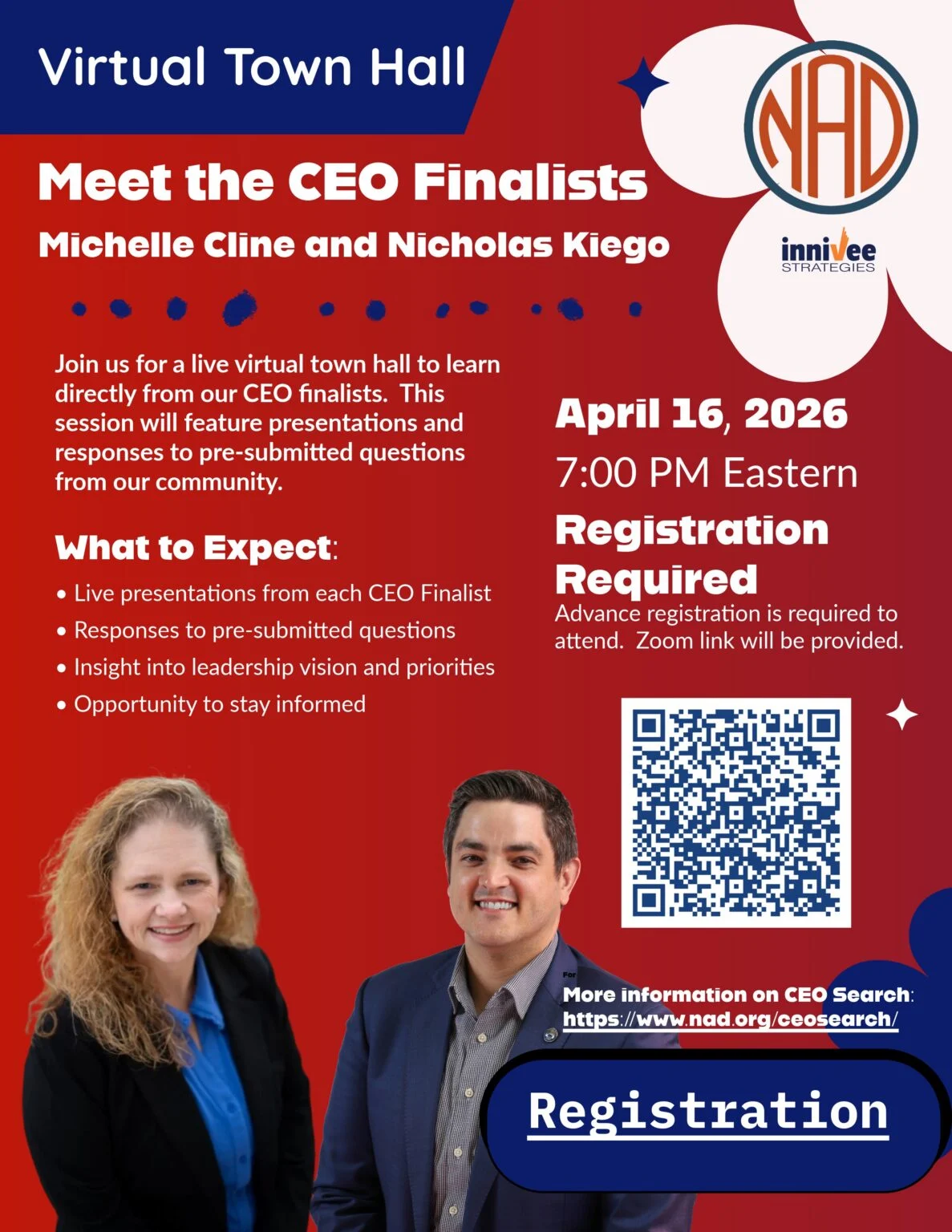
By April 2026, the committee finalized the selection of the two finalists: Michelle Cline and Nicholas Kiego. Both individuals have established profiles within the community, and their inclusion in the final round represents a significant milestone in the NAD’s governance calendar. To foster transparency, the board scheduled a virtual town hall for April 16, 2026, allowing the membership to engage with the candidates before a final selection is made.
Profiles and Leadership Visions
The selection of Michelle Cline and Nicholas Kiego reflects the board’s emphasis on candidates with a proven track record in advocacy and organizational stewardship.
Michelle Cline enters the final phase of the search with an extensive background in organizational management and systemic advocacy. Supporters of her candidacy point to her experience in navigating complex institutional bureaucracies and her ability to build coalitions across diverse stakeholder groups. Her platform has consistently focused on the modernization of civil rights strategies, particularly in the digital age, where algorithmic bias and automated captioning gaps present new frontiers for advocacy.
Nicholas Kiego, conversely, brings a distinct focus on grassroots mobilization and educational reform. His previous work has often intersected with the intersectional needs of the deaf community, including the challenges faced by deaf individuals of color and those in underserved rural areas. His vision for the NAD prioritizes community-led initiatives and the amplification of diverse voices within the deaf experience, suggesting a potential shift toward a more decentralized, community-first leadership style.
Both candidates were required to address a series of pre-submitted questions from the public. These queries spanned topics ranging from the future of deaf education funding to the NAD’s role in influencing federal policy on emergency communication and telecommunications access.
Contextualizing the Role of the NAD
The National Association of the Deaf, founded in 1880, operates as the nation’s foremost civil rights organization for the deaf and hard of hearing. The position of CEO is arguably one of the most influential roles within the American disability rights movement. The incumbent must manage a multi-faceted portfolio that includes lobbying members of Congress, managing a national membership base, overseeing legal department interventions in landmark court cases, and maintaining the financial viability of a non-profit that relies heavily on grants, donations, and events.
In recent years, the organization has had to adapt to a rapidly changing technological landscape. The integration of artificial intelligence in communications, the ongoing debates surrounding the Americans with Disabilities Act (ADA) compliance in digital spaces, and the shifting paradigms of deaf education have placed unprecedented demands on the organization’s leadership. Consequently, the board’s search criteria were not merely focused on administrative efficiency, but on the ability to anticipate and respond to these systemic shifts.
Analysis of Institutional Implications
The selection of a new CEO carries significant weight for the broader disability rights movement. As the NAD often sets the tone for smaller, state-level deaf organizations, the leadership style of the incoming CEO will likely influence regional policy priorities for the next decade.
Industry analysts observe that the NAD is currently at a crossroads. While its historical successes in securing legislative victories are well-documented, the next CEO must navigate a landscape of tightening non-profit budgets and increased competition for donor attention. Furthermore, there is an internal pressure to ensure that the leadership reflects the diversity of the membership. The two finalists represent a demographic and experiential diversity that the board has been keen to emphasize throughout the process.
Should the board choose a candidate with a primary focus on litigation, the organization may see an increase in test-case lawsuits aimed at defining the boundaries of digital accessibility. Conversely, a focus on lobbying and policy-making would likely see the NAD pivot toward legislative action and public awareness campaigns. Both pathways require a leader who can effectively communicate the urgency of deaf rights to an audience that often lacks baseline knowledge of the community’s unique linguistic and cultural identity.
Community Engagement and Transparency
The virtual town hall held on April 16, 2026, was a departure from older, more opaque executive search models. By providing a platform for the community to engage directly with the finalists, the NAD sought to mitigate concerns regarding the insularity of board-led decisions. This level of public engagement is increasingly standard for large-scale non-profits, yet it remains a sensitive process for candidates who must balance public openness with the confidentiality typically afforded to high-level executive searches.
The forum served as a litmus test for the candidates’ communication styles. For the members of the deaf community watching, the event was an opportunity to observe how each finalist handles the pressure of public scrutiny, their ability to articulate complex policy positions in ASL, and their willingness to address uncomfortable questions regarding the organization’s past performance.
Data and Financial Considerations
The NAD operates within a complex financial environment. According to recent public filings, the organization’s budget is heavily weighted toward legal defense funds, legislative lobbying, and educational outreach programs. As of the 2025 fiscal report, the organization maintained a balanced budget, though it noted the increasing costs associated with maintaining compliance and accessibility in its own digital operations.
The incoming CEO will inherit a balance sheet that requires both stability and growth. Potential fiscal challenges include:
- Sustainability of Grant Funding: Shifting federal priorities often impact the availability of grants for non-profits focusing on civil rights and disability education.
- Membership Engagement: As younger generations of deaf and hard-of-hearing individuals engage with social media-driven activism, the NAD must find ways to ensure that its institutional membership model remains relevant.
- Infrastructure Upgrades: Continued investment in ASL-accessible virtual platforms is non-negotiable for an organization that serves a dispersed, national constituency.
Conclusion: The Road Ahead
As the NAD moves toward a final decision, the atmosphere among members is one of cautious optimism. The dual-finalist structure has provided the community with a clear window into the future of the organization. While the board has not yet announced a definitive date for the final selection, the conclusion of the April 16th town hall marks the end of the public vetting phase.
For Michelle Cline and Nicholas Kiego, the process has been a rigorous test of their leadership readiness. For the NAD, the selection of the next CEO is more than a staffing decision; it is a declaration of the organization’s strategic intent for the coming decade. As the board prepares to deliberate and finalize the appointment, the stakeholders of the NAD—from individual members to institutional partners—remain focused on the primary objective: ensuring that the voice of the deaf community remains strong, protected, and empowered in the halls of power and throughout American society. The upcoming transition will be a defining moment for the organization, setting the trajectory for its mission to protect and preserve the civil rights of deaf and hard-of-hearing individuals across the United States.