At a high-traffic recycling facility in Rhode Island, the reality of these risks was brought into sharp focus following a near-miss incident in 2021. The plant, operated by Glencore, serves as a critical node in the circular economy, where 35 employees manage the shredding of electronic waste, the reduction of particle size, and the preparation of dense metallic samples for smelting. Within this footprint, five forklifts operate constantly, maneuvering through tight corridors to transport heavy, irregular payloads. The 2021 incident—a high-stakes encounter between a pedestrian and a heavy-load vehicle—served as a catalyst for a fundamental shift in the facility’s approach to safety.
The Anatomy of an Industrial Hazard
The challenges faced by the Rhode Island facility are representative of a broader, systemic issue within the global manufacturing sector. According to the Occupational Safety and Health Administration (OSHA), there are approximately 85 to 100 forklift-related fatalities and nearly 35,000 serious injuries annually in the United States alone. Despite rigorous safety training requirements, the physical environment of a plant often works against the operator.
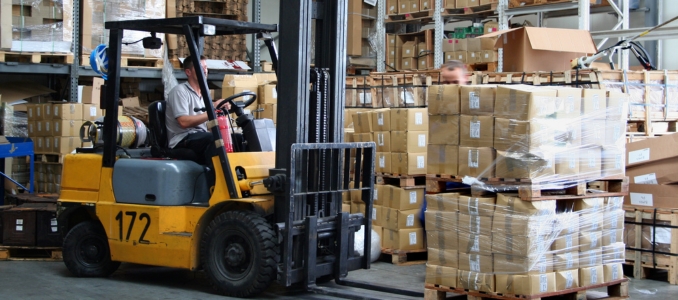
In heavy industrial settings, forklifts are rarely moving standardized pallets in wide, open warehouse aisles. Instead, they handle massive raw materials, long bar stock, and bundled tubing. These loads frequently present irregular profiles and high centers of gravity, which obscure the operator’s field of vision. When coupled with the auditory interference of shredders and heavy machinery, an operator’s ability to detect a pedestrian in their path is severely compromised.
Chronology of a Safety Transformation
The timeline of the Rhode Island facility’s transformation provides a roadmap for other industrial sites. In the period leading up to 2021, the facility relied on standard "see and be seen" protocols, including high-visibility vests and auditory alarms on equipment. However, the near-miss incident exposed the limitations of these reactive measures.
By late 2021, site leadership, led by plant manager Juan Carlos Molines, began a comprehensive audit of their floor plan. They recognized that the facility’s architecture—characterized by sharp corners, structural columns, and significant noise pollution—made it impossible for operators to maintain constant visual awareness of their surroundings.
In 2022, the facility moved to evaluate proximity detection technologies. After vetting several options, leadership prioritized a system capable of functioning in "obstructed" environments rather than simple "line-of-sight" sensors. They selected an active ultra-wideband (UWB) proximity detection system. This technology allows for the creation of configurable danger zones around equipment. Unlike RFID or infrared systems, UWB can penetrate obstacles, meaning a worker hidden behind a stack of metal crates will still be detected by the forklift’s system.

By 2023, the implementation phase was complete. Every employee, contractor, and visitor was equipped with a UWB transceiver. The forklifts were retrofitted with the corresponding hardware, creating a digital "bubble" around each vehicle. The system was designed not only to alert the operator but to actively intervene by throttling the vehicle’s speed if a breach of the safety zone occurred. Since the full integration of this system, the facility has maintained a record of zero significant forklift-related incidents.
Engineering Safety Into the Workflow
The move from behavioral safety (training workers to be careful) to engineered safety (creating systems that prevent accidents regardless of human error) represents a significant shift in industrial best practices. The Glencore model demonstrates that safety must be "baked in" to the operational workflow.
Industry analysts point out that the primary hurdle to such systems is often the perceived cost of implementation. However, when weighed against the cost of a single major injury—which includes legal fees, workers’ compensation claims, equipment downtime, and lost productivity—the return on investment for active proximity detection becomes clear. For many firms, the direct costs of a major incident can exceed seven figures, making the capital expenditure for UWB systems a form of risk management rather than a mere expense.
The Role of Technology in Modern Compliance
The use of UWB technology is part of a growing trend toward "Industry 4.0" safety protocols. By digitizing the proximity of assets and personnel, management can now collect data on "near-miss" hotspots. If the UWB system flags a specific corner of the warehouse as a frequent danger zone, leadership can adjust traffic flow patterns, install mirrors, or add physical barriers to eliminate the hazard entirely.

This data-driven approach removes the guesswork from safety management. Instead of waiting for an accident to occur, managers can analyze heat maps of where proximity warnings are triggered most often. This proactive identification of risk allows for continuous improvement, ensuring that the facility remains safe even as operational needs evolve.
Broader Implications for the Industrial Sector
The lessons from the Rhode Island facility extend far beyond the recycling industry. As global supply chains face increased pressure to process materials faster, the speed of material handling on the plant floor has increased. This "pace-of-business" pressure often creates the very conditions where safety protocols are bypassed in favor of efficiency.
The integration of active, automated intervention systems provides a solution that does not sacrifice speed for safety. By automatically slowing a vehicle down only when a pedestrian is present, the facility maintains its productivity without needing to enforce universally slow speed limits, which can be inefficient.
Furthermore, the requirement for visitors to wear transceivers addresses a frequently overlooked vulnerability. In many plants, guests or external maintenance contractors are the most at-risk individuals, as they are often unfamiliar with the facility’s traffic patterns and noise levels. Making participation in the proximity detection system mandatory for all entrants ensures a uniform standard of protection across the entire facility footprint.
Future-Proofing Industrial Environments
As heavy manufacturing continues to integrate more automation, the "human-in-the-loop" factor remains the most unpredictable variable. While robotic systems and autonomous forklifts are on the horizon, the majority of industrial plants today still rely on manual operation for complex material handling tasks. Therefore, the priority must remain on augmenting the operator’s capabilities through sensor-based intelligence.
The Glencore case serves as a benchmark for what can be achieved when a facility stops viewing safety as a static compliance requirement and begins treating it as an active, engineering-led initiative. By identifying the specific physical constraints of their environment and deploying technology that accounts for those limitations, the facility has successfully mitigated one of the most persistent risks in the industrial world.
Moving forward, regulatory bodies are likely to place increased scrutiny on the use of proximity sensors in high-traffic environments. As these systems become more accessible and cost-effective, they may shift from being an optional safety upgrade to a standard requirement for heavy industrial operation. For now, the successful implementation at this Rhode Island site stands as a testament to the fact that when technology is properly aligned with operational realities, it is possible to achieve the industry’s ultimate goal: zero harm.
The transition from reactive training to proactive, automated safety systems is not merely a change in equipment; it is a fundamental shift in the culture of an organization. By prioritizing the visibility and protection of every individual on the floor, firms can foster a sustainable environment where high-speed production and high-level safety are not mutually exclusive, but rather, two sides of the same operational coin.