Chronology of the Fairport Incident
The sequence of events leading to the cessation of operations began in the early morning hours of October 22. According to internal reports, sensors embedded within the lower levels of the Fairport salt mine detected an unusual inflow of water, which exceeded normal operational parameters for the site. Recognizing the potential for structural instability or flooding, management triggered the mine’s emergency evacuation procedure.

By the time the final headcount was verified on the surface, all miners had been accounted for, and no injuries were reported. Following the successful evacuation, the company immediately contacted the Mine Safety and Health Administration (MSHA) and relevant state regulatory bodies in Ohio to disclose the situation. For the subsequent four days, internal engineering teams and technical consultants performed a preliminary assessment of the mine’s underground conditions. On October 26, the company officially announced that all mining operations at the Fairport facility would be placed on an indefinite hiatus while experts conducted a more rigorous forensic analysis of the water source and its impact on the structural environment.
Technical Context of the Fairport Mine
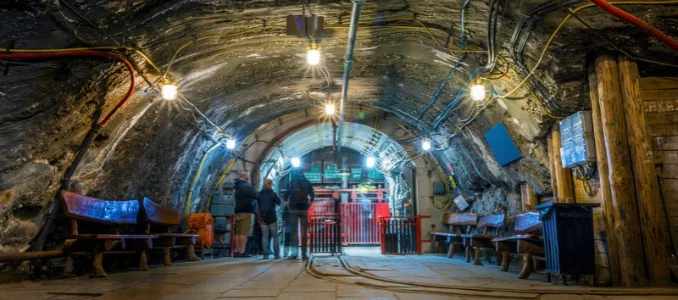
The Fairport mine, located on the shores of Lake Erie, is a critical piece of infrastructure for the regional salt supply chain. Mining at this location is conducted through the room-and-pillar method, a technique common in salt and coal extraction where "rooms" of salt are mined while "pillars" of the material are left behind to support the weight of the overhead rock.
Salt mining beneath a large body of water like Lake Erie presents unique geological challenges. The primary concern in such environments is the prevention of hydraulic connection between the lake bed and the mine shafts. If the integrity of the rock strata between the lake and the mining level is compromised—whether by natural seismic shifts, human-induced structural failure, or geological faults—water can ingress rapidly. Because salt is highly water-soluble, even a minor leak can quickly escalate into a catastrophic dissolution of the support pillars, potentially leading to a collapse. Consequently, Morton Salt maintains rigorous monitoring systems designed to detect micro-movements and moisture fluctuations, which likely played a pivotal role in the early detection and successful evacuation of the workforce on October 22.

Regulatory and Forensic Investigation
The investigation currently underway is a multi-disciplinary effort involving Morton Salt’s in-house engineering team, independent geotechnical consultants, and state and federal regulators. The primary objective of this investigation is to identify the precise origin of the water. Investigators are utilizing a combination of borehole sonar imaging, groundwater chemical analysis, and structural stress-testing to determine if the intrusion is localized or indicative of a more systemic failure in the mine’s geological containment.
Regulators from the MSHA are overseeing the process to ensure that any potential plan to resume operations meets the highest safety standards. Under federal mining regulations, a mine that experiences a significant water inflow event cannot reopen until a comprehensive mitigation plan is filed and approved, proving that the hazard has been fully addressed and that the mine is safe for human re-entry. Morton Salt has pledged full transparency throughout this process, collaborating with regulatory agencies to provide the data necessary for a safety determination.
Economic and Supply Chain Implications
The suspension of mining at the Fairport site is expected to have a ripple effect on the regional salt market, particularly as the industry approaches the winter season. The Fairport facility is a major supplier of road salt for municipalities and state departments of transportation across the Great Lakes region. Road salt, or rock salt, is the primary material used for de-icing highways, and supply chain disruptions during the fourth quarter of the year can lead to localized shortages.

Morton Salt has officially declared a force majeure event regarding its commitments at the Fairport site. Force majeure, a common clause in commercial contracts, allows a company to be excused from its contractual obligations due to unforeseen, uncontrollable events—in this case, the geological emergency that rendered the mine inoperable. By invoking this clause, Morton Salt is signaling to vendors, logistics partners, and municipal customers that the delivery of salt products from this specific facility will be delayed or cancelled until further notice.
Analysts observing the industry note that while Morton Salt possesses other facilities, the logistics of shifting supply chains on short notice are complex. Moving bulk rock salt requires specialized rail and maritime transport, which are often booked months in advance. The unexpected removal of a major node in this supply chain will likely put upward pressure on market prices and may force municipalities to seek salt from more distant suppliers, further straining transport infrastructure.
The Role of Occupational Health and Safety
The incident at Fairport underscores the paramount importance of occupational health and safety (OHS) standards in the extractive industries. Underground mining is inherently high-risk, and the prevention of accidents relies on the integration of advanced monitoring technology and human-centric safety culture. The fact that all workers were evacuated safely serves as a benchmark for the effectiveness of modern emergency response planning.

Occupational health and safety experts often emphasize that "near-miss" reporting and the strict enforcement of evacuation protocols are what prevent catastrophic loss of life. In this instance, the rapid response to the water inflow suggests that the safety culture at the Fairport mine prioritized personnel safety over operational continuity. Moving forward, the final report on the incident will likely be scrutinized by industry peers to determine if new "best practices" can be derived from the data collected during the evacuation.
Future Outlook and Next Steps
As the investigation enters its second phase, Morton Salt has indicated that surface operations at the Fairport site will be severely limited. While the mine remains closed, only essential maintenance and safety-monitoring activities will be permitted. The company has not provided a timeline for a potential reopening, as the outcome of the geotechnical study remains the deciding factor.
For the local community, the Fairport mine remains a significant economic anchor. The facility provides stable, high-paying industrial jobs and contributes to the local tax base. Consequently, the town’s leadership and local labor representatives are monitoring the situation closely, hopeful that the investigation will yield a pathway toward remediation and safe resumption of work.

In the broader context of the North American salt industry, this event highlights the fragility of essential infrastructure. As geological and climate-related pressures increase, the industry must continuously invest in the resilience of its physical assets. The outcome of the Fairport investigation will not only determine the future of this specific mine but will likely influence how salt producers across the continent approach the maintenance and safety of their underground facilities in the years to come.
As of late October, stakeholders await the preliminary findings from the independent experts. Until those results are made public, the Fairport salt mine remains under a total operational freeze, serving as a stark reminder of the ongoing challenges involved in extracting resources from the earth’s crust. The priority, according to all involved parties, remains the safety of the workforce and the long-term stability of the surrounding environment, ensuring that no further incidents occur as the investigation proceeds.