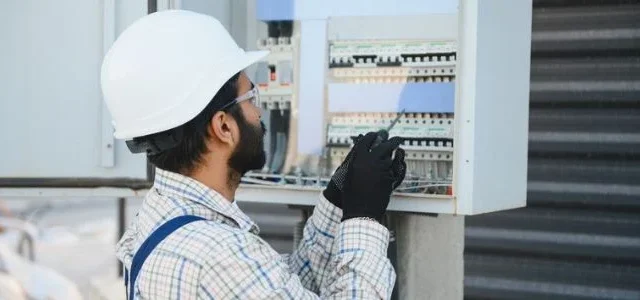

The regulatory framework for head protection in the United States remains anchored in the 29 CFR 1910.135 standard. This regulation incorporates by reference the American National Standards Institute (ANSI) Z89.1 standards, specifically the 1997, 2003, and 2009 editions. However, the interpretation of these standards has often been a point of confusion for employers who must balance compliance with the practical realities of a diverse, high-risk workforce.

The Evolution of Head Protection Requirements
For decades, the standard hard hat—often characterized by its limited brim and top-only impact protection—was the industry default. While these helmets are sufficient for environments where vertical falling objects represent the primary hazard, they often prove inadequate in modern industrial settings where lateral impacts, trips, falls, and off-axis blows are common.
OSHA’s recent guidance clarifies that the responsibility for selecting appropriate PPE rests squarely on the employer, predicated on a mandatory hazard assessment. If a safety audit identifies potential risks to the side of the head, a traditional top-only helmet will not satisfy the requirements of the general industry PPE standard. In such instances, employers are obligated to provide head protection that addresses the identified risk. The agency specifically pointed to Type II helmets, which are designed to mitigate impacts to the front, back, and sides of the head, as an example of equipment that might be necessary depending on the specific findings of a site’s risk profile.
This shift does not represent a new legal requirement but rather a clarification of existing obligations. Employers have long been required under 29 CFR 1910.132 to assess the workplace for hazards and select the appropriate PPE to mitigate those risks. By highlighting the specific inadequacy of top-only protection in high-risk environments, OSHA is signaling a shift toward more robust, multi-impact head protection systems that align with modern ANSI standards and international safety trends.

The Role of Hazard Assessment and ANSI Standards
The integration of the 1997, 2003, and 2009 ANSI Z89.1 editions creates a complex web of compliance. Employers must ensure that their head protection equipment is consistent with the level of risk identified during their mandatory walkthroughs. A recurring challenge in industrial safety is the tendency to prioritize "standardization" over "suitability." Companies often procure equipment in bulk to streamline logistics, sometimes overlooking the nuanced differences between helmet types.
OSHA’s interpretation serves as a firm reminder that safety compliance is not a "one-size-fits-all" endeavor. The agency’s 2024 safety and health information bulletin, while advisory, provides the context necessary for safety managers to defend their PPE choices during audits. It clarifies that merely having a helmet on a worker’s head is not the goal; the goal is to provide protection that matches the specific physics of the hazards present in that worker’s environment.
Lockout/Tagout: The Criticality of Legible Labels
In a second, equally important interpretation, OSHA addressed the standardization of labels used during electrical lockout/tagout (LOTO) procedures. The query centered on whether a lock featuring a permanently attached, readable label satisfies the requirements for electrical work practice standards.

The answer provided by the agency is affirmative, provided the label clearly communicates the danger and the authorization requirements. In the context of electrical work, the ability to identify who has applied a lock and the associated prohibition against removing that lock without authorization is a cornerstone of the 29 CFR 1910.147 (Control of Hazardous Energy) and 1910.333 (Selection and Use of Work Practices) standards.
When a lock is used to secure a disconnecting means, the label serves as the primary communication tool between the maintenance worker and any other personnel who might inadvertently attempt to restore power. If the label is faded, handwritten, or easily detached, the entire safety system is compromised. OSHA’s clarification emphasizes that "permanence" and "readability" are not mere suggestions; they are the functional requirements that transform a standard padlock into a legitimate safety device.
Chronology of Regulatory Guidance
The issuance of these interpretations follows a multi-year effort by the AIHA (American Industrial Hygiene Association) and other safety advocacy groups to bridge the gap between technical standards and real-world field application.

- 1997–2009: The establishment of the ANSI Z89.1 standards creates the baseline for head protection, incorporating various testing protocols for impact and penetration.
- 2020–2023: As industrial workplaces become more complex, injury data begins to highlight the prevalence of lateral impacts in non-construction industries, prompting a review of traditional hard hat effectiveness.
- 2024: OSHA releases an updated safety and health information bulletin, focusing on the differences between traditional hard hats and modern safety helmets, leading to the recent clarifications provided to the industry.
- Late 2024/Early 2025: OSHA issues the two specific letters of interpretation to address inquiries regarding PPE selection and the integrity of lockout labeling systems.
Broader Implications for Industry
The implications of these clarifications are twofold. First, for safety managers, this necessitates a review of existing PPE inventories. Many companies may find that they are currently under-protecting their workers if their hazard assessments have evolved, but their equipment procurement has remained static. The financial cost of upgrading to Type II helmets or more advanced safety headgear is statistically offset by the significant reduction in traumatic brain injuries (TBIs) and lateral impact trauma.
Second, for electrical maintenance programs, the focus on label integrity mandates a move toward standardized, engraved, or high-durability labels for all lockout devices. The "homemade" label—often a piece of masking tape or a quickly scrawled tag—no longer meets the threshold of rigorous safety management. Organizations are encouraged to implement systematic, serialized, and permanent tagging solutions to ensure compliance and, more importantly, to prevent the catastrophic consequences of accidental re-energization.
Analysis of the Regulatory Climate
OSHA’s current approach reflects a broader trend of prioritizing granular, risk-based compliance. By addressing these specific scenarios, the agency is acknowledging that modern work environments have outpaced older, more generalized safety requirements. The use of AI-driven safety management platforms and digital incident tracking has provided the agency with a clearer picture of where safety programs frequently fail: in the details of implementation.

The insistence on readable, permanent labels for locks is an acknowledgement of the "human element" in safety. Even the most robust technical system fails if a worker cannot easily read a warning. Similarly, the focus on head protection is an acknowledgment of the "physics of the jobsite." As heavy machinery and high-speed processes become more prevalent in general industry, the risk profile has expanded beyond simple top-down threats.
Conclusion
For employers, these clarifications serve as a blueprint for proactive safety management. Compliance is no longer achieved by merely selecting the cheapest ANSI-compliant equipment available. Instead, it requires a continuous feedback loop between hazard identification and equipment selection. Whether it involves ensuring a worker is wearing a helmet capable of shielding them from a side-impact, or verifying that a lockout tag is legible enough to prevent an electrical accident, the message from OSHA is clear: the safety of the worker depends on the precision and quality of the tools provided.
As industries move forward, the adoption of these best practices will likely become the standard for auditing and enforcement. Organizations that take the initiative to refine their PPE selection processes and standardize their electrical safety hardware will not only find themselves in better standing with regulators but will also create a demonstrably safer culture for their employees. By bridging the gap between historical standards and current hazard realities, companies can move closer to the ultimate goal of zero workplace incidents.