The Evolution of the Autonomous Jobsite
For decades, the construction industry has remained one of the most physically demanding and dangerous sectors of the global economy. According to data from the Bureau of Labor Statistics (BLS), construction consistently reports one of the highest rates of workplace injuries and fatalities, with "struck-by," "caught-in/between," and fall-related incidents remaining persistent threats. The advent of robotics was initially viewed as the ultimate panacea for these issues, offering to remove workers from the path of harm.
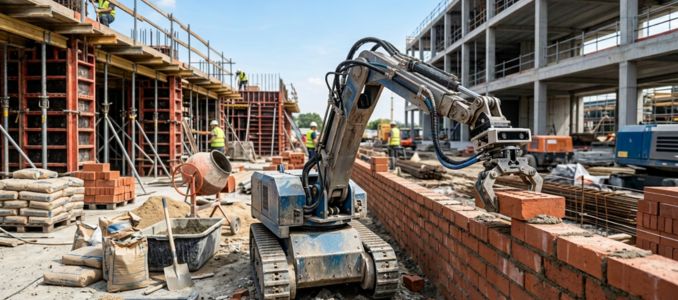
The timeline of this transition began in earnest over the last decade, with the introduction of semi-autonomous masonry robots, exoskeleton suits designed to reduce musculoskeletal stress, and aerial drones for site surveying. By 2020, investment in "contech" (construction technology) reached record highs, fueled by labor shortages and the need for greater efficiency. However, as these machines moved from experimental prototypes to standard jobsite equipment, researchers began to identify a growing gap between manufacturer intent and the reality of the field.
The Reality of Dynamic Environments
The fundamental challenge identified by NIOSH researchers is the "uncontrolled variable" problem. In an automotive assembly plant, a robot operates within a caged or sensor-fenced perimeter, performing repetitive tasks on a predictable timeline. A construction site, conversely, is a fluid, chaotic ecosystem. Terrain shifts, lighting conditions fluctuate, and severe weather can compromise sensitive LiDAR and optical sensors.
Furthermore, unlike manufacturing, where robots are the primary actors, construction sites are multi-trade environments. Electricians, plumbers, ironworkers, and operators must navigate the same space, often with overlapping responsibilities. When an autonomous earthmoving vehicle is operating in the same radius as a crew installing underground utilities, the potential for communication failure between human and machine becomes a critical safety breach.

Categorizing the New Hazard Profile
NIOSH has categorized the primary risks associated with construction robotics into three distinct tiers:
1. Kinetic and Mechanical Hazards
These are the most immediate threats to personnel. They include:
- Struck-by incidents: Occurring when an autonomous vehicle fails to detect a worker in its path or when a robotic arm swings unexpectedly.
- Caught-in/between injuries: Risks arising from the proximity of human limbs to moving parts, belts, or hydraulic components.
- Dropped loads: As robots take over heavy lifting, the failure of software or hydraulic systems could result in material falls, creating crushing hazards below.
2. Technological Failure Modes
The reliance on complex software introduces failure points that were previously non-existent on a construction site. These include:

- Sensor Saturation: Dust, snow, or direct sunlight glare can "blind" optical sensors, leading to navigation errors.
- Communication Latency: In environments with poor connectivity, delays in command signals can cause a robot to continue a movement even after an operator has hit an emergency stop.
- Algorithmic Misinterpretation: A robot may correctly identify an object but fail to categorize it as a human, leading to suboptimal pathfinding that puts workers at risk.
3. Human-Robot Interaction (HRI) Risks
The most subtle but perhaps most dangerous risk is "complacency creep." As workers become accustomed to the presence of autonomous machines, they may naturally lower their guard, assuming the robot will always "see" them. This over-reliance on technology’s ability to avoid collisions can lead to dangerous behavioral patterns.
Industry Implications and Prevention Through Design
In response to these findings, industry experts are increasingly advocating for "Prevention through Design" (PtD). This methodology suggests that safety should not be an afterthought or a set of peripheral protocols, but a foundational element of the equipment’s engineering.
PtD principles applied to robotics include:

- Failsafe Redundancy: Ensuring that if a primary sensor fails, the robot defaults to a "stationary safe" mode rather than continuing its last trajectory.
- Task-Specific Risk Assessments: Before a robot is deployed on a site, managers must perform an assessment that accounts for the specific terrain, weather, and concurrent work activities.
- Visual and Audible Signaling: Standardizing how robots communicate their intent—such as lighting patterns that indicate the machine is about to turn or back up—to ensure human workers can intuitively understand machine behavior.
Leading Indicators: Moving Beyond Reactive Safety
Traditional safety management is reactive; it focuses on analyzing injuries after they have occurred. NIOSH is pushing the industry toward a proactive model based on "leading indicators." By tracking near misses involving robots, monitoring the frequency of emergency stop activations, and documenting sensor faults, firms can identify dangerous trends before they result in a fatality.
For example, if a specific model of robotic masonry arm triggers its internal obstacle-detection system three times in a week due to dust interference, site managers should treat this as a signal to modify the work zone or increase the distance between the robot and human workers, rather than waiting for a collision to occur.
The Role of Collaborative Technology
While the risks are significant, the potential for technology to improve safety is equally substantial. One of the most promising areas of current research is the use of computer-vision-based monitoring. Researchers are developing systems where drones act as "safety sentinels," hovering above the site to map the location of every worker and machine. These systems can issue real-time alerts to the control centers of autonomous vehicles if a human is detected entering a high-risk zone.

Collaborative robotics—often called "cobots"—represents another pathway. Unlike fully autonomous units, cobots are designed to work in tandem with humans. For instance, a masonry cobot might take the physical load of a 50-pound concrete block while the worker performs the precision placement. Because the human remains in the loop, the machine’s movements are controlled by the worker’s physical input, significantly reducing the likelihood of unexpected or erratic behavior.
A Call for Unified Standards
As the industry moves toward deeper automation, the absence of a unified regulatory standard remains a hurdle. Current OSHA regulations were written for human-operated equipment, and while they can be applied to robots, they are often insufficient for the unique nuances of autonomous navigation and software-driven hazards.
NIOSH, along with various international standards organizations, is currently working to develop consensus standards that define the responsibilities of manufacturers versus contractors. Manufacturers are being urged to provide more transparent data regarding the limitations of their obstacle-detection systems, while contractors are being tasked with providing more comprehensive training for workers who will be sharing space with these machines.

Conclusion: The Path Forward
The integration of robotics into construction is not a question of "if," but "how." The economic pressures of labor shortages and the drive for increased efficiency make the adoption of these technologies inevitable. However, as the NIOSH bulletin makes clear, the safety of the workforce must be the primary driver of this transition.
The future of the construction site will likely be a hybrid environment. Success will not be measured by the number of robots deployed, but by the ability of firms to harmonize these machines with the human element. By prioritizing risk assessment, embracing proactive monitoring of leading indicators, and investing in collaborative design, the construction industry can successfully navigate the hazards of the digital age, ensuring that the robots of tomorrow do not come at the cost of the workers of today. As the sector continues to evolve, ongoing dialogue between technologists, safety professionals, and the tradespeople on the ground will be the essential ingredient in building a safer, more efficient future.