
The Anatomy of a Construction Incident: Data and Context
Statistically, the construction sector accounts for a disproportionate share of workplace fatalities. According to the Bureau of Labor Statistics (BLS), construction-related deaths continue to hover near the highest levels of any private industry. The "Fatal Four"—falls, struck-by objects, electrocutions, and caught-in/between accidents—consistently account for more than 60% of construction fatalities. These incidents are rarely the result of a single failure; they are often the culmination of systemic oversights, communication breakdowns, or environmental variables that converge at a specific moment.
When a high-consequence event occurs, the objective of site leadership must transition from active construction management to crisis stabilization. The initial 24-hour period is defined by a high degree of volatility, where human error and emotional distress can compromise the integrity of both the site and the subsequent investigation.
Phase One: The Immediate Emergency Response (Hours 0–2)
The primary directive in the immediate aftermath of any incident is the preservation of life and the mitigation of secondary hazards. If an incident involving heavy equipment, a structural collapse, or an electrical fault occurs, the site supervisor must initiate an immediate "stop-work" order for the affected zone. This is a non-negotiable step designed to prevent a "second-strike" scenario, where rescuers or bystanders are injured by the same mechanisms that caused the initial accident.
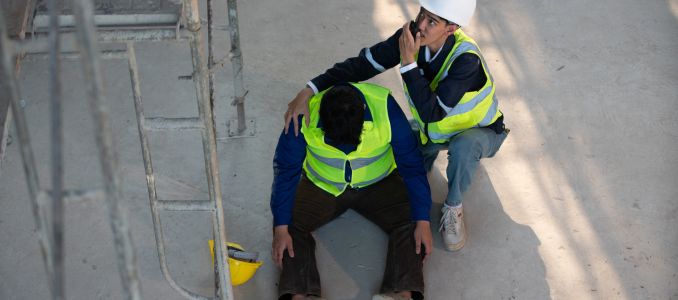
Once the immediate area is cleared, the focus shifts to medical triage. Emergency medical services (EMS) must be summoned with precise information regarding the nature of the injury and the site’s location. While waiting for professionals, designated first-aid-certified personnel should provide stabilization, provided they can do so without endangering themselves. In the context of large-scale projects, every minute spent waiting for professional intervention requires clear, concise communication between the site safety officer and the incoming emergency responders.

Phase Two: Securing the Scene and Evidence Preservation (Hours 2–8)
Once the immediate medical needs are addressed, the site becomes an active scene for both internal and external investigations. The failure to secure this area is a common source of later legal and regulatory challenges.
Evidence preservation involves more than just keeping people out; it requires a systematic lockdown of the physical space. Equipment should remain in the exact position it occupied at the time of the incident, unless its movement is required for safety or rescue operations. Taking high-resolution photographs, documenting the positions of controls on machinery, and collecting environmental data—such as weather conditions or lighting—are vital tasks.
Furthermore, a "chain of custody" for information must be established. This includes maintaining a log of every individual who enters the incident perimeter. By documenting the entry and exit of all personnel, safety officers provide investigators with a clear trail, which prevents the contamination of witness testimony and the inadvertent tampering with physical evidence.

Phase Three: Structured Witness Interviews and Reporting (Hours 8–16)
The human element of an incident investigation is often the most complex. Witness interviews should be conducted separately and as soon as possible after the event. Allowing witnesses to congregate and discuss the incident among themselves leads to "memory contamination," where individual accounts are unintentionally altered by the perceptions of others.
Supervisors must approach these interviews with empathy but maintain a strictly factual framework. The goal is to establish a chronology of events leading up to the incident. Was the machinery serviced recently? Were all safety protocols followed? Was the weather a contributing factor?
Simultaneously, the administrative reporting process must begin. Companies are legally obligated to notify governing bodies—such as OSHA—of severe injuries or fatalities within strictly defined timeframes (often 8 to 24 hours depending on the severity). Failure to adhere to these reporting deadlines can result in significant regulatory fines and may be viewed as an attempt to obfuscate the investigation.

Phase Four: Emotional Support and Stakeholder Communication (Hours 16–24)
An often-overlooked aspect of incident management is the psychological impact on the workforce. A construction site is a high-pressure environment, and a major incident can lead to widespread anxiety and a decline in morale. Management must communicate clearly and transparently with the remaining crew.
"Silence is the enemy of safety culture," notes industry safety consultant Marcus Thorne. "When management fails to communicate what has happened and what is being done to fix it, rumors proliferate. This leads to fear, which ultimately leads to more accidents."
Providing access to counseling services, such as Employee Assistance Programs (EAPs), is a standard best practice. Furthermore, leadership must reach out to the family of the affected worker, providing them with accurate, timely information. In the age of social media, controlling the narrative through transparency is a critical component of institutional reputation management.

The Implications of a 24-Hour Protocol
The investment of time and resources into a structured 24-hour response protocol pays dividends in three specific areas: legal defense, insurance premiums, and long-term safety culture.
From a legal perspective, having a documented, consistent response plan demonstrates that the company has acted with due diligence. If an incident leads to litigation, the records generated during the first day—such as safety logs, maintenance records, and witness accounts—become the foundation of the defense. Organizations that fail to document these details often find themselves unable to reconstruct the events accurately, leading to adverse rulings.
From an operational standpoint, the 24-hour window serves as the first step toward a root-cause analysis. While the immediate cause of an accident might be human error, the root cause is often a systemic failure in training, equipment maintenance, or site scheduling. By auditing the site during the first day, safety officers can identify whether the incident was an anomaly or a symptom of a broader, manageable risk.

Finally, the organizational culture is tested in the wake of an accident. When a company demonstrates that it values the lives of its workers by executing a professional, caring, and thorough response, it builds trust. Employees are more likely to report near-misses in the future, creating a proactive feedback loop that prevents future accidents.
Conclusion
The first 24 hours following a construction site incident are a crucible. The decisions made by site management during this period will ripple through the legal, financial, and operational future of the company. By prioritizing emergency response, securing the physical and testimonial environment, fulfilling regulatory reporting obligations, and supporting the emotional well-being of the workforce, construction companies can fulfill their ethical and professional responsibilities. While no safety program can entirely eliminate risk, a standardized and rigorous response to the inevitable accidents of the industry remains the most effective tool for mitigating tragedy and fostering a safer future for all personnel.