The Critical Need for Early Intervention in Parkinson’s Disease
Parkinson’s disease is a progressive neurological disorder characterized by the loss of dopamine-producing neurons in the brain, specifically in the substantia nigra. According to the World Health Organization, the prevalence of PD has doubled in the past 25 years, with global estimates suggesting that over 10 million people are currently living with the condition. The primary challenge for clinicians is that PD is typically diagnosed through clinical observations of motor symptoms, such as tremors, bradykinesia (slowness of movement), and postural instability.
By the time these physical symptoms become apparent, it is estimated that between 60% and 80% of the relevant dopaminergic neurons have already been lost. Current diagnostic tools, including the Unified Parkinson’s Disease Rating Scale (UPDRS) and neural imaging like DaTscans, are often subjective, expensive, or inaccessible in many primary care settings. Because existing treatments mainly focus on managing symptoms rather than curing the disease, early intervention is the only viable path to slowing progression and maintaining a patient’s quality of life. The development of a rapid, inexpensive, and objective screening tool is therefore a top priority for global neurology.
The Science of Sebum and Volatile Organic Compounds
The foundation of the new research lies in the study of the body’s chemical secretions. Previous investigations have established that Parkinson’s disease alters the body’s metabolic processes, leading to changes in the composition of sebum—the oily substance produced by the sebaceous glands to lubricate and waterproof the skin. These metabolic shifts are driven by several factors associated with PD, including systemic inflammation, oxidative stress, and the underlying neurodegeneration process.
As these biological changes occur, they influence the production of volatile organic compounds (VOCs). VOCs are chemicals that have a high vapor pressure at room temperature, allowing them to be released into the air and detected as odors. In 2019, the scientific community was alerted to the potential of "smelling" Parkinson’s through the case of Joy Milne, a "super-smeller" who could identify the disease in patients by the scent of their skin. However, utilizing sebum from the general surface of the skin—such as the forehead or back—presents logistical challenges. Skin sebum is highly susceptible to environmental contamination, including air pollution, varying humidity levels, and the use of personal care products, which can skew test results and lead to inconsistencies.
Why Earwax Provides a Superior Testing Medium
To overcome the limitations of surface skin sebum, Hao Dong, Danhua Zhu, and their colleagues turned their attention to the ear canal. Earwax, or cerumen, is primarily composed of sebum mixed with dead skin cells and secretions from the ceruminous glands. The anatomy of the ear canal provides a unique advantage: it is a semi-enclosed, protected microenvironment.
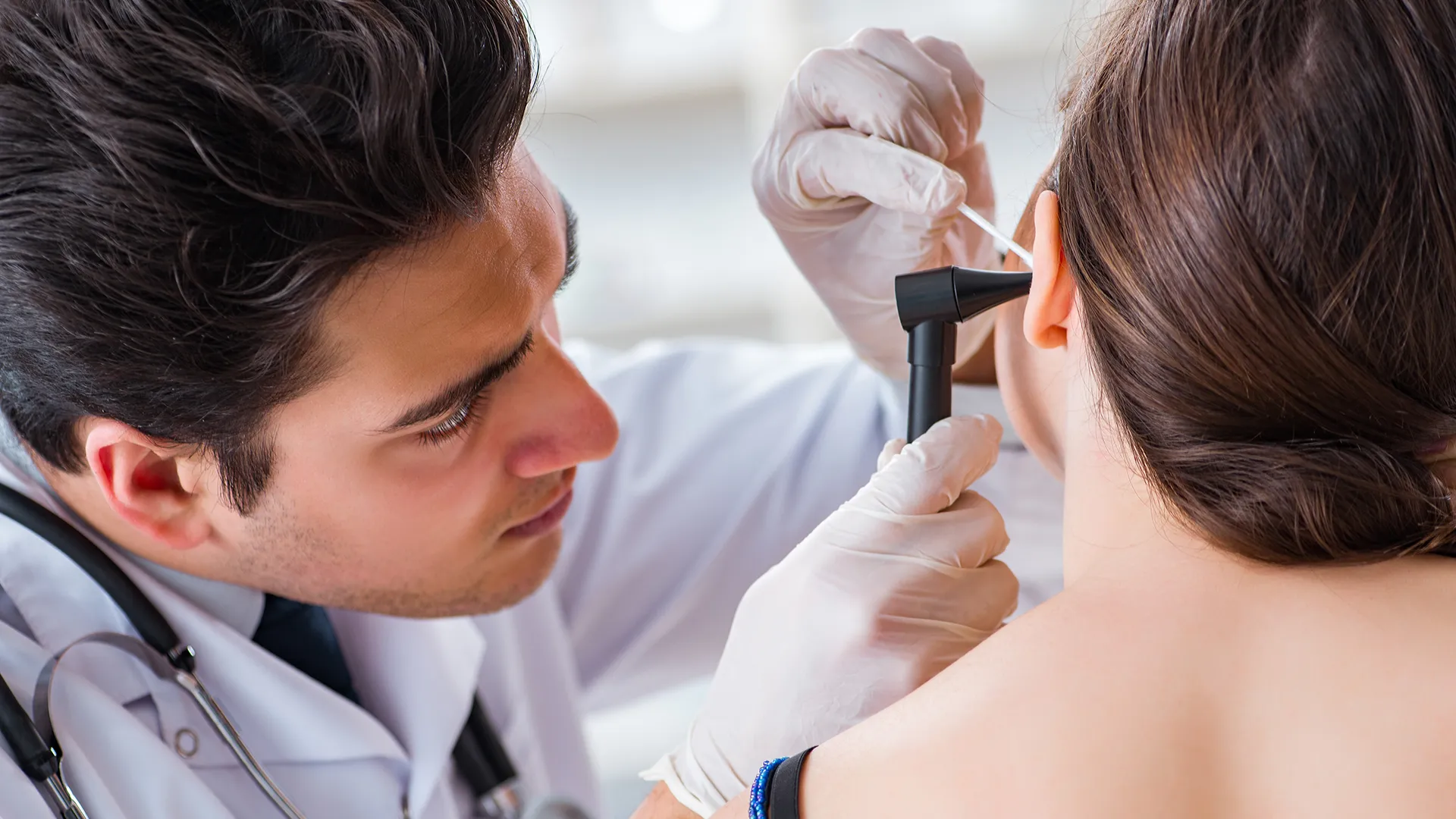
Unlike the skin on the face or arms, the skin inside the ear canal is shielded from most external environmental factors. This protection preserves the integrity of the VOCs, making earwax a more stable and reliable medium for chemical analysis. Furthermore, sampling earwax is a simple, non-invasive procedure that can be performed quickly using a standard medical swab, making it ideal for large-scale screening programs.
Methodology: From Swabbing to Mass Spectrometry
The research team conducted a comprehensive study involving 209 human subjects. To ensure a robust data set, the cohort was divided into 108 individuals who had been clinically diagnosed with Parkinson’s disease and 101 healthy control subjects. The researchers utilized a standardized protocol to collect earwax samples from the ear canals of all participants.
Once collected, the samples underwent rigorous chemical analysis using two primary techniques: gas chromatography (GC) and mass spectrometry (MS).
- Gas Chromatography: This process separates the complex mixture of chemicals found in the earwax into individual components based on their volatility and interaction with a stationary phase.
- Mass Spectrometry: After separation, each component is ionized and identified based on its mass-to-charge ratio. This allows for the precise identification of the molecular "fingerprint" of the earwax.
Through this detailed analysis, the researchers identified a broad spectrum of VOCs. However, four specific compounds stood out as being significantly different in concentration between the PD group and the control group. These four biomarkers are:
- Ethylbenzene: An aromatic hydrocarbon.
- 4-ethyltoluene: A compound often associated with metabolic changes.
- Pentanal: An alkyl aldehyde.
- 2-pentadecyl-1,3-dioxolane: A complex acetal.
The presence and ratio of these four chemicals provided a distinct chemical signature that correlated strongly with a Parkinson’s diagnosis.
Training the Artificial Intelligence Olfactory (AIO) System
Identifying biomarkers is only the first step; creating a usable diagnostic tool requires a way to interpret those markers rapidly and accurately. To achieve this, the researchers developed an Artificial Intelligence Olfactory (AIO) system. This system utilizes machine learning algorithms to process the data generated by the gas chromatography-mass spectrometry analysis.
The AI was trained using the VOC profiles of the 209 participants. By "learning" the subtle differences in the chemical signatures of PD patients versus healthy individuals, the AIO model developed a predictive capability. When tested on the sample set, the AIO-based screening model categorized the earwax samples with a staggering 94% accuracy rate. This level of precision is significantly higher than many other experimental biomarkers and rivals the accuracy of much more expensive and invasive diagnostic procedures.
Chronology of the Research and Future Roadmap
The development of this screening method follows a specific timeline of scientific inquiry:
- Phase 1 (Discovery): Initial theories regarding PD-related odors were tested using "super-smellers" and skin sebum analysis.
- Phase 2 (Optimization): Researchers identified the ear canal as a more stable environment for VOC preservation.
- Phase 3 (Data Collection): Swabbing of 209 subjects and the subsequent chemical analysis in a controlled laboratory setting in China.
- Phase 4 (AI Integration): The development and training of the AIO system to automate and refine the detection process.
- Phase 5 (Current Status): Publication of findings in Analytical Chemistry and the call for wider clinical trials.
The lead researcher, Hao Dong, emphasized that while the results are promising, the study is currently a "small-scale single-center experiment." The roadmap for future development includes expanding the research to include multiple centers across different geographic regions and involving diverse ethnic groups. This is crucial because diet, genetics, and environment can all influence the composition of earwax and the specific VOCs emitted by the body. Furthermore, the team intends to study the VOC profiles at different stages of the disease to determine if the earwax signature changes as PD progresses, which could help in monitoring treatment efficacy.
Implications for Healthcare and Patient Care
The potential implications of an earwax-based PD test are vast. From a health economics perspective, a low-cost screening tool could reduce the burden on specialized neurology departments by filtering out healthy individuals and prioritizing those with high-risk chemical profiles for further testing.
For patients, the benefits of early detection cannot be overstated. While there is currently no cure for Parkinson’s, early diagnosis allows for:
- Neuroprotective Strategies: Patients can begin lifestyle modifications, such as specific exercise regimens and diets, which have been shown to slow the decline of motor function.
- Early Medication Management: Starting medications like Levodopa or MAO-B inhibitors earlier can help manage symptoms more effectively before they become debilitating.
- Clinical Trial Enrollment: Early-stage patients are the most valuable participants for clinical trials investigating new disease-modifying therapies.
- Psychological Preparation: Early diagnosis gives patients and their families more time to plan for the future and access support services.
Expert Reactions and Scientific Analysis
While the scientific community has reacted with optimism, many experts urge a measured approach. Independent neurologists have noted that the 94% accuracy rate is impressive, but they caution that "biomarkers in a lab" do not always translate perfectly to "biomarkers in a clinic." The primary concern is "specificity"—ensuring that the test does not produce false positives by mistaking other neurological or metabolic conditions for Parkinson’s.
"The identification of ethylbenzene and pentanal as potential biomarkers is scientifically sound," noted one independent reviewer. "However, we must see how these markers hold up in patients with other forms of parkinsonism or related dementias, such as Lewy Body Dementia, to ensure the test is truly specific to PD."
The use of AI is also a point of significant interest. By utilizing an "electronic nose" (the AIO system), the researchers are bypassing the subjectivity of human smell and the high cost of manual data interpretation. This aligns with a broader trend in medicine where AI is used to identify patterns in complex biological data that are invisible to the human eye.
Conclusion: A New Frontier in Non-Invasive Diagnostics
The study conducted by Dong, Zhu, and their colleagues represents a significant leap forward in the quest for a non-invasive Parkinson’s diagnostic. By combining the biological stability of earwax with the analytical power of gas chromatography and artificial intelligence, the researchers have created a blueprint for a first-line screening tool that is both practical and highly effective.
As the research moves into its next phase of multi-center validation, the medical community remains hopeful that "earwax sniffing" AI could soon become a standard part of geriatric check-ups. In the fight against a disease that robs millions of their mobility and independence, this humble secretion from the ear canal may provide the early warning sign needed to change the course of the disease for the better.
The study received support from several prestigious institutions, including the National Natural Sciences Foundation of Science and the Pioneer and Leading Goose R&D Program of Zhejiang Province. These investments underscore the importance of finding innovative solutions to the growing global challenge of neurodegenerative diseases. As the world’s population ages, the demand for such diagnostic breakthroughs will only continue to rise, placing the work of Dong and his team at the forefront of modern medical science.