The Paradigm Shift in Fall Protection
Daniel Huntington, a general manager at Key Safety and a specialist in high-altitude fall protection, has spent years observing the disconnect between standard safety protocols and the actual movement patterns of maintenance staff. According to Huntington, the industry has suffered from a "perimeter-first" bias that ignores the sequential reality of the worker’s journey.
"Workers are exposed to hazards the moment they breach the threshold of the roof," Huntington notes. "If we prioritize the edge, we are missing the most common points of contact: the ladder, the hatch, and the path of travel. A robust safety program must evaluate risks in the exact order a worker encounters them."
This shift in perspective is not merely academic. It is a fundamental realignment with OSHA’s "Hierarchy of Controls," which mandates that employers move beyond personal protective equipment (PPE) to implement engineering and administrative solutions that eliminate the need for dangerous behavior in the first place.
Chronology of a Rooftop Inspection
To understand where safety programs frequently fail, one must examine the standard operating procedure (SOP) for a typical rooftop inspection. The chronology of a routine maintenance call usually follows a predictable, yet often hazardous, sequence:

- Access Point Initiation: The worker arrives at a fixed ladder or roof hatch. This is the first transition point where the risk of a fall through the opening is highest.
- The Transition Zone: The worker physically moves from the ladder/stairway onto the roof surface. Statistics from the Bureau of Labor Statistics (BLS) indicate that a disproportionate number of "same-level" and "elevation" falls occur during this specific transition, often due to fatigue or equipment burden.
- Navigating Internal Hazards: Once on the roof, the worker encounters non-edge hazards, such as unsecured HVAC equipment, trip-and-fall hazards from conduit runs, and unprotected skylights.
- Perimeter Proximity: Only after completing the aforementioned steps does the worker reach the edge of the roof to perform work on building systems or perimeter infrastructure.
By failing to account for steps one through three, many safety programs leave workers vulnerable to accidents before they have even performed a single task.
Data-Driven Perspectives on Fall Hazards
According to the most recent OSHA injury data, falls from ladders and through roof openings remain among the top ten most frequently cited violations in the construction and general industry sectors. In 2025, data suggested that nearly 35% of all fall-related incidents in the commercial sector occurred within ten feet of an access point, rather than at the roof’s edge.
Furthermore, the economic impact of these incidents is substantial. Beyond the human cost, the financial burden of a fall-related injury—including medical expenses, legal liability, and work-stoppage costs—can exceed $150,000 per incident for a small to mid-sized business. Organizations that prioritize "pre-edge" safety measures, such as the installation of self-closing gates at ladder openings, report a statistically significant reduction in incident rates compared to those that rely solely on perimeter guardrails.

Assessing Access Point Integrity
The first line of defense is the access point itself. OSHA 1910.28(b)(3) explicitly mandates that employers must ensure each employee is protected from falling through any hole or opening in a walking-working surface. Despite this, many legacy facilities continue to utilize archaic fixed ladders that lack modern safety cages, self-closing gates, or offset railings.
Safety experts argue that the transition from a ladder to a roof is a high-risk maneuver. When a worker climbs a fixed ladder, they are often leaning backward while attempting to step over a parapet or onto a roof deck. If the access point is not equipped with a self-closing gate, the opening remains exposed, creating a "trap" for any worker moving in the vicinity.
"A gate is not just a piece of hardware; it is a permanent administrative control that removes human error from the equation," says Huntington. "If you require a worker to manually replace a chain or close a barrier, you are relying on their discipline. If you install a self-closing gate, the system protects them regardless of their state of mind."

The Importance of Defined Traffic Patterns
Once access is secured, the focus must shift to the "path of travel." In many facilities, workers are left to navigate the roof surface as they see fit, often taking the shortest route to the work site, which may bring them perilously close to an unprotected edge.
Facility managers are increasingly adopting "designated walkway" systems. These systems utilize yellow-painted markings or physical barriers to guide personnel toward the center of the roof—where the fall risk is zero—before directing them toward the specific equipment requiring maintenance.
This approach serves two purposes:

- Exposure Minimization: By keeping workers away from the perimeter, the organization significantly reduces the likelihood of an accidental trip leading to a fall.
- Predictability: When workers follow designated paths, it becomes easier to inspect the roof for hidden hazards, such as loose materials or degrading roof membranes, which might otherwise be missed.
Implications for Future Compliance
As OSHA continues to modernize its standards to reflect the complexities of modern building design, the "perimeter-only" mindset is becoming a liability. During recent industry safety symposiums, officials have emphasized that compliance is no longer a checklist of guardrail installations. Instead, it is an ongoing process of risk assessment.
The shift toward risk-based assessment is compelling organizations to re-evaluate their aging infrastructure. For facilities built in the late 20th century, the original design may not have anticipated the level of rooftop activity currently required by modern climate control and solar infrastructure. Organizations that fail to conduct a thorough audit of their rooftop access points and internal traffic flows may find themselves struggling to keep pace with evolving liability standards.
The Role of Technology in Risk Assessment
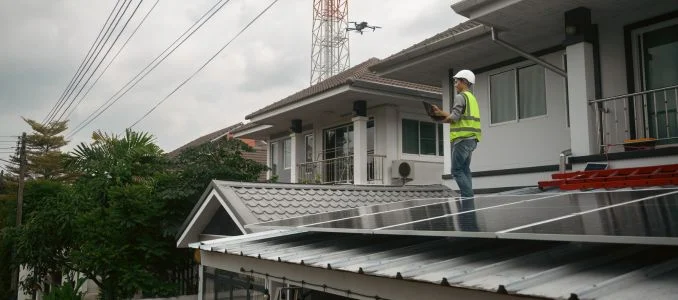
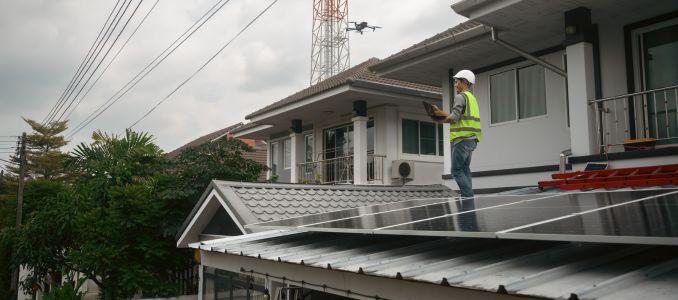
The rise of drone technology has introduced a new dimension to rooftop safety. As indicated in recent industry reports, maintenance teams are increasingly utilizing drones to perform initial site surveys. This allows technicians to identify potential hazards—such as damaged skylights or degraded mounting systems—before they ever set foot on the roof.

While drones cannot replace the physical work required for repairs, they act as a vital intelligence-gathering tool. By mapping the rooftop in high resolution, safety managers can identify "hot spots" of activity and determine where permanent safety installations, such as guardrails or anchor points, are most effectively placed.
Conclusion: A Holistic Approach
Safety is not an additive process; it is an integrative one. True protection requires a move away from the traditional, narrow focus on the edge and toward a comprehensive strategy that addresses the entire lifecycle of a rooftop work session.
By starting with safe access, formalizing traffic patterns, and treating every roof opening as a critical risk factor, organizations can move from a state of reactive compliance to a proactive culture of safety. As Huntington concludes, "When you make the path to the work as safe as the work itself, you don’t just reduce the risk of a fall—you increase the efficiency and morale of the entire maintenance team."

The data is clear: the most effective way to prevent a tragedy at the roof’s edge is to ensure that no one ever has a reason to be there unless they are protected by a system that began long before they reached the top of the ladder.